Comments
36
...

| This is a Draft Amnesty Week draft. It may not be polished, up to my usual standards, fully thought through, or fully fact-checked. |
Commenting and feedback guidelines: This is a Forum post that I wouldn't have posted without the nudge of Draft Amnesty Week. Fire away! (But be nice, as usual) |
Epistemic status: Moderate confidence. This draws on my observations of EA's biosecurity policy efforts, not an in-depth research. Happy to be pushed back on.
EA has been unusually good at identifying neglected, high-impact biosecurity interventions. DNA synthesis screening, metagenomic surveillance, far-UVC. Many of these ideas are technically strong and undersupported relative to their expected impact.
But I worry that we systematically underestimate something essential: to generate political traction (and funding) for our neglected ideas, we need to align them with mainstream priorities and constituencies. Without that alignment, even excellent proposals remain a niche obsession.
The EA prioritization framework — scale, neglectedness, tractability — works well for identifying promising cause areas and even interventions. The problem is that policy change runs on a different set of variables: salience, coalition size, credible messengers, and timing.
Policy entrepreneurs don't just develop good solutions. They attach those solutions to problems that powerful actors already care about. They make radical ideas acceptable by recruiting authority figures; and make acceptable ideas popular by embedding them in contemporary political debates.
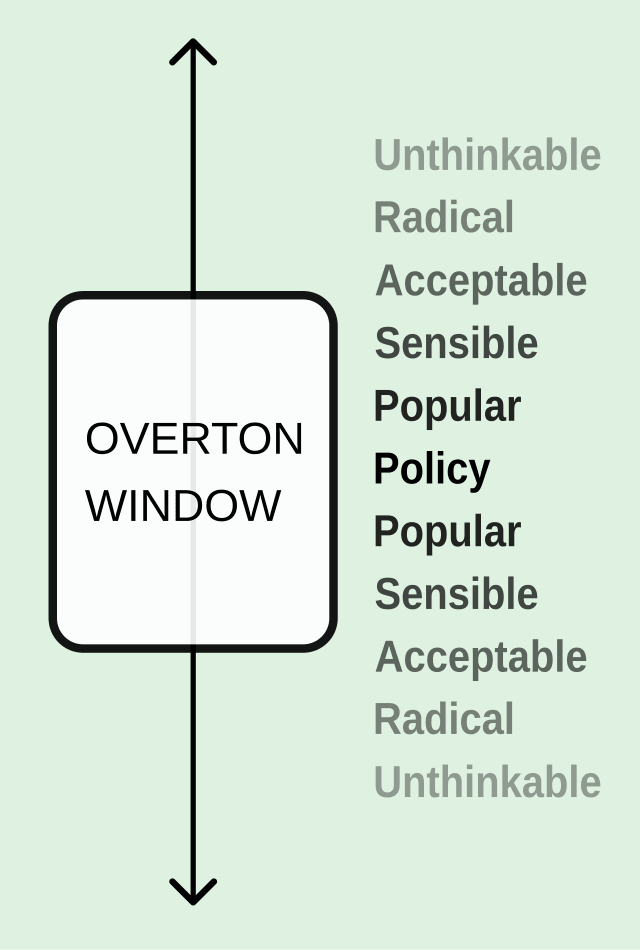
If we want neglected biosecurity interventions to be adopted and scale, we have to ask:
* Who already cares about something adjacent to this?
* Which mainstream budget could plausibly fund it?
* What KPI does the relevant ministry actually track?
Without answers to those questions, even technically excellent proposals remain ignored by policymakers.
I am not arguing that we abandon neglected interventions. I am arguing for adjacent reframing.
Metagenomic surveillance is a good illustration. Within EA circles, it's typically framed as a pathogen-agnostic GCBR mitigation tool that could catch "silent pandemics", a framing that resonates with a small group of biosecurity specialists and funders.
Politically, however, it's a tough sell. As COVID-19 fades from public memory, funding is drying up for pandemic preparedness in many countries.
This is exactly where reframing matters. Rather than positioning metagenomic surveillance primarily as a hedge against rare catastrophe, policy entrepreneurs could embed it within priorities that already have bureaucratic homes and budget lines: antimicrobial resistance monitoring, and routine respiratory disease tracking. These are the constituencies that keep the infrastructure funded between crises.
Adjacent reframing also runs the other way: sometimes the highest-impact thing EA-aligned policy entrepreneurs can do is show up for mainstream causes that are under threat.
Wastewater monitoring is a good current example. It's not as neglected as metagenomic surveillance, but in the post-COVID funding environment, programs that proved their value during the pandemic are being quietly wound down as budgets tighten and attention moves on. That's a real loss. Wastewater surveillance is cheap, scalable, and contributes both to early warning and ongoing disease control. Losing that infrastructure now means rebuilding it from scratch during the next crisis, at much greater cost.
Sometimes, keeping accepted ideas popular can be more effective than trying to make radical ideas accepted.
Public health and social measures — things like mask mandates, school closures, and lockdowns — present a similar opportunity. Trust in these tools has eroded badly since COVID-19, and that matters: if governments hesitate to act decisively at the start of the next pandemic because of political backlash or contested evidence, the consequences could be catastrophic. This isn't a neglected problem. The WHO has recently invested significantly in reviewing the evidence base for these measures, and there's real momentum building around getting this right.
That mainstream momentum is worth joining and gently steering. The current wave of policy attention is focused broadly on PHSMs, but not all of them are equally valuable against the risks we most care about. Targeted advocacy could help ensure that the interventions with the strongest case for effectiveness against GCBRs — particularly early, decisive measures like lockdowns — are the ones that emerge with stronger institutional backing. This is exactly the kind of situation where a small amount of well-placed EA engagement could punch above its weight: the window is open, the conversation is already happening, and nudging it in a more impactful direction requires much less effort than developing radical interventions from scratch.
A reasonable pushback: doesn't this approach risk cannibalizing resources from other impactful global health priorities? If adjacent reframing redirects funding away from tuberculosis or measles control, those tradeoffs are real and worth taking seriously.
In practice, though, adjacent reframing usually targets different pots of money. Education budgets, workplace safety funds, infrastructure programmes, and economic resilience schemes are not typically classified as "global health." If a biosecurity intervention can credibly deliver benefits in those domains, the resource base expands rather than merely reallocates.
Generating political support from scratch for a niche x-risk category is genuinely hard. Attaching a proven solution to a widely-recognised problem is usually much more tractable.
If this diagnosis is roughly right, a few shifts seem warranted:
None of this requires abandoning epistemic rigour. It requires recognising that technical merit is necessary but not sufficient for policy change.
Biosecurity policy entrepreneurship is not only about supporting the most neglected intervention. It's about making that intervention legible, useful, and politically attractive to actors who don't share our priors.
If we want durable reductions in global catastrophic biological risk, we may need to ask not just "What is most neglected?" but also ask "Who already cares about something close to this; how do we steer their efforts?"