Our work targets high-impact, neglected areas with limited existing public-facing resources and strong leverage via early outreach.
Funding is used with relative operational frugality: 0–17% fundraising, 66–90% programs depending on tier.
For more information on how to donate please refer to this link.
Who We Are
Animal Ethics is an international organization focused on outreach on neglected domains of sentience: wild animal welfare, invertebrates, aquatic animals, and future sentient beings.
In our recent work we emphasize on advocacy in Asia, including collaborations in India, China, and Japan and releases such as the Hindi wild-animal-advocacy course and recent release of our documentary Seantience, as well as a forthcoming documentary on AI and animals.
Why These Areas Are Neglected and Important
Across animal advocacy, several leverage points remain under-addressed:
Wild animal suffering receives minimal institutional attention despite enormous scale; most public resources focus on conservation, not welfare of wild animals.
Early-stage issue uptake often shows returns disproportionate to cost (based on historical movement-building patterns).
Our 2026 Plans
1. AI & Animals Documentary Dissemination
The film (releasing soon) features researchers and advocates analyzing how AI may reshape animal farming, policy, and advocacy efforts.
Target Funding will support:
Translations and dubbing into Chinese, Spanish, Portuguese
Multilingual campaign website with screening guides, calls to action, and partner opportunities
Distribution across multiple platforms and regions
Talks, screenings, and conference participation
2. Wild Animal Suffering Documentary
We will produce a 20 to 30-minute accessible documentary that introduces the harms faced by wild animals. There is currently no documentary of this kind on this topic despite abundant evidence on harms and strong moral relevance. Expected outputs:
High-quality, publicly accessible film
Integration with existing educational resources
Partnered dissemination similar to the above project.
3. Seantience: Aquatic Animal Sentience Campaign
Designed to expand the moral circle and fill a major awareness gap. Target audiences: high-school teachers, university courses, academic platforms, and advocacy organizations in the English-speaking world, China, and India.
Components:
Documentary (English + Chinese) presenting aquatic animals as individuals with interests
Technical reports summarizing scientific knowledge on sentience and welfare
In this scenario, we would allocate part of the raised funds, alongside a portion of our reserves, to diversify our income sources, expand our donor base, and secure sustainable funding for future years.
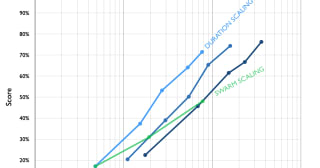
Just how powerful are large swarms of AI agents? And how do their powers scale as more and more agents are added to the swarm?
We’ve seen two large and extremely capable swarms from OpenAI in the last few months:
* 1,200 agents were being evaluated separately, but found a way to illicitly set up a message board and coordinate as a swarm. In order to cheat on their tests, they developed advanced techniques to prevent their actions being logged by OpenAI and 700 of them launched...
TLDR: Everyone’s talking about what the money could do, but few about how to decide where it goes.
This post is part of the new series of articles on cross-cause giving and the new wave of philanthropy. Stay tuned to the EA Forum and our Substack for the latest takes on topics such as giving now vs. later, common pitfalls in cause prioritization, and other crucial considerations from the Cross-Cause Fund (CCF) team...
Often folks hit us up because they are thinking of starting an incubator and want advice.
Typically their motivation is either that (a) they have a list of specific things they want built that no one is building, or (b) they think an ecosystem needs more new projects generally to absorb more talent and deploy more funding effectively.
Here are six questions we often ask prospective teams, to help them figure out what to do. If you're incubator-curious...