There is a (currently) non-public organization working on making this happen. If anyone is interested in learning more, feel free to reach out (we're hiring)!
It is honestly striking that caring about such a massive scale of suffering is often seen as 'weird.' As I began researching the topic, I was particularly surprised to discover that even within the EA community, this remains a largely overlooked area.
It at least doesn’t seem obvious to me that when insects are writhing around in agony, behaving like you or I would if we were in intense pain, they’re experiencing something on the level of a stubbed toe.
Actually, I also previously found myself leaning toward the idea that certain species might not have 'invested' in deep subjective experiences, primarily due to their shorter lifespans and r-selection reproductive strategies. Because of this, I also didn't prioritize them as much (despite their staggering numbers) assuming their experiences lacked the depth of more biologically complex animals.
However, after more thought and research, I’ve realized that lifespan or reproductive speed isn't a solid foundation for judging the intensity of an experience. A pivotal argument in the post Differences in the Intensity of Valenced Experience across Species resonates strongly here: “…subjective experiences that were so faint as to be almost imperceptible would appear to do a poor job motivating behavior."
This perspective is far more compelling. If the stimulus is vital, the experience must be intense enough to drive action, regardless of how long that organism is expected to live. The intensity of pain is fundamentally linked to its ability to hijack an organism's attention in life-threatening situations and the 'decibel level' of the signal must be sufficiently high to ensure survival. This makes me think that their 'now' can be as urgent and undeniable as our own in similar situations.
Furthermore, as you mentioned in the post, the mounting empirical evidence regarding states like behavioral despair or pessimistic decision-making after stress also suggests a profoundly valenced internal world.
This realization has significantly shifted how I view the urgency and priority of their welfare. Also, I feel a heightened sense of moral responsibility toward the species that face the most prejudice. When our empathy fails to reach a certain group due to bias, it becomes an even greater ethical duty to advocate for them and ensure their suffering is not ignored.
I haven’t researched this extensively, but wouldn’t methods like gene drives be a better option for insects than humane insecticides? If insects lead net-negative lives, gene drives would protect them from harms beyond just the moment of death by reducing population sizes at the source. Furthermore, we don't currently know how "humane" even the best humane insecticides truly are, and their development process could be costly and difficult. In contrast, gene drive technology already exists; it primarily needs to be adapted for broader industrial use.
Also, this shift could lead to a powerful intersection of interests and provide more incentives for scaling. The public would likely opt for pesticide-free food for health reasons, producers would be eager to eliminate the recurring costs of purchasing and applying chemical agents. (I’m speculating here though, as I don’t know exactly how costly the gene drive method would be, but its self-sustaining nature makes me think that, at some point, it could become more preferable than the perpetual expense of chemicals.) and environmentalists would likely be interested to prevent the pollution of soil and water. So, we could frame this method in a way that would garner large-scale support even from groups that do not prioritize insect welfare.
What are gene drives? Is that like genetically modifying insects to not feel pain and then introducing them into the environment so the pain-free genes eventually replace all the standard genes? (Or whatever other genetic feature, not necessarily pain related)
Exactly, it follows a very similar logic, but when it comes to population control, an infertility gene is what's generally used.
Gene drives rely on CRISPR/Cas9 technology, which acts as a tool to ensure nearly 100% of offspring inherit the new trait.
In our case;
1- A female infertility gene is inserted into the eggs of the target species.
2- Once these insects are released into the wild, they mate with wild ones, and the CRISPR system cuts the normal gene from the wild parent & replaces it with the infertility gene.
3- This way, the males remain fertile and act as carriers to spread the trait through the population; however, because the females carrying this code become unable to lay eggs, the population quietly and naturally declines over time.
Speaking of insects, to save the inconceivable number of them that will exist in the future, we know that insect farming is a crucial area to address right now. Though I also believe we currently aren't treating this with the urgency it deserves.
What makes it so difficult to escape industrial animal farming today is its deeply established system, with billion-dollar lobbying power and a massive level of optimization. Therefore, it is vital to act before this industry scales and becomes entrenched. (I also suspect that securing welfare gains in this sector will be even more challenging, 1.) as insects naturally evoke less empathy, 2.) we still know very little about their specific needs, 3.) and the sheer cost-effectiveness of rearing them provides little economic incentive for welfare improvements.)
In this context, what do you think about the potential of insect cell culture? Have you come across any discussion on this? From a technical standpoint, insect cell culture is significantly easier to develop than that of other animals (as insect cells can thrive at lower temperatures without CO2 regulation, possess a much higher resilience to mechanical shear stress, and are more adaptable to low-cost, serum-free media). Furthermore, since the final 'product' is often used in powder form, there is no need for the complicated tissue engineering processes required to create complex textures. I’m curious whether you think working on this could be a cost-effective intervention.
It might benefit more than just the insects to develop a more humane method, considering previous pesticides (now banned in most countries) like DDT harmed insects, humans and the environment.
I'm very interested in this. I would very much like to know which pesticides kill less insects (but achieve their purpose of protecting crops) and which pesticides kill more humanely and what are the best blanket replacements for the biggest pesticides in use today.
I think this is very understudied for biodiversity off-target deaths as well. Unintended deaths and unnecessary suffering. I think it's possible to do a truly huge amount of good here.
Does anyone have some initial leads on what these might be?
I have lots of radical views about insects. I think probably most expected happiness and misery in the world is experienced by insects, and that our actions often have much more significant moral impacts on bugs than on people. But in this article, I’m not going to defend anything radical. My thesis here is very moderate: I think we should try to make pesticides kill insects less painfully.
Every year, quadrillions of insects are killed or harmed with pesticides—3.5 quadrillion, according to one estimate. This is about 30,000 times more than the number of people who have ever lived in human history. In the best cases, deaths take minutes or hours as the insects are slowly poisoned to death. In other worse cases, death takes days as the insects are left unable to shed their own skin and essentially crushed to death from the inside. In still other cases, insects starve to death as their guts malfunction. This is likely to be very painful.
It is plausible that many insects can suffer. When benchmarks are created to assess pain in animals, insects consistently meet most of the criteria, having nociceptors, responding to painkillers, demonstrating associative learning, and sometimes displaying surprising cognitive complexity. Of the criteria they don’t clearly meet, this is because of lack of research, not contrary evidence.
When flies are genetically engineered to have capsaicin receptors (responsible for tasting spicy food) they display strong negative behavioral reactions to food laced with capsaicin. They take small nibbles at the food, before violently quaking as if in distress. They find it so aversive that they even starve themselves to death rather than eat it. However, this stops if you give them painkillers. This isn’t definitive proof of consciousness, but it’s at least suggestive!
Many different insects learn to avoid stimuli that they associate with pain. When flies are given electric shocks paired with some odor, they learn to avoid the odor. The same is true of bees, ants, and various others. Insects behave, when exposed to heat, exactly as one would expect of an animal in pain. While it is possible that they feel only minimal suffering, on account of their cognitive simplicity, it is also possible that they feel a lot of pain.[1]
The best report on animal sentienceestimated insects that experienced pain within an order of magnitude or two as intensely as people. It at least doesn’t seem obvious to me that when insects are writhing around in agony, behaving like you or I would if we were in intense pain, they’re experiencing something on the level of a stubbed toe. I’m at least not convinced that it’s overwhelmingly likely that they’re vastly less conscious, in some qualitative sense, so that they see colors, hear sounds, and feel pain with overwhelmingly less vividness—as if the brightness and volume on their inner life has been turned down almost to zero. If a being might suffer a lot, then their being painfully killed by the quadrillions is a big deal.
If we conservatively estimate that insects feel pain on average 1/1,000th as intensely as people do, then pesticides annually cause about as much misery as 3 trillion painful human deaths. That is an amount of pain equivalent to if every human on the planet experienced intense pain, on the level of being poisoned to death, every single day. My guess is that this is more pain than is caused by the entire invertebrate farming industry (including even those ghastly shrimp farms).
That is very bad. It isn’t very clear whether pesticides on net increase or decrease insect suffering, because pesticides might lower insect populations. So it’s not clear if the world would be better if pesticides were phased out. But in any case, they are the cause of a very large amount of direct pain. We should aim to make them less painful.
I boldly propose: if we’re killing lots of beings that might be conscious, we should try to do it less painfully. If we’re causing intense pain to a population, every single year, that is 30,000 times more than the number of people who have ever lived, so that even by conservative estimates more expected pain is caused by this every year than by all human suffering in history, we should try to cause less intense pain. Radical, I know!
This isn’t some weird utilitarian view. It just seems like common sense—that we should try to hurt others less, if possible. We shouldn’t boil lobsters alive. If we can avoid it, we shouldn’t slowly poison insects to death in the maximally painful way. Insects are smaller than lobsters, but they’re fairly cognitively similar.
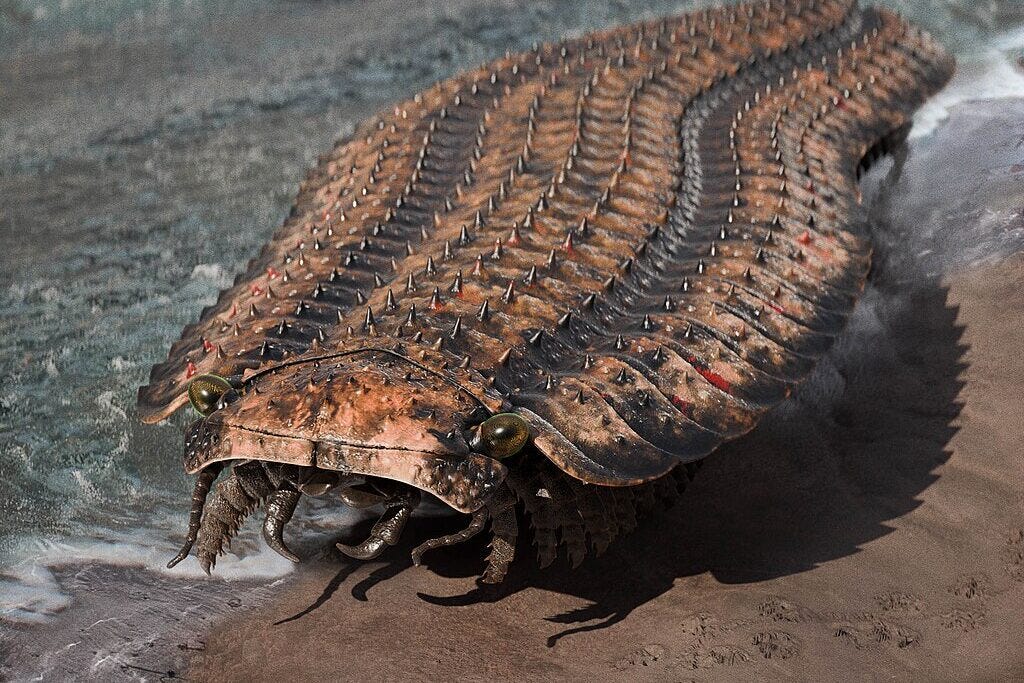
I think we’re biased against insects because they’re small. There used to be giant prehistoric insects that looked like this:
Imagine meeting this guy in a dark alley.
If you poisoned those giant insects to death, and then a trillion more, and a trillion more, and did that a thousand times, so that in total you poisoned to death 1 quadrillion of them, that would seem like a big deal. Our intuitions count insects far less than bigger animals. But this is an error. It treats size as morally relevant when it obviously isn’t.
So humane pesticides seem ridiculously important.
But despite this, and despite Brian Tomasik having been banging the drum about this a decade ago, nobody has funded it. There’s just been no research into how to make pesticides more humane. I want to emphasize: if you got humane pesticides implemented widely, you would affect quadrillions of animals every year! You might affect a distribution of pain, in a few years, more than all human misery in history.
So someone should get on this! Once we have humane pesticides, efforts can be carried out to increase their uptake. If you’re interested in funding humane pesticides, or interested in being funded to work on humane pesticides, feel free to shoot me a Substack DM or send me an email at [email protected]. By sponsoring this, you’d be able to affect staggering amounts of suffering. If you work on or sponsor humane pesticides, you could maybe do more for insects than any person ever. And while the insects are unlikely to thank you (because they don’t talk) you can prevent quadrillions of them from experiencing immense agony. A thousand trillions worth of insects won’t have to die slowly, in horrible agony, alone, for days, in the dark.
There are some reasons to think simple animals might suffer a lot—both because they need more pain to learn and when they suffer, pain wholly envelops their mind, without other sophisticated cognitive processes going on.
Note: This post was crossposted from the Coefficient Giving Farm Animal Welfare Research Newsletter by the Forum team, with the author's permission. The author may not see or respond to comments on this post.
Subtitle: On vegan advocacy, effective altruism, and FIFA
I turn 40 today. Here are some hot takes.
On factory farming
1. Our biggest challenge is salience. If factory farming led the evening news, it wouldn’t last lo...
Impressions from the 21st Annual U.S. Cluster Headache Patient Conference, organized by Clusterbusters.
On the morning of the last day of the conference, E. was hanging out with other “clusterheads” outside the conference hotel when he started having a cluster headache attack. Before he could go back to his hotel room, J. offered E. his DMT v...
TL;DR:
The movement has an evidence problem. To solve it, for each intervention we need to know:
* What types of evidence that intervention needs
* What types of evidence different sources can give us
In this post, we outline a framework for evidencing an intervention through five stages:
...


There is a (currently) non-public organization working on making this happen. If anyone is interested in learning more, feel free to reach out (we're hiring)!
Hi, could you send me some information on what youre working on? I may do some venture investing in this area
Let me know if you need funding. May be interested in donating $100-$1.000 monthly.
Hey! Apologies for the delay. You can support our work here. Thank you!