Some of the deepest puzzles in ethics concern how to coherently extend ordinary beneficence and decision theory to extreme cases. The notorious puzzles of population ethics, for example, ask us how to trade off quantity and quality of life, and how we should value future generations. Beckstead & Thomas discuss a paradox for tiny probabilities and enormous values, asking how we should take risk and uncertainty into account. Infinite ethics raises problems for both axiology and decision theory: it may be unclear how to rank different infinite outcomes, and it’s hard to avoid the “fanatical” result that the tiniest chance of infinite value swamps all finite considerations (unless one embraces alternative commitments that may be even more counterintuitive).
Puzzles galore! But these puzzles share a strange feature, namely, that people often mistakenly believe them to be problems specifically for utilitarianism.
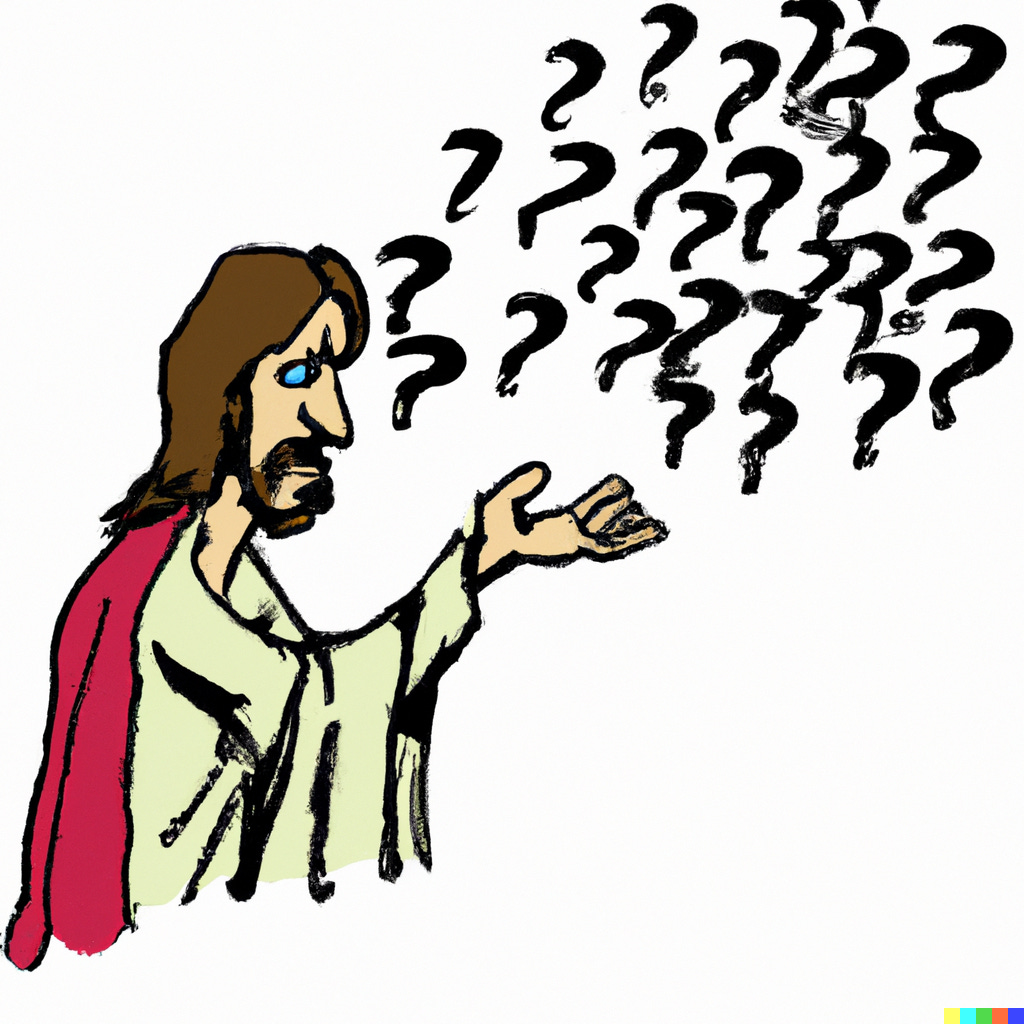
[Image caption: "Fear not: there’s enough for everyone!"]
Their error, of course, is that beneficence and decision theory are essential components of any complete moral theory. (As even Rawls acknowledged, “All ethical doctrines worth our attention take consequences into account in judging rightness. One which did not would simply be irrational, crazy.” Rossian pluralism explicitly acknowledges a prima facie duty of beneficence that must be weighed against our other—more distinctively deontological—prima facie duties, and will determine what ought to be done if those others are not applicable to the situation at hand. And obviously any account relevant to fallible human beings needs to address how we should respond to uncertainty about our empirical circumstances and future prospects.)
Why, then, would anyone ever think that these puzzles were limited to utilitarianism? One hypothesis is that only utilitarianism is sufficiently clear and systematic to actually attempt an answer to these questions. Other theories too often remain silent and non-committal. Being incomplete in this way is surely not an advantage of those theories, unless there’s reason to think that a better answer will eventually be fleshed out. But what makes these questions such deep puzzles is precisely that we know that no wholly satisfying answer is possible. It’s a “pick your poison” situation. And there’s nothing clever about mocking utilitarians for endorsing a poisonous implication when it’s provably the case that every possibility remaining amongst the non-utilitarian options is similarly poisonous!
When all views have costs, you cannot refute a view just by pointing to one of its costs. You need to actually gesture towards a better alternative, and do the difficult work of determining which view is the least bad. Below I’ll briefly step through some basic considerations that bring out how difficult this task can be.
Population Ethics
In ‘The New Moral Mathematics’ (reviewing WWOTF), Kieran Setiya sets up a false choice between total utilitarianism and “the intuition of neutrality” which denies positive value to creating happy lives. (Note that MacAskill’s longtermism is in fact much weaker than total utilitarianism.) He swiftly dismisses the total view for implying the repugnant conclusion. But he doesn’t mention any costs to neutralism, which may give some readers the misleading impression that this is a cost-free, common-sense solution. It isn’t. Far from it.
Neutrality implies that utopia is (in prospect) no better than a barren, lifeless rock. It implies that the total extinction of all future value-bearers could be more than compensated for by throwing a good enough party for those who already exist. These implications strike me as far more repugnant than the repugnant conclusion. (If you think the big party doesn’t sound so bad, given that you’re already invited, instead imagine Cleopatra making the decision millennia ago.) Moreover, neutrality doesn’t even fully avoid the original problem! It still doesn’t imply that future utopia A is better than the repugnant world Z; just that they are “on a par”. (This is a result that totalists can just as well secure through a more limited critical range that still allows awesome lives to qualify as positive additions to the world.)
To fully avoid repugnance, we want a population axiology that can at least deliver both of the following verdicts:
(i) utopia (world A) is better than Parfit’s world Z, and
(ii) utopia is better than a barren rock.
The total view can’t secure (i), but at least it’s got (ii) covered. Neutrality gets us neither! (The only hope for both, I think, is some kind of variable value view, or possibly perfectionism, both of which allow that we have strong moral reasons to want more awesome, excellent lives to come into existence.)
To bring out just how little is gained by neutrality, note that all the same puzzles re-emerge when trading off quantity and quality within a single life, where neutrality is clearly not an option. (The intrapersonal “neutral” view would hold that early death is harmless, and adding extra good time to your life—however wonderful that time might be—is strictly “on a par” with never having that time at all. Assuming that you’d prefer to experience bliss than instant death, you already reject the “intuition of neutrality” in this domain!)
Consider the intrapersonal repugnant conclusion: A life contain zillions of barely-positive drab moments is allegedly better for you than a century in utopia. Seems wrong! So how are you going to avoid it? Not by appealing to neutrality, for the reasons we’ve just seen. An intrapersonal analogue of variable value or critical range views is surely more promising, though these views have their own significant costs and limitations (follow the links for details). Still, if you settle on a view that works to avoid the intrapersonal repugnant conclusion, why not carry it over to the inter-personal (population) case, if you’re also concerned to avoid the repugnant conclusion there?
Once you acknowledge that (i) the intrapersonal repugnant conclusion is just as counterintuitive as the inter-personal one, and yet (ii) unrestricted “neutrality” about creating new moments of immense value is not a feasible option, it becomes clear that neutrality about creating happy lives is no panacea for the puzzles of population ethics. Either we make our peace with some form of the repugnant conclusion, or we settle on an alternative account that’s nonetheless compatible with ascribing value to creating new loci of value (times or lives) at least when they are sufficiently good. Folks who think neutrality offers an acceptable general solution here are deluding themselves.
Decision Theory
In an especially striking example of conflating utilitarianism with anything remotely approaching systematic thinking, popular substacker Erik Hoel recently characterized the Beckstead & Thomas paper on decision-theoretic paradoxes as addressing “how poorly utilitarianism does in extreme scenarios of low probability but high impact payoffs.” Compare this with the very first sentence of the paper’s abstract: “We show that every theory of the value of uncertain prospects must have one of three unpalatable properties.” Not utilitarianism. Every theory.
(Alas, when I tried to point this out in the comments section, after a brief back-and-forth in which Erik initially doubled down on the conflation, he abruptly decided to instead delete my comments explaining his mistake.)
Just to briefly indicate the horns of the paradox: in order to avoid the “recklessness” of orthodox (risk-neutral) expected utility in the face of tiny chances of enormous payoffs, you must either endorse timidity or reject transitivity. Timidity “permit[s] passing up arbitrarily great gains to prevent a tiny increase in risk.” (Relatedly: risk-averse views may imply that we should prefer to destroy the world rather than risk a 1 in 10 million chance of a dystopian future, even on the assumption that a correspondingly wonderful utopia is vastly more likely to otherwise eventuate.) Doesn’t sound great! And rejecting transitivity strikes me as basically just giving up on the project of coherently systematizing how we should respond to uncertain prospects; I don’t view that as an acceptable option at all.
Conclusion
It’s really not easy for anyone to avoid uncomfortable verdicts in these puzzle cases. However bad the “utilitarian” verdict looks at first blush, a closer examination suggests that many alternatives are likely to be significantly worse. (When discussing related issues in ‘Double or Nothing Existence Gambles’, I suggest that a moderate mix of partiality and diminishing marginal value of intrinsic goods might help in at least some cases. But it’s really far from obvious how best to deal with these problems!)
Most of those who are most confident that the orthodox utilitarian answers are absurd haven’t actually thought through any sort of systematic alternative, so their confidence seems severely misplaced. Personally, I remain hopeful that both the Repugnant Conclusion and (at least some) reckless ‘Double or Nothing’ existence gambles can be avoided with appropriate tweaks to our axiology. But I’m far from confident: these puzzles are really tricky, and the options all have severe costs! Non-consequentialists may superficially look better by refusing to even talk about the problems, so—like skilled politicians—they cannot so easily be pinned down. But gaps in a theory shouldn’t be mistaken for solutions. It’s important to appreciate that any coherent completion of their view will likely end up looking just as bad—or worse.
As a result, I think many people who (like Erik Hoel) think they are opposed to utilitarianism are really reacting against a broader phenomenon, namely, systematic theorizing. The only way to entirely avoid the problems they deem so sneer-worthy is to stop thinking. Personally, I just can’t shake the feeling that that would be the most repugnant response of all.



There are other appeals of neutrality (about adding "positive" lives or "goods") besides just avoiding the RC:
* although there are more fundamental distinctions we could make if we wanted, e.g. between intrapersonal and interpersonal tradeoffs.
Hi Michael! Thanks for your comments.
That last point also speaks to the putative desirability of offering a "stronger principled reason". Protecting bodily autonomy by denying the in-principle value of people in need of organ transplants would be horrifying, not satisfying. So I don't think that question can be adjudicated independently of the first-order question of which view is simply right on the merits.
I don't think this solves the problem, at least if one has the intuition (as I do) that it's not the current existence of the people who are extremely harmed to produce happy lives that makes this tradeoff "very repugnant." It doesn't seem any more palatable to allow arbitrarily many people in the long-term future (rather than the present) to suffer for the sake of sufficiently many more added happy lives. Even if those lives aren't just muzak and potatoes, but very blissful. (One might think that is "horribly evil" or "utterly disastrous," and isn't just a theoretical concern either, because in practice increasing the extent of space settlement would in expectation both enable many miserable lives and many more blissful lives.)
ETA: Ideally I'd prefer these discussions not involve labels like "evil" at all. Though I sympathize with wanting to treat this with moral seriousness!
Interesting! Yeah, a committed anti-natalist who regrets all of existence -- even in an "approximate utopia" -- on the grounds that even a small proportion of very unhappy lives automatically trumps the positive value of a world mostly containing overwhelmingly wonderful, flourishing lives is, IMO, in the grips of... um (trying to word this delicately)... values I strongly disagree with. We will just have very persistent disagreements, in that case!
FWIW, I think those extreme anti-natalist values are unusual, and certainly don't reflect the kinds of concerns expressed by Setiya that I was responding to in the OP (or other common views in the vicinity, e.g. Melinda Roberts' "deeper intuition that the existing Ann must in some way come before need-not-ever-exist-at-all Ben").
I agree. I happen to agree with you that the attempts to accommodate the procreation asymmetry without lexically disvaluing suffering don't hold up to scrutiny. Setiya's critique missed the mark pretty hard, e.g. this part just completely ignores that this view violates transitivity:
...Having said that, I do think the "deeper intuition that the existing Ann must in some way come before need-not-ever-exist-at-all Ben" plausibly boils down to some kind of antifrustrationist or tranquilist intuition. Ann comes first because she has actual preferences (/experiences of desire) that get violated when she's deprived of happiness. Not creating Ben doesn't violate any preferences of Ben's.
I don't think so. I'm sure that Roberts would, for example, think we had more reason to give Ann a lollipop than to bring Ben into existence and give him one, even if Ann would not in any way be frustrated by the lack of a lollipop.
The far more natural explanation is just that we have person-directed reasons to want what is good for Ann, in addition to the impersonal reasons we have to want a better world (realizable by either benefiting Ann or creating & benefiting Ben).
In fairness to Setiya, the whole point of parity relations (as developed, with some sophistication, by Ruth Chang) is that they -- unlike traditional value relations -- are not meant to be transitive. If you're not familiar with the idea, I sketch a rough intro here.
"Extinguish" evokes the wrong connotations since neutrality is just about not creating new lives. You make it seem like there's going to be all this life in the future and the proponents of neutrality want to change the trajectory. This introduces misleading connotations because some views with neutrality say that it's good to create new people if this is what existing people want, but not good to create new people for its own sake.
I think using the word "extinguish" is borderline disingenuous. [edit: I didn't mean to imply dishonesty – I was being hyperbolic in a way that isn't conducive to good discussion norms.]
Likewise, the Cleopatra example in the OP is misleading – at the very least it begs the question. It isn't obvious that existing people not wanting to die is a reason to bring them into existence. Existing people not wanting to die is more obviously a reason to not kill them once they exist.
"Disingenuous"? I really don't think it's OK for you to accuse me of dishonesty just because you disagree with my framing of the issue. Perhaps you meant to write something like "misleading".
But fwiw, I strongly disagree that it's misleading. Human extinction is obviously a "trajectory change". Quite apart from what anyone wants -- maybe the party is sufficient incentive to change their preferences, for example -- I think it's perfectly reasonable to expect the continuation of the species by default. But I'm also not sure that default expectations are what matters here. Even if you come to expect extinction, it remains accurate to view extinction as extinguishing the potential for future life.
Your response to the Cleopatra example is similarly misguided. I'm not appealing to "existing people not wanting to die", but rather existing people being glad that they got to come into existence, which is rather more obviously relevant. (But I won't accuse you of dishonesty over this. I just think you're confused.)
Sorry, I didn’t mean to accuse you of dishonesty (I'm adding an edit to the OP to make that completely clear). I still think the framing isn’t defensible (but philosophy is contested and people can disagree over what's defensible).
Yes, but that’s different from extinguishing future people. If the last remaining members of a family name tradition voluntarily decide against having children, are they “extinguishing their lineage”? To me, “extinguishing a lineage” evokes central examples like killing the last person in the lineage or carrying out an evil plot to make the remaining members infertile. It doesn’t evoke examples like “a couple decides not to have children.”
To be clear, I didn’t mean to say that I expect extinction. I agree that what we expect in reality doesn’t matter for figuring out philosophical views (caveat). I mentioned the point about trajectories to highlight that we can conceive of worlds where no one wants humanity to stick around for non-moral reasons (see this example by Singer). (By “non-moral reasons,” I’m not just thinking of some people wanting to have children. When people plant trees in their neighbourhoods or contribute to science, art, business or institutions, political philosophy, perhaps even youtube and tik tok, they often do so because it provides personal meaning in a context where we expect civilization to stay around. A lot of these activities would lose their meaning if civilization was coming to an end in the foreseeable future.) To evaluate whether neutrality about new lives is repugnant, we should note that it only straightforwardly implies “there should be no future people” in that sort of world.
I think I was aware that this is what you meant. I should have explained my objection more clearly. My point is that there's clearly an element of deprivation when we as existing people imagine Cleopatra doing something that prevents us from coming to exist. It's kind of hard – arguably even impossible – for existing people to imagine non-existence as something different from no-longer-existence. By contrast, the deprivation element is absent when we imagine not creating future people (assuming they never come to exist and therefore aren’t looking back to us from the vantage point of existence).
To be clear, it's perfectly legitimate to paint a picture of a rich future where many people exist and flourish to get present people to care about creating such a future. However, I felt that your point about Cleopatra had a kind of "gotcha" quality that made it seem like people don't have coherent beliefs if they (1) really enjoy their lives but (2) wouldn't mind if people at some point in history decide to be the last generation. I wanted to point out that (1) and (2) can go together.
For instance, I could be "grateful" in a sense that's more limited than the axiologically relevant sense – "grateful" in a personal sense but not in the sense of "this means it's important to create other people like me." (I'm thinking out loud here, but perhaps this personal sense could be similar to how one can be grateful for person-specific attributes like introversion or a strong sense of justice. If I was grateful about these attributes in myself, that doesn't necessarily mean I'm committed to it being morally important to create people with those same attributes. In this way, people with the neutrality intuition may see existence as a person-specific attribute that only people who have that attribute can meaningfully feel grateful about. [I haven't put a lot of thought into this specific account. Another reply could be that it's simply unclear how to go about comparing one's existence to never having been born.])
I think if we're already counting implicit preferences, so that, for example, people still have desires/preferences while in deep dreamless sleep and those still count, it's very hard to imagine someone losing all of their desires/preferences without dying or otherwise having their brains severely damaged, in which case their moral status seems pretty questionable. There's also a question of whether this has broken (psychological) continuity enough that we shouldn't consider this the same person at all: this case could be more like someone dying and either being replaced by a new person with a happy, flourishing future or just dying and not being replaced at all. Either way, the child has already died.
If they'd have the same desires/preferences in the future as they had before temporarily losing them, then we can ask if this is due to a causal connection from the child before the temporary loss. If not, then this again undermines the persistence of their identity and the child may have already died either way, since causal connection seems necessary. If there is such a causal connection, then our answer here should probably match how we think about destructive mind uploading and destructive teleportation.
Of course, it may be the case that a temporarily depressed child just prefers overall to die (or otherwise that that's best according to the preference-affecting view), even if they'd have a happy, flourishing future. The above responses wouldn't work for this case. But keeping them alive involuntarily also seems problematic. Furthermore, if we think it's better for them to stay alive even if they're indifferent overall, then this still seems paternalistic in a sense, but less objectionably so, and if we're making continuous tradeoffs, too, then there would be cases where we would keep them alive involuntary for their sake and against their wishes.
There's also the possibility that a preference still continues to count terminally even after it's no longer held, so even after a person dies or their preferences change, but I lean towards rejecting that view.
The connection to personal identity is interesting, thanks for flagging that! I'd emphasize two main points in reply:
(i) While preference continuity is a component of person identity, it isn't clear that it's essential. Memory continuity is classically a major component, and I think it makes sense to include other personality characteristics too. We might even be able to include values in the sense of moral beliefs that could persist even while the agent goes through a period of being unable to care in the usual way about their values; they might still acknowledge, at least in an intellectual sense, that this is what they think they ought to care about. If someone maintained all of those other connections, and just temporary stopped caring about anything, I think they would still qualify as the same person. Their past self has not thereby "already died".
(ii) re: "paternalism", it's worth distinguishing between acting against another's considered preferences vs merely believing that their considered preferences don't in fact coincide with their best interests. I don't think the latter is "paternalistic" in any objectionable sense. I think it's just obviously true that someone who is depressed or otherwise mentally ill may have considered preferences that fail to correspond to their best interests. (People aren't infallible in normative matters, even concerning themselves. To claim otherwise would be an extremely strong and implausible view!)
fwiw, I also think that paternalistic actions are sometimes justifiable, most obviously in the case of literal children, or others (like the temporarily depressed!) for whom we have a strong basis to judge that the standard Millian reasons for deference do not apply.
But that isn't really the issue here. We're just assessing the axiological question of whether it would, as a matter of principle, be bad for the temporary depressive to die--whether we should, as mere bystanders, hope that they endure through this rough period, or that they instead find and take the means to end it all, despite the bright future that would otherwise be ahead of them.