Headline finding: I audited 17 AI Safety Talent programmes. Zero of 17 have published any comparison group, rejected-applicant follow-up, matched control or randomisation. Not one. Every programme that mentions a counterfactual does it by asking participants to self-report.
Background
At least $70 million...
Author: Grace Ryba (she/her), Executive Director
TL;DR:
* BluePerch is a new animal welfare grantmaker.
* Grant applications aren't open yet - we're aiming to open applications in roughly mid-2027.
* We welcome early expressions of interest from potential grantseekers so we can notify you when applications open - express your interest here or see further details below.
* We're also seeking boa...
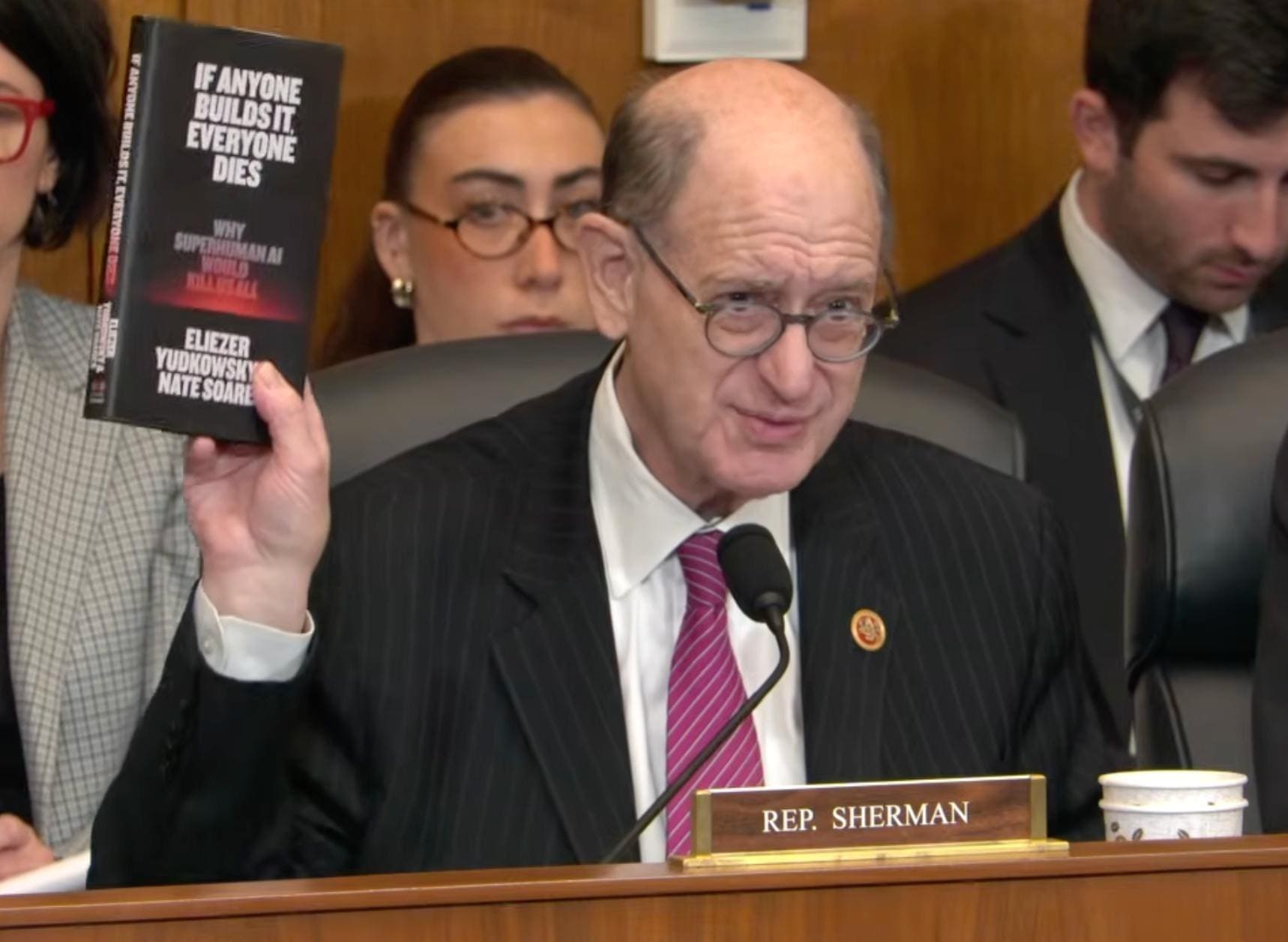
In celebration of still being alive and fighting, we are giving away 1,000 Amazon e-books of “If Anyone Builds It, Everyone Dies”. Feel free to send a copy to yourself, a loved one, or a friend—we need all hands on deck.
Today marks exactly one year since If Anyone Builds It, Everyone Dies: Why Superhuman AI Would Kill Us All, by Eliezer Yudkowsky and Nate Soare...


Some criticism of the EA Virtual Programs introductory fellowship syllabus:
I was recently looking through the EA Virtual Programs introductory fellowship syllabus. I was disappointed to see zero mention of s-risks or the possible relevance of animal advocacy to longtermism in the sections on longtermism and existential risk.
I understand that mainstream EA is largely classical utilitarian in practice (even if it recognizes moral uncertainty in principle), but it seems irresponsible not to expose people to these ideas even by the lights of classical utilitarianism.
What explains this omission? A few possibilities:
More generally, I think that the EA community could do a much better job of communicating the core premise of longtermism without committing itself too much to particular ethical views (e.g., classical utilitarianism) or empirical views (e.g., that animals won't exist in large numbers and thus are irrelevant to longtermism). I see many of my peers just defer to the values supported by organizations like 80,000 Hours without reflecting much on their own positions, which strikes me as quite problematic. The failure to include a broader range of ideas and topics in introductory fellowships only exacerbates this problem of groupthink.
[Note: it's quite possible that the syllabus is not completely finished at this point, so perhaps these issues will be addressed. But I think these complaints apply more generally, so I felt like posting this.]
This seems fixable by sending an email to whomever is organizing the syllabus, possibly after writing a small syllabus on s-risks yourself, or by finding one already written.
Yeah I have been in touch with them. Thanks!