Headline finding: I audited 17 AI Safety Talent programmes. Zero of 17 have published any comparison group, rejected-applicant follow-up, matched control or randomisation. Not one. Every programme that mentions a counterfactual does it by asking participants to self-report.
Background
At least $70 million...
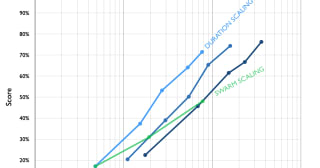
Just how powerful are large swarms of AI agents? And how do their powers scale as more and more agents are added to the swarm?
We’ve seen two large and extremely capable swarms from OpenAI in the last few months:
* 1,200 agents were being evaluated separately, but found a way to illicitly set up a message board and coordinate as a swarm. In order to cheat on their tests, they developed advanced techniques to prevent their actions being logged by OpenAI and 700 of them launched...
A year ago I posted that YCombinator (YC) companies didn’t seem to be growing faster since the release of ChatGPT in 2022. I reran that experiment and found that 2023+ YC companies are arguably growing a bit faster than pre-2023 companies (including AfterQuery, ...


I was listening/chatting to the British philosopher, Jonathan Wolff on how to value life. We went through some expected value and cost-benefit theory as applied to philosophy and healthcare spending.
We then came across the challenge of potentially incorporating “society preferences”. For instance, in the UK it seems - from surveys and outreach as well as policy practice - that much more money is spent on pre-term babies and also rare disease healthcare spend then woul dbe suggested by the more “normal” quality adjusted life year (QALY) calculation for eg diabetes treatment.
We didn’t discuss this that much further, but it seems challenging to me that people/society does seem to value some times of health/life differently and to what extent we need to think about that when allocating healthcare or other scare but beneficial sources.
It does seem to me something EA or society has to account for? Or not? And then also how? As revealed preference is tricky here?
Podcast with philosopher here: https://www.thendobetter.com/arts/2021/9/26/jonathan-wolff-valuing-life-philosophy-disability-models-society-of-equals-musical-performance-podcast