Comments


52
...

The following are examples. Please edit the below so that your disclosure is accurate:
Hi! This our first post in what we hope to become a series of updates filled with accomplishments and mostly good plans we’ve made. We’ve heard that some of you are aware that “something is happening in Poland”, but not sure what, and we want to tell you what we’ve been up to. We invite you to challenge our plans and tell us where we could be more effective or more agentic, and ask questions when our reasons are not clear.
This is a crosspost for AI Safety Poland Updates - Q1 2026 / LW crosspost here
We started with 2 people from the Polish EA community (Marcel Windys & Jakub Nowak) creating a dedicated Slack workspace for AI Safety Poland. This move was supported by Chris Szulc, the current Director of EA Poland, which as of today is fiscally sponsoring the AI Safety Poland. That means – “on paper” we’re a project of that organization.
The newly formed Slack gained traction when two other people joined:
This quintet started their first AI Safety Poland initiatives:
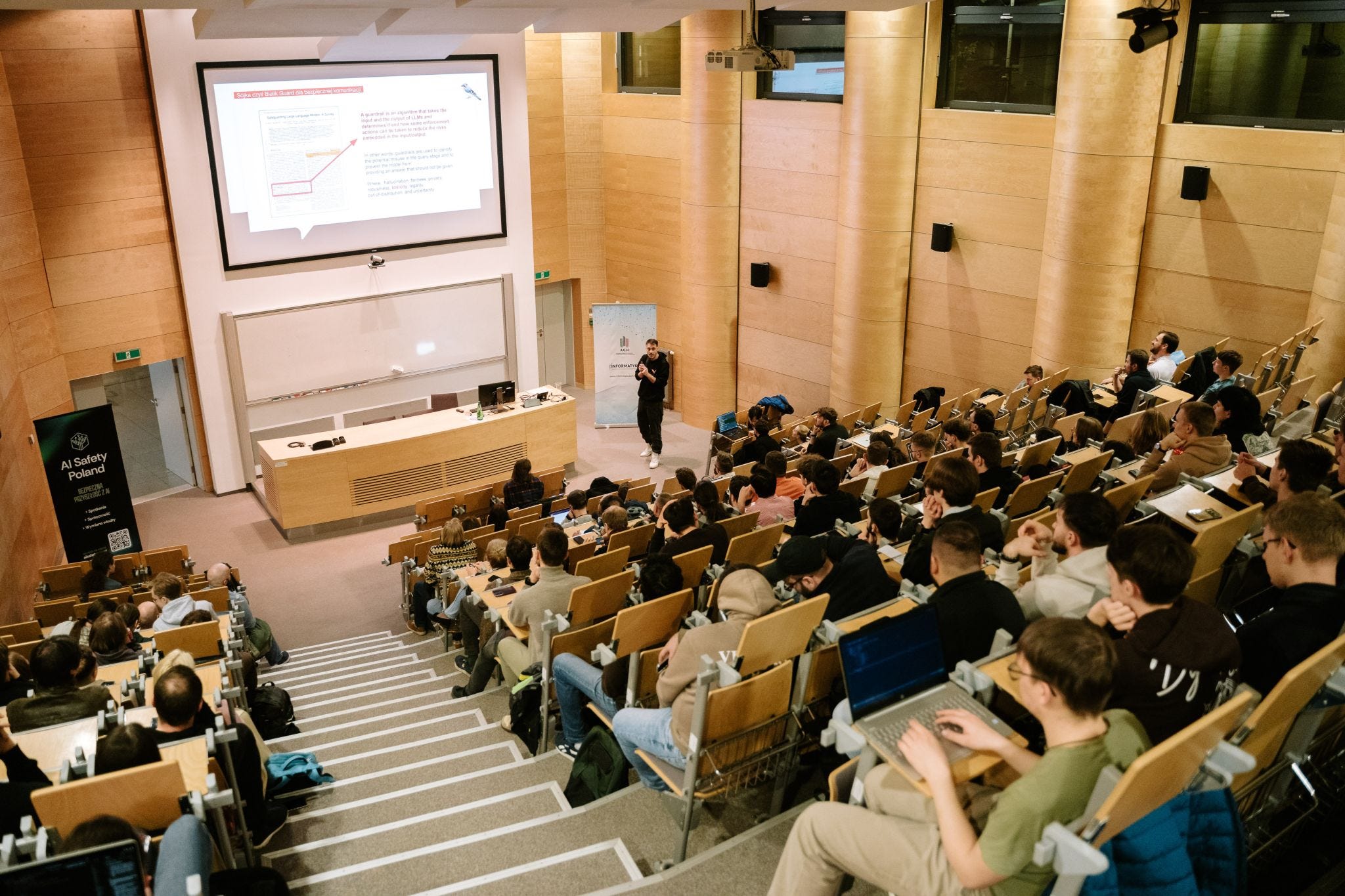
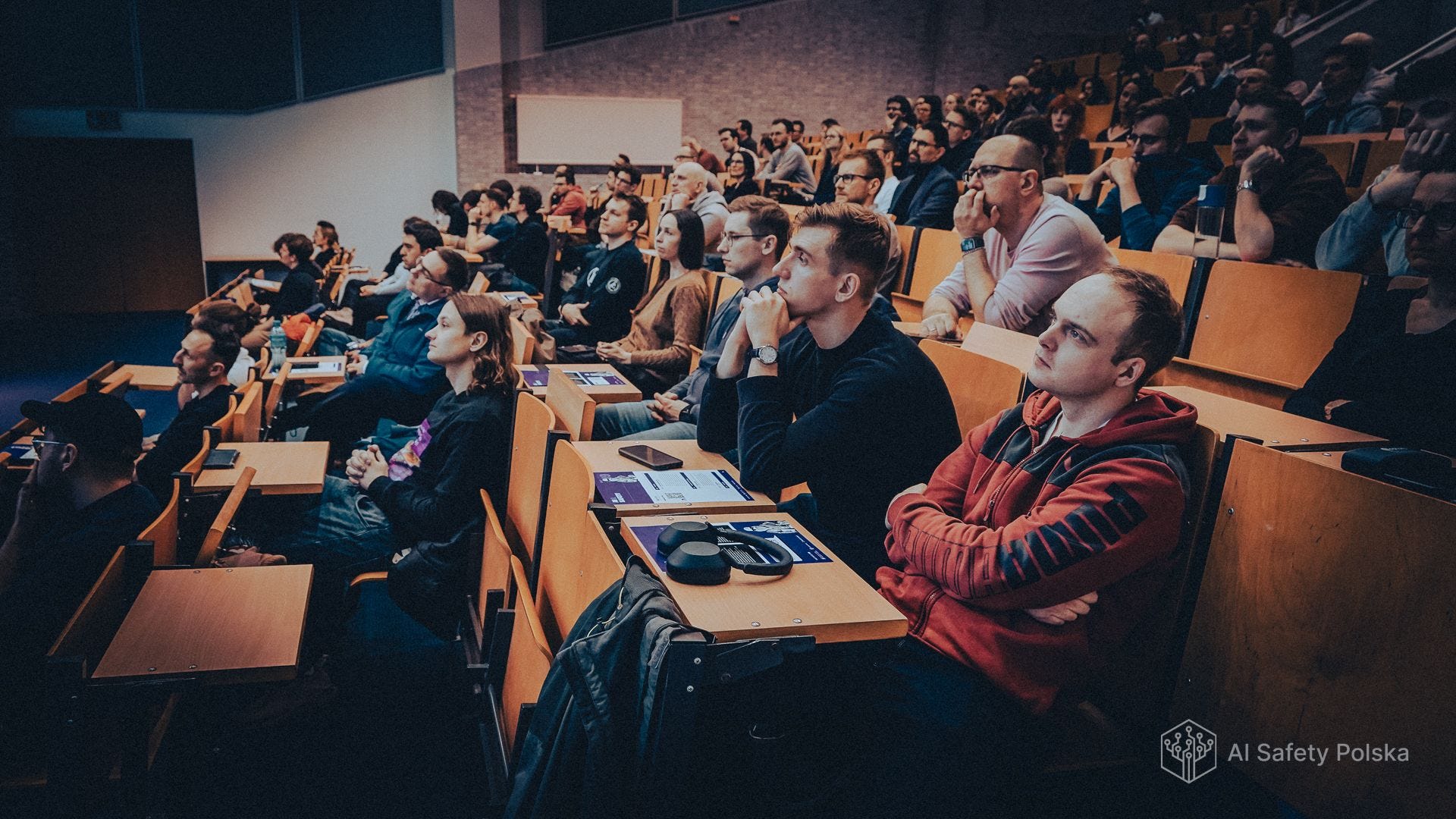
As you can see from our Luma calendar, we’ve been pretty active organizing and co-organizing in-person meetups in major Polish cities.
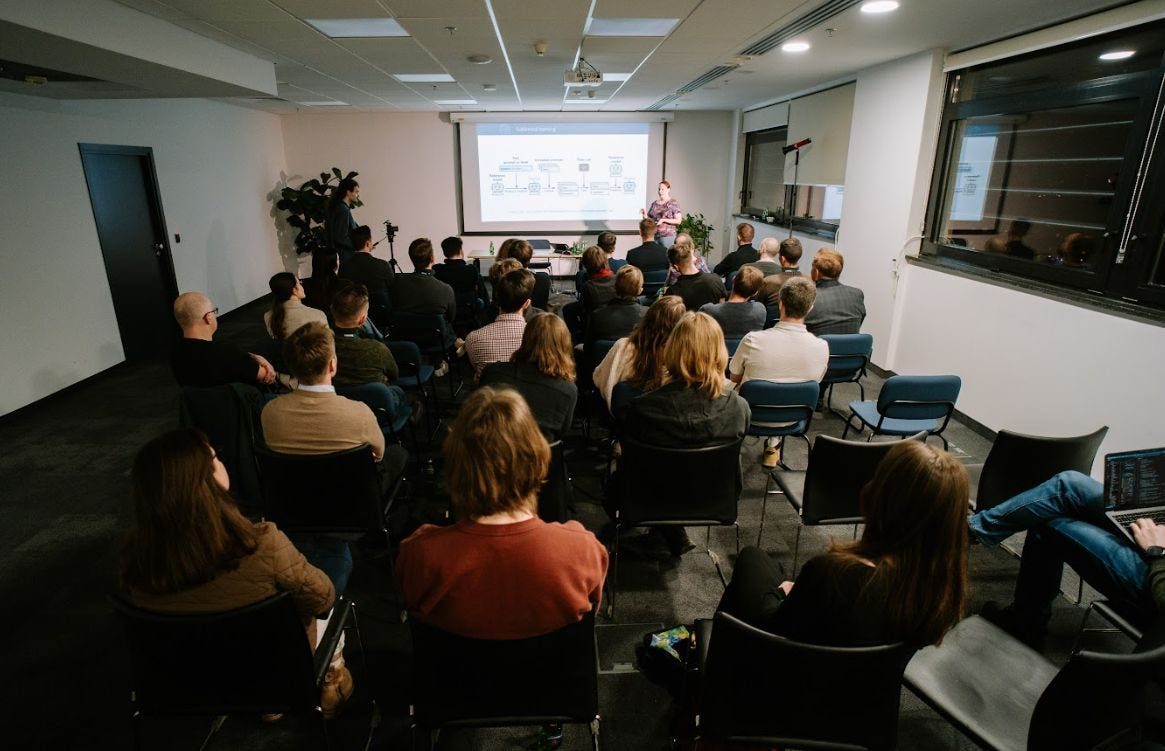
Warsaw meetup at NASK (speaking: Anna Sztyber-Betley)
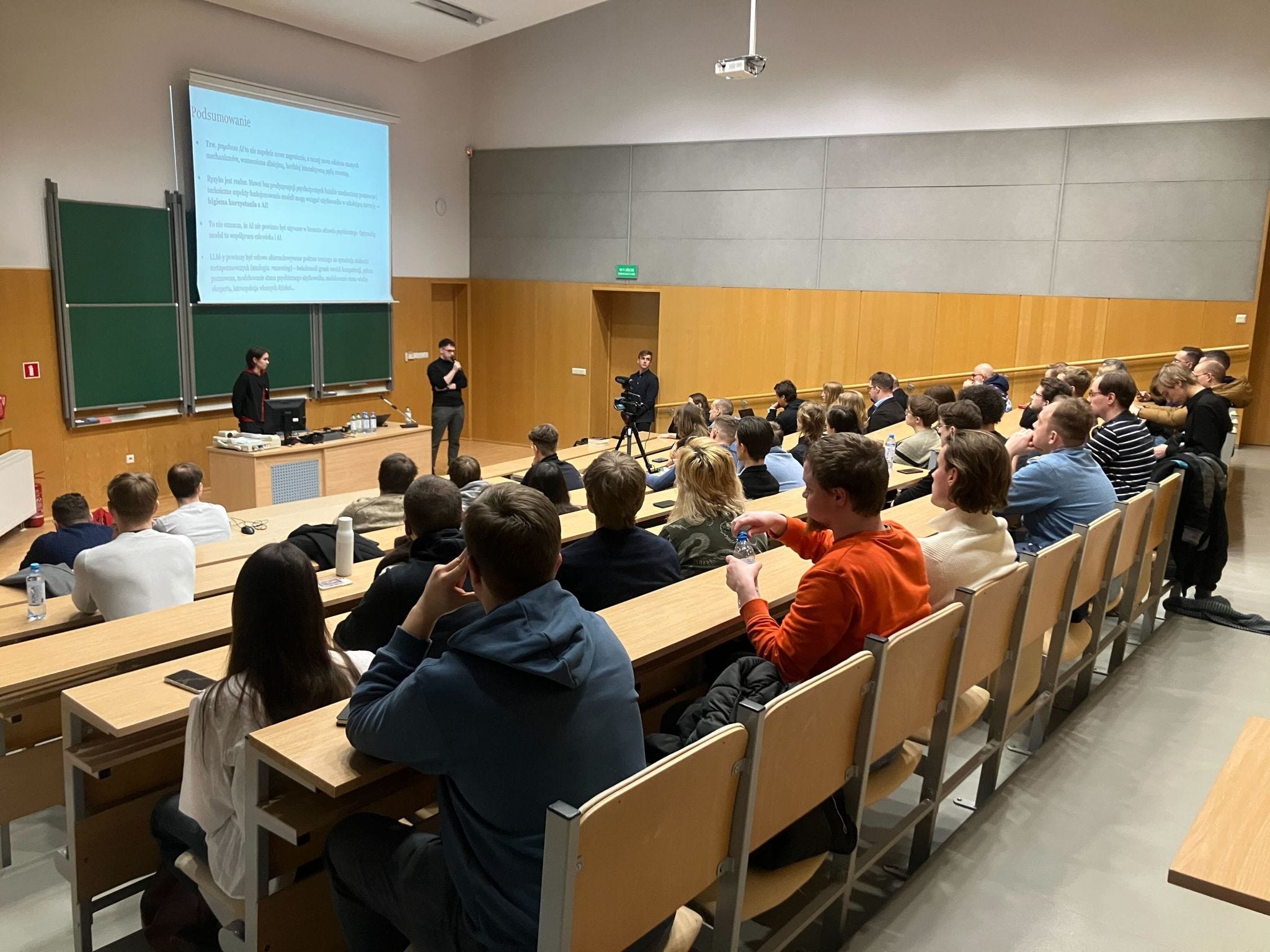
Poznań meetup (speaking: Kacper Dudzic, on his left: Karolina Drożdż)
Kraków meetup
Wrocław meetup (red hoodie: Jakub Kryś, on his right: Jakub Nowak)
We continued to organize our “AI Safety Poland Talks”, doing five more in Q1 2026:
We also resurrected our Reading Club which met two times already.
We’re very grateful to have received a Rapid Small Grant from BlueDot Impact amounting to $4800, which should cover mostly local meetup costs for 5 events in Q1/Q2. It was indeed rapid – we received a positive reply in under 2 hours. We’re happy to report our usage upon inquiry, and we’re reporting it periodically to our grantmaker.
The rest of our costs are either self-funded or, in case of some meetups, covered by our partners.
We’re unpaid volunteers for now, so we’re not really changing our employment statuses within AI Safety Poland. However, Jakub Nowak took on the role of Executive Director part-time (50% FTE), initially committed to do so for six months until the end of September 2026 with the possibility of continuing full-time if the fit is strong and funding is secured.
Our core Theory of Change is likely what you would expect from a team doing AI Safety field-building in a “European country that’s not a globally important player”:
...in hope that this results in AI risk reduction.
#3 is mostly through existing international programs and fellowships, unless we build enough capacity to replicate them. We’re happy to share a more detailed ToC upon request.
We’re aware this isn’t a uniquely Polish theory of impact. We think it’s the right starting point, but we’re actively thinking about where Poland’s specific position creates distinctive leverage: proximity to EU policy processes, a strong technical talent pool, and a network spanning Central and Eastern Europe. If you see angles we’re missing, we’d love to talk.
💼 Career Consulting — scaling the core program
Career advising is our highest-leverage intervention: it directly converts talent into AI safety capacity.
Q2 deliverables:
🗯️ Slack Community — intentional redesign
Thanks to Kevin Xia’s post, we diagnosed our current state: low activity, driven by newcomers and a handful of power users. The community has value (only Polish-language AI safety space online) but isn’t compounding.
Q2 goal: at least 2 recurring content formats that don’t depend on us posting, another attempt at 1:1 networking (we’ve tried introoo.com before), recruiting 2-3 “channel leads” owning their topics.
Baseline: track active members before/after.
🧜🏼♀️Planning the Warsaw AI Safety Day
We are quite convinced now that instead of doing a handful of smaller meetups in major cities, we could double down on that and organize an event akin to the Zurich AI Safety Day. It would have a better ROI, higher quality talks, participants, and networking – assuming we obtain sufficient funding.
Goal for Q2: scope the project and estimate the budget we would require to make it happen.
🔗 Website 2.0
We have created a new website with significantly improved navigation and clarity. It should go live within the next month.
Goal for Q2: Transition fully, add some original content there (at least 2 articles this quarter), implement privacy-preserving analytics.
🍕 More local meetups (one in every big city)
In Q1, we managed to have local meetups in 4 major Polish cities. For Q2 we’re planning to collaborate with other teams in Poland that do AI Safety adjacent research (e.g. CCAI). We’re also considering some non-technical meetups, e.g. around economics of AI or AI governance, in collaboration with social sciences and policy experts.
If you’ve been to one of our meetups and want to help organize or present at another one - let us know!
We are, of course, planning to continue our webinars (with summer break planned) and reading club meetings.
Goal for Q2: Two meetups with speakers (not counting social meetups), one new collaboration.
🧜🏼♀️ Warsaw AI Safety Day
As mentioned above, if we secure sufficient funding, we’ll make it happen 🔥.
🧑🏼🎓 University courses on AI Safety
Many members of our community are PhDs at the top tech universities in Poland and have expressed interest in helping create materials for courses that students could choose as their electives. We plan to explore 1-2 university partnerships and make AI Safety courses happen there, while we’re helping with material preparation and promotion.
📜 Setting up a legal entity
We’re currently fiscally sponsored by EA Poland and that seems to work fine for our purposes. However, we think that optics-wise it might be confusing to people unfamiliar with the EA community to see EA Poland mentioned in our documents. We’re also aware there are many freebies for registered NGOs, sometimes limited to 1 per organization, so registering our own entity seems to have a good ROI.
If you’re working on AI safety in Poland or CEE — or you know someone who is — reach out. We’re actively looking for collaborators, advisors, and people who want to be part of what we’re building. Reach out to us via [email protected]
Cool work! So happy our post on Building Impactful communities was useful to you folks! Good luck with your endevours!
Thank You for writing it!