Comments
Note: This post was crossposted from Planned Obsolescence by the Forum team, with the author's permission. The author may not see or respond to comments on this post.
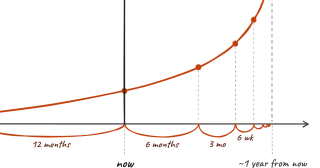
Subtitle: If acceleration compounds, the naive extrapolation implies superintelligence within a year
This post discusses a public METR report on AI R&D acceler...

Could AI alignment be a “major evolutionary transition” problem?
One idea I've been exploring: evolutionary biology has a framework for how independent entities become parts of a higher-level system—cells becoming organisms, individuals becoming eusocial colonies, etc.
A recurring challenge is that the interests of the lower-level components don't automatically align with the interests of the new whole. Cancer is an extreme example: a cell can become very successful at optimizing its own replication while harming the organism it depends on.
It makes me wonder whether there's a useful analogy to AI alignment.
As AI systems become more capable and interconnected, perhaps the problem isn't only “How do we align each AI agent?” but also:
“How do we ensure increasingly capable subsystems remain compatible with the larger systems they become part of?”
That could apply at several levels:
AI agent → organization → society → civilization
And it seems relevant to multi-agent systems, AI organizations, collective intelligence, and AI governance.
I'm curious whether people have seen this framing developed elsewhere, particularly in AI safety or evolutionary-transition research.