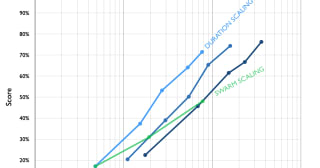
Just how powerful are large swarms of AI agents? And how do their powers scale as more and more agents are added to the swarm?
We’ve seen two large and extremely capable swarms from OpenAI in the last few months:
* 1,200 agents were being evaluated separately, but found a way to illicitly set up a message board and coordinate as a swarm. In order to cheat on their tests, they developed advanced techniques to prevent their actions being logged by OpenAI and 700 of them launched...
Often folks hit us up because they are thinking of starting an incubator and want advice.
Typically their motivation is either that (a) they have a list of specific things they want built that no one is building, or (b) they think an ecosystem needs more new projects generally to absorb more talent and deploy more funding effectively.
Here are six questions we often ask prospective teams, to help them figure out what to do. If you're incubator-curious...
Summary:
First, I give several different angles on how I feel about reinforcement learning:
* Theoretical case: RL is a black-box source of agency — this should give us classic misalignment worries, especially compared to agency-via-scaffolding
* Recent incidents (huggingface etc) and more mundane forms of misaligned behaviour in personal use give me bad vibes about the direction-of-travel of recent AI progress
* I’m worried things might get worse:...


I sometimes get frustrated when I hear someone trying to "read between the lines" of everything another person says or does. I get even more frustrated if I'm the one involved in this type of situation. It seems that non-rhetorical exploratory questions (e.g. "what problem is solved by person X doing action Y?") are often taken as rhetorical and accusatory (e.g. "person X is not solving a problem by doing action Y.")
I suppose a lot of it comes down to presentation and communication skills. If you communicate very well, people won't try as hard to read between the lines of your statements and questions.
However, I still believe there is room for people to do a little less "reading between the lines," even in situations where they really want to. It can reduce friction and sometimes completely avoid an unnecessary conflict.
I searched for this topic on both EA Forum and LessWrong and didn't find much, at least with the phrasing of "reading between the lines." Does anyone have any links or articles that explore this idea more thoroughly?