Comments
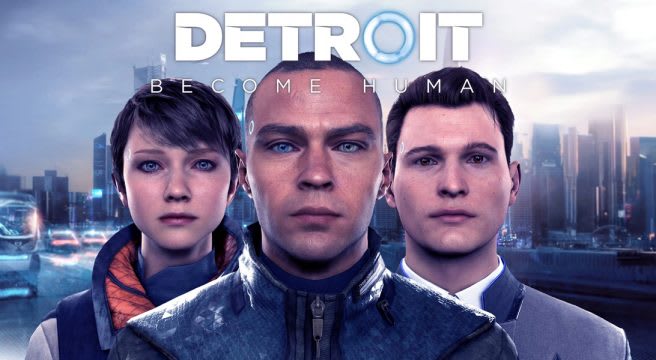
Detroit: Become Human (2018). © Sony Interactive Entertainment Europe, developed by Quantic Dream.
TLDR
I recently finished Detroit: Become Human, a 2018 interactive story video game about androids in a near-future Detroit. I was surprised by how much of it overlaps with things people on this Forum have been debating about AI, like whether AI systems could be moral patients, how we'd ever know, and who gets to control them. The game isn't perfect (e.g. its use of slavery and civil rights imagery has been fairly criticised), but I still recommend it, especially if you're curious about AI welfare but find formal discussions a bit dry.
On spoilers: I only cover the game's premise here, so this should be safe to read before playing.
Why a video game?
I've been involved in EA for many years, and I didn't expect a video game to make me think this much about AI. While playing, I kept coming back to the same questions: Is a machine always just a machine? Could one ever become conscious, and how sure are we that none ever will? And if one did, would it feel pain, or anything else?
Without giving away the fun bits, the game is set in Detroit in 2038, where a company called CyberLife sells human-like androids that do a lot of the city's work. Some of them start behaving in ways their owners didn't expect, and you play as three of them. To be fair to earlier fiction, none of these questions are new. Karel Čapek’s 1920 play R.U.R., which gave us the word “robot”, is about artificial factory workers who eventually turn on the humans who made them. More recently, Channel 4’s Humans (2015) follows a family who buy a humanlike household “synth”, only to find that some synths may be conscious.
The difference for me was having to make the choices myself, often with a timer running, and then seeing at the end of each chapter how many other players had chosen the same thing. Quantic Dream says the game has sold over 15 million copies, so I suspect it's how quite a lot of people first came across these ideas.
What it made me think about
The game keeps putting you in front of characters whose inner lives are unclear and asking how you'll treat them. Joe Carlsmith's The stakes of AI moral status makes the case that getting this wrong could be a very big mistake, and the 80,000 Hours profile on the moral status of digital minds is helpful on why mistakes in both directions (caring too much or too little) are costly.
The game also has its own fictional tests for whether an android has an inner life. They make for good drama, but I don't think they hold up in real life. Robert Long's What to think when a language model tells you it's sentient explains why: an AI's reports about itself aren't a reliable guide, and you'd need to look at how it actually works. Rethink Priorities' Digital Consciousness Model is one attempt to do that, and one thing I took from it is how much the answer changes depending on which theory of consciousness you start with.
Part of the game story is about an AI that's meant to serve the company that built it, and that one company makes every android in the country. This reminded me of Lucius Caviola's How do AI welfare and AI safety interact?. Things that help keep AI safe, like monitoring, retraining and being able to shut it down, could also count as harms if the AI turns out to be a moral patient. His later post, Open strategic questions for digital minds, looks for actions that would be good either way, which I found really helpful. The game also left me thinking about how much power ends up with whoever builds and controls these systems, which Forethought's AI-Enabled Coups report looks at in much more depth.
There's an optional survey inside the game, and in a June 2018 snapshot of the results, around 72% of players said technology could become a threat to mankind. This can be looked at together with the Sentience Institute's AIMS survey of US adults in 2023, where 71% agreed that sentient AI deserves respect, but 69% also supported banning its development. Neither sample is perfect, but I found it interesting that people can feel sympathy for AI and yet still not want it to be built.
Where it falls short
The biggest problem, in my view, is how much the game borrows from the imagery of slavery, the civil rights movement and other atrocities. Plenty of critics found this crude, and I think they have a point. I also think it's a useful reminder for us. Comparisons between AI and real historical oppression can be persuasive, but they can also trivialise real suffering and put off the people whose history is being borrowed.
The writing is heavy-handed at times, too. And the game treats having an inner life as more or less an on/off switch, whereas the research I've read treats consciousness, welfare and agency as separate questions, and none of them seems to be all-or-nothing.
Some people will reasonably think a commercial video game is the wrong place to start on questions this serious, and that it might make people more confident than they should be. Others might doubt that AI welfare deserves much attention yet, and JWS's post Making AI Welfare an EA priority requires justifications that have not been given makes that case well. I think both are fair points. On balance I still think fiction is worth engaging with, because it's probably where a lot of people form their first impressions, followed by further reading and discussions.
My take
I'd recommend the game to anyone here who likes story-driven games, with the caveats above. I don't think it should change anyone's view on whether today's AI systems are conscious. But it did make me practise deciding how to treat something when I didn't really know what it was, and I suspect that's something more of us will have to do. I was surprised by the percentage of my own choices following evidence vs. emotion.
A few questions I’ll leave for readers:
- If you've played it, did your choices match what you actually believe about AI moral status?
- Is there a stable position that treats AI systems as possible moral patients while still keeping strong controls like monitoring and shutdown?
- What other games or fiction would you recommend on these questions?
Practical notes
- Platforms: PlayStation 4 (also playable on PS5) and Windows, via Steam and the Epic Games Store.
- Playtime: HowLongToBeat lists about 12 hours for the main story. One playthrough is enough for this discussion, though replaying a chapter or two shows how much the branches differ.
- Content warnings: domestic abuse including violence towards a child, suicide, graphic violence, and imagery drawing on slavery, segregation and genocide.
- Controls: some sections rely on quick button prompts; there is a less demanding control mode.



Thanks for sharing that! I was actually exploring that topic from an animal welfare perspective recently, i.e., can video games lead to shifts in perspectives, similar to documentaries. I'd bet yes since playing a character might lead to more perspective-taking.
Some examples of games having tried this in the animal welfare space:
https://store.steampowered.com/app/898890/Endling_Extinction_is_Forever/
https://store.steampowered.com/app/2768030/Saborus/
I'm curious: Which elements of the game had most impact on you rethinking AI welfare? Was it the forced choice making you describe? First-person perspective? 3D? Storyline? Curious!
Thanks very much for the two recommendations - I'll check them out!
It was indeed a combination of the first-person perspective and forced choice that I knew would make a difference. This made me think: (1) it's me in the story, (2) I have to decide, and (3) my decision actually matters. These were powerful factors that brought me closer to the issue than being a ~bystander.