TL;DR:
- When we started Rethink Priorities (RP) in 2018, our mission was, simply put, to close the knowledge gaps that stopped people from improving the world as much as they could. That hasn’t changed much, but the landscape we’re doing it in is shifting.
- In 2027, we plan to grow our core GHD, Animal Welfare, and Worldview Investigations teams to take on emerging priorities across causes, including those that the forthcoming transformative AI is creating.
- We’re also making 3 new strategic bets:
- Scale the Cross-Cause Fund to $50M+ in donations, so the new philanthropic capital is allocated across causes through explicit, research-based modeling to maximize impact.
- Launch a new AI Strategy Program dedicated to identifying and acting on high-leverage, neglected strategies for navigating transformative AI (TAI).
- Grow the Special Projects program to onboard 10 new projects a year (to speed up launching promising initiatives and organizations).
- We’re putting unrestricted funding behind these. Each department will post its plans and funding needs during Marginal Funding Week. Here, we present the high-level strategy they’re driven by.
When Peter Wildeford and I co-founded Rethink Priorities in 2018, we wanted to do something very specific: close the knowledge gaps that blocked philanthropists, policymakers, and organizations from acting. Our ultimate aim has always been to help secure a flourishing existence for present and future beings, human or nonhuman. That aim hasn’t changed, but the circumstances we’re pursuing it in have.
The US has cut foreign aid, creating a $60 billion gap in global health funding. Although many philanthropists have stepped up to fill it, and donations to cost-effective interventions are growing, we continue to uncover new areas that remain untackled. Industrial animal farming is forecasted to grow, but in an AI-transformed economy, it could take forms that no existing advocacy was designed for. Underneath it all, fundamental questions remain unresolved: how much does the future count, how do we weigh suffering across species, or how would we know if AI is conscious? RP was built to ask these hard questions and continuously improve our answers. From the beginning, it’s mattered to me that we follow the evidence, adapt as the landscape changes, and don’t settle for convenient answers or comfortable ways of operating.
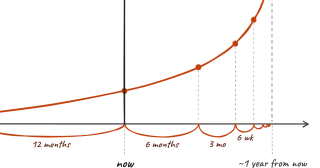
That’s why we’re also looking at AI capabilities advancement, which is faster than almost anyone had planned for. The risks are no longer entirely hypothetical, and the most valuable things to do will shift faster and in ways no one has fully mapped out. That has two consequences for us. First, someone has to keep watch on the space to find high-leverage, neglected strategies that are being missed, and then act on them. Second, acting is often slow, and that is exactly what, as a movement, we can’t afford. Starting new projects can take months of legal, finance, and operational setup before anyone does the actual work, and we have seen with projects like Apollo Research and others that we can collapse those timelines. Two of our three bets for 2027 stem directly from this; our new AI strategy team will focus on finding those gaps, and the Special Projects program will help the initiatives tackling them launch faster.
The third bet comes from a different change. We’re all facing an extraordinary opportunity. Very large amounts of philanthropic capital will soon enter the space, expected to fund the causes and interventions we’ve spent years identifying as most impactful. I hope the same commitment RP has to following the evidence and best reasoning will guide where this money goes. I feel a personal responsibility to help make that happen.
As the money arrives, the best place to give will keep moving, and I want to ensure that the new philanthropic capital is used well. By well, I mean that, to the extent possible, any money flowing into charitable causes is allocated impartially to where it will yield the most impact, while accounting for empirical, normative, and meta-normative uncertainty. In the current financial and intellectual climate, this means not letting prioritization heuristics or a confidently held but unexamined ethical view make quick decisions for us. I say this as a member of this community, as a researcher who has worked on cause prioritization for the past decade, and as a person who has updated themselves.
I remember that in 2015 I was the kind of person who argued, incorrectly, that we should act on a single moral view, largely pursuing the greatest happiness for the greatest number. My view has shifted to the point that I recently gave a talk about why we should take uncertainty of all sorts seriously and how to account for it. This transformation didn’t happen through the mere passing of time, but through reading even more about crucial considerations for RP projects (more than 20 papers on moral weights just to review Jason Schukraft’s work, and a similar number on aggregation methods). Through regular engagement with experts in relevant cause prioritization topics who tend away from 100% confidence on these issues. And through a nearly daily habit of weighing how much to trust different kinds of empirical evidence, from RCTs to causal inferences from observational data, and turning the same scrutiny on philosophical arguments.
In the following sections, I’ll outline how we at Rethink Priorities read the current landscape and what we intend to do about it in 2027.
How I view RP’s role
RP’s organizational vision is deliberately broad: it is to ensure “a flourishing existence for present and future beings.” That includes humans, nonhuman animals, and other potentially morally relevant beings. We are a think-and-do tank. We conduct research that fills key knowledge gaps and identifies new interventions, and we build infrastructure that supports the efforts of impact-focused organizations, funders, and other relevant stakeholders.
Where we think we have a comparative advantage:
- Cause prioritization: We’ve built and keep developing key tools and internal expertise crucial to addressing key prioritization questions, including the Cross-Cause Model, the Moral Parliament tool, and the Moral Weight Project. We’re possibly the only organization currently systematically comparing interventions across causes via explicit modeling.
- Working upstream on novel questions: We take on problems where the evidence is thin, but the potential impact could be large, such as invertebrate welfare, the impacts of AI on global health in LMICs, or digital consciousness. In each area, we produce initial research tackling key cruxes to facilitate downstream decision-making. We’ve helped shape new fields of research or advocacy when relevant, given the available evidence base and moral uncertainty.
- Turning research into well-informed decisions: We adapt to what each field needs to advance impact, whether that’s commissioned research for large foundations, academic research, or regular convenings for key organizations. For example, in 2026 we provided strategic advice to 48 stakeholders (including funders and partners), and hosted 4 in-person strategy events.
- Providing infrastructure for new projects: Since 2022, our Special Projects team has accelerated and incubated high-impact initiatives by providing fiscal sponsorship, tailored infrastructure, and operational support. From the first grant a project secures onward, we handle the operational burden so founders can focus on their mission. Former fiscal sponsees include Apollo Research, Truthful AI, and Epoch.
Our 2027 strategy: Expanding our core + 3 new strategic bets
Alongside our core research, we're making three new programmatic bets on how RP can better turn research into impact and enable better decision-making. We want to improve how funding is allocated across causes, help promising organizations get started, and identify neglected strategies for transformative AI.
Expanding our core departments’ teams and focus
We are growing our core departments’ teams to address emerging priorities across their cause areas, including those shaped by uncertain AI futures. We also want to identify high-leverage funding and talent gaps, and step in to fill them where others cannot or will not.
In the year ahead, you can expect our Global Health and Development, Animal Welfare, and Worldview Investigations teams to:
- inform key decision-makers on the implications of transformative AI within and across causes, for example, by finding high-leverage areas for AI for Good in low- and middle-income countries and identifying promising interventions for animals in a range of AI scenarios
- push our frontier research forward by further developing our work on animal moral weights and digital consciousness
- grow talent and new project pipelines for neglected animal welfare
- pivot toward doing even more independent research (as opposed to commissioned projects) in global health and animal welfare, further establishing our voice in those spaces
- bring on more domain experts through collaborative projects, contracts, and hiring to help us close knowledge gaps across crucial projects
- continue stakeholder coordination (convenings, meetups, funding circles) across the most promising areas
- research other neglected topics
Each of our departments has ambitious plans for 2027, and how it can direct its resources to do the most good. Details of these plans and funding needs will be posted by each department separately–many of them during Marginal Funding Week. In the meantime, see our 2026 key achievements for more on the strategic value we provided in the past year.
Despite the imminence of transformative AI, we think our workstreams within other causes are valuable, and that, in general, some non-AI work becomes even more important because of AI or can support AI safety (e.g., societal resilience interventions or democracy and biosecurity work). We also think that, in order to maximize impact under uncertainty, one should focus on a diverse portfolio of approaches to doing good that’s robust across a wide range of future scenarios.
In addition, we expect that, as more money comes into the philanthropic space, there will be at least as much, if not even more, need for within-cause-area research support. We’ve built strong teams that can take on the most pressing problems and provide key insights and thought leadership for this community.
The 3 new bets
Given our in-house expertise, funding opportunities to scale crucial teams, and the current AI and philanthropic landscape, we decided to take three strategic bets in 2027:
- Growing and improving the Cross-Cause Fund (CCF) to reach $50M in donations
- What: Launched in May 2026, RP’s Cross-Cause Fund pools donors' contributions and allocates them across causes, using a Cross-Cause Model to inform decisions about where funding can do the most good under uncertainty. It’s a research-based, donor-advised fund hosted at Charityvest, advised by RP at no fee, and has moved over $700K since its inception across GHD, AW, and GCRs.
- Our plan: We’re currently working on several improvements to the model across worldview inputs, cost-effectiveness data, monitoring and evaluation, and more (read more about our plans to improve and scale the CCF). We will publish results of this work as we go. Our ambitious aim is to secure $50M+ in donations to the CCF by the end of 2027.
- Why now: Overall, our cross-cause prioritization work is filling a crucial gap for the movement. As more money now enters the charitable space, rigorous cause prioritization becomes higher-stakes. That’s due to the potential scale of the impact that money could achieve, the lack of robust giving strategies, the fast-diminishing marginal returns of many interventions, and the potential coordination issues leading to suboptimal allocations between saturated interventions while others remain neglected. The Cross-Cause Fund helps prevent the latter two issues to maximize impact under uncertainty.
- Launching a new AI Strategy Program dedicated to identifying and acting on high-leverage, neglected strategies for navigating transformative AI (TAI) and setting up a new internal project focused on the Economics of TAI.
- What: RP's newly launched AI Strategy Program (with a new, dedicated team) focuses on finding high-leverage ideas for navigating TAI, converting them into actionable interventions and, further down, incubated projects or organizations run internally or via RP's Special Projects program.
- Our plan: In 2027, the program led by Kyle Gracey will rapidly identify promising strategies and help accelerate the most impactful projects that come from them. Alongside Kyle, Kieran Keohane, the first internal project leader, will focus on the team’s first big bet: a new effort on the economics of TAI, which emerged from the program's first strategy scan. This work starts with a fast-turnaround study on the economics of pacing frontier AI development. Its 2027 aim is to prove its value and raise funding to scale. The team has also recently hired three analysts.
- Why now: With AI capabilities advancing rapidly, the prospect of recursive self-improvement, and growing tensions between AI companies' commercial incentives and calls to slow frontier development, we think there is a reasonably high chance of transformative AI arriving soon. As the field develops, we think it is increasingly important to reassess where the largest gaps are, which neglected strategies deserve more attention, and what new initiatives should be launched to implement them. Our experience with strategic landscaping puts RP in a good position to identify these problems and inform funding and field priorities, while our Special Projects team and wider research and operational infrastructure allow us to launch high-impact initiatives to address them. We’ve also already uncovered the first major gap: the lack of a dedicated economic analysis unit to inform high-stakes policy decisions at pace. We also see significant gaps in measuring AI’s impact on society and applying economics to help mitigate AI’s catastrophic risks.
- Substantially scaling our support for new and upcoming projects through our Special Projects program
- What: RP’s Special Projects (SP) team brings our operations expertise to other high-impact initiatives. By providing fiscal sponsorship and handling day-to-day tasks across finance, operations, and HR, we enable these initiatives to focus on their core activities. So far, RP has successfully supported 15 projects in total via this program.
- Our plan: We will build systems and capacity to onboard 10 additional projects per year going forward. We recently received a grant from Coefficient Giving to grow our team to that effect.
Why now: While the landscape of philanthropy and GCR mitigation is changing quickly, launching new organizations is still slow. We have the operational expertise and the infrastructure to help promising projects speed up, as well as shift the focus of funders and key team members to where it matters most; e.g., Apollo Research told us we helped them launch far more quickly than they could have on their own. And because some of the problems we aim to solve are only getting more urgent, removing blockers to launch and achieving operational set-up earlier yields even more counterfactual impact gains.
Putting our money where our mouth is
Importantly, we are taking these bets because we think, on our best all-things-considered judgment, they are among the most impactful ways RP can help right now. The three bets are valuable under many worldviews, and our core programs span across causes. That makes RP’s portfolio robust under uncertainty, which is also what we recommend to impact-minded donors. We are putting our money where our mouth is: we’ve dedicated a significant share of our unrestricted funding to these programs in 2026 (a projected three-quarters over the full year).
These plans are not set in stone. We try to make the best judgments the evidence allows and to update with new information. Our new bets are no exception, and we will revisit them if and when the evidence changes.
A final thought
Nothing would make me happier than evidence that things would go just as well without RP: that we’ve solved all the major challenges in prioritization (both cross-cause and within-cause), or that high-impact groups working on some of the world’s most pressing issues could launch as quickly without us. I’d then readily move on to tackling other problems.
Until that day, RP will keep asking the hard philosophical and empirical questions to identify new pathways to impact and keep helping others think through the most important problems.
Support our effort in tackling complex, neglected issues
Give to RP so we can remain independent, impact-focused, and agile in a fast-shifting environment.
DonateInterested in donating over $10K in flexible funding? Book a chat with our Development team.
For any other questions, please contact [email protected].
Acknowledgements
Thank you to Elisa Autric for help with writing this post; Ula Zarosa, Jonathan Nelson, and Janique Behman for feedback; and Shane Coburn for editing.