Last updated: 20/1/2022
This is the second post in my sequence on moral anti-realism (see my previous post). This second post should work perfectly when read as a standalone piece.
My motivation to write this post
For this post, I set out to describe and analyze what arguably constitutes the most fundamental disagreement in philosophy: realism versus anti-realism, not only in metaethics but in general. In one form or another, this disagreement also shows up in the philosophy of mind, personal identity, aesthetics, epistemology, the philosophy of physics, and so on. Belief in different types of realism is correlated (see the appendix), so I see significant benefits to also discussing other types of realism. For instance, moral philosophers on both sides of the realism/anti-realism divide have drawn comparisons from different domains in support of their positions. To address those comparisons, prior discussion of those other domains is helpful. However, I tried to structure this post to be more than a (second) introduction. Even though my aim is to neutrally describe the core differences between realism and anti-realism, in doing so I will already present some of my main arguments for anti-realism. My most persuasive “argument” against (moral) realism isn’t any single knockdown objection, but rather my overall impression that when we go from realism to anti-realism, we don’t have to give up anything worth wanting. I expect (moral) realists to disagree with that sentiment, in part because I could imagine that many may not have been motivated to explore the option space for moral reasoning under anti-realism (“to make anti-realism work”). I wrote this post to make what I perceive to be underappreciated points about how realism comes with some surprisingly non-trivial claims, and how anti-realism doesn’t have to mean throwing up one’s hands saying “anything goes.”
Summary
- We tend to have the feeling that disagreements on what’s “moral,” “conscious,” “(epistemically) right,” and so on, go beyond semantics, or are unambiguous. The discussion between realists and anti-realists is about the degree to which this feeling is accurate.
- Anti-realists don’t deny that domains in question (morality, philosophy of mind, epistemology, etc.) have some “structure.” Instead, they disagree with the realists on how to interpret and relate to that structure.
- While the typical realist believes in the notion of an unambiguous speaker-independent (“objective”) reality, the typical anti-realist would consider this a confusing concept because we have to interpret reality, and interpretations about a domain can only be formed on top of subjective evaluation criteria.
- There’s a category of realisms built around what David Chalmers has called “bedrock concepts:” concepts like “moral” or “conscious” or “(epistemically) right.” Bedrock concepts are assumed to be meaningful, but also inexplicable—in the sense that we cannot explain them in neutral terminology. Anti-realists are generally skeptical of bedrock concepts, whereas many realists cannot imagine doing philosophy without them.
- For many types of realism, the only arguments in favor are appeals to widely distrusted essentialist intuitions. (There are also so-called naturalist versions of realism that don't rely on bedrock concepts; I won't focus on them in this post.)
- Not all types of realism rest on thin assumptions. Arguably, bedrock concepts related to (various kinds of) normativity, as well as bedrock concepts related to consciousness (“qualia”), are backed by stronger arguments. Realists about normativity argue that normative anti-realism is self-defeating, and realists about qualia argue that qualia anti-realism is impossible.
Points of agreement
Discussions on the following domains all have something in common:
- The presence or absence of consciousness
- Morally good or bad actions
- Beautiful or ugly art
- The preservation (or lack thereof) of personal identity (for instance after going through a teletransporter)
- Epistemically right or wrong reasoning
- The truth or falsity of scientific theories
Discussing the topics above tends to be accompanied by the impression that we are accomplishing something substantive, i.e., that we can make unidirectional intellectual progress and that corresponding disagreements can go beyond personal opinion. (The strength of this intuition may vary depending on the person or the field in question.) Very crudely, “realism versus anti-realism” is the philosophical discussion about the degree to which that impression is appropriate.
Going by connotations alone, we might at first think that realism means that a domain in question is real, whereas anti-realism implies that it’s something other than real (e.g., that it’s merely imagined). Although accurate in a very loose sense, this interpretation is misleading.
It’s misleading in that it suggests the discussion is analogous to conversations about the existence of God. But philosophers call this “theism versus atheism,” instead of “realism versus anti-realism about God.” There’s a cliché about atheists continuing to talk about God even after they quit believing. Still, this cliché only refers to “talking about God” to convince others (or to show off one’s reasoning)—which is different from continuing to “talk about God” in the interest of figuring out God’s true nature. Typically, when someone stops believing in God, they also stop talking as though God exists. As far as private purposes are concerned, atheists don’t generally refine their concept of God; they abandon it.
Going from realism to anti-realism works differently. (Of course, not all anti-realists think alike; and many people may change their opinions in the other direction, too.) Rejecting realism for a domain neither entails erasing the substance of that domain, nor (necessarily) its relevance. Anti-realists will generally agree that the domain has some relevance, some “structure.” For instance, anti-realists about morality may still be interested in (and moved by) moral arguments, anti-realists about epistemic facts may still care about how to reason, and anti-realists about consciousness may still be interested in the latest expert survey on invertebrate sentience.
Points of disagreement
There’s agreement on the domain in question having some structure. The disagreement comes down to the correct way to relate to that structure. While the realists believe that there are speaker-independent facts directly about the domain in question, the anti-realists deny this.
The existence of “speaker-independent facts” would mean that the domain in question lends itself to only one interpretation: the interpretation that holds true because it’s true. Another way to express this sentiment is that there’s an interpretation that exists “prior to thought” (Boyd, 1998).
Not all anti-realists think alike, but those who endorse anti-realism about most (or even all) the contested domains are especially likely to reject the notion of speaker-independent standards altogether. This rejection results in a philosophical framework grounded in merely speaker-dependent standards. In such a framework, we need to specify our criteria of evaluation before we can meaningfully discuss what’s true or false about a domain. Once those evaluation criteria (“standards”) are stipulated, then we can evaluate claims. In this sense, the claims can be true or false, but only in relation to subjectively (“speaker-dependently”) chosen standards.
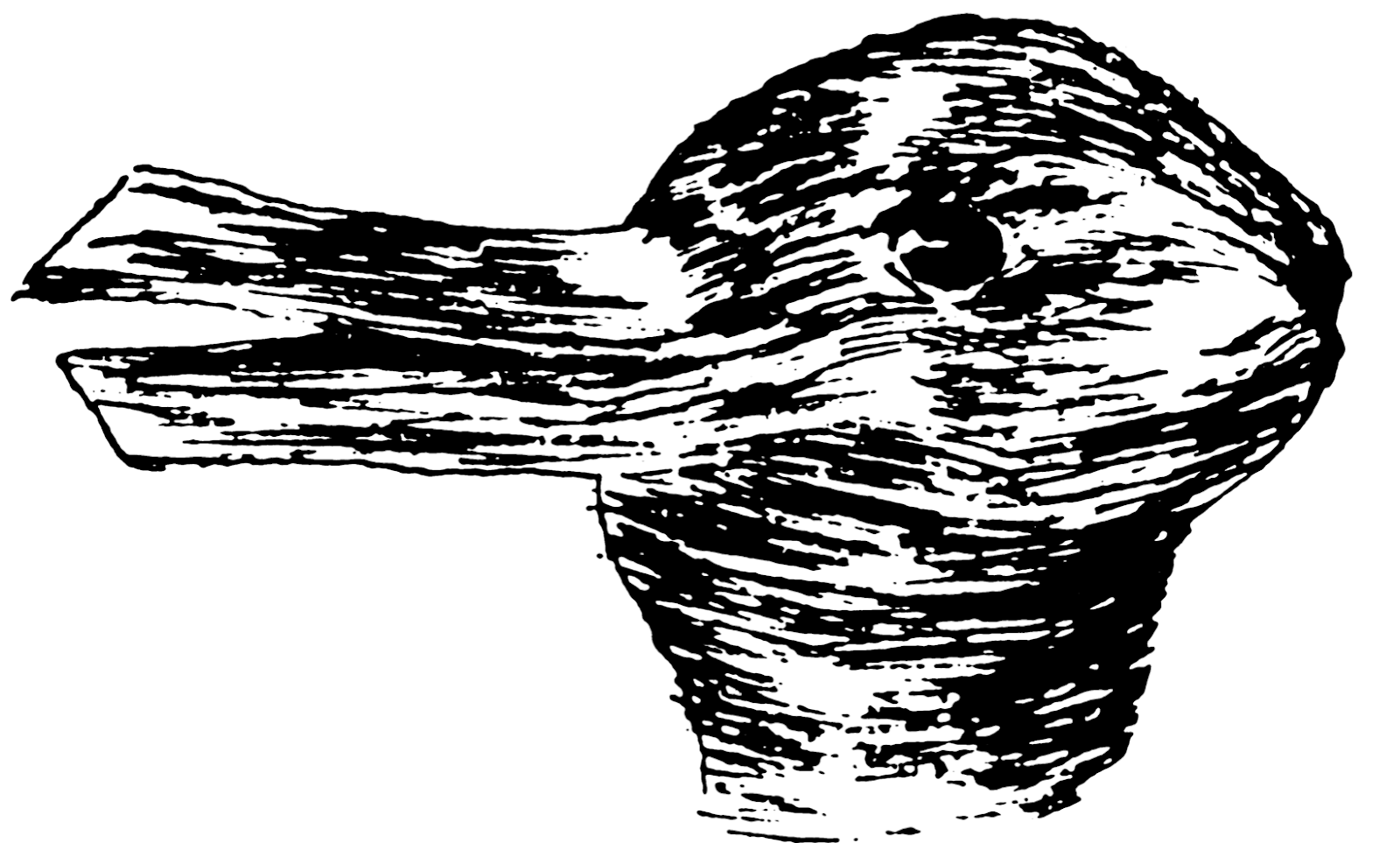
Figure 1. Duck-rabbit illusion (public domain)
From an anti-realist perspective, there’s a degree of ambiguity to everything. Consider the duck-rabbit illusion (above) for illustration. Although there are two different ways to interpret the figure, we can still distinguish between true and false things to say individually about the duck or the rabbit. For instance, choosing to focus on the “duck interpretation,” it would be wrong to claim that the feathery animal has its beak wholly closed. Anti-realism about the duck-rabbit illusion doesn’t mean that we can’t make valid claims about the different animal interpretations; it only means that there’s no point in asking which of the two animal interpretations is the right one. Neither the duck interpretation nor the rabbit interpretation adds anything further to the underlying patterns of black and white.
Some people equate anti-realism with the nihilistic sentiment “all interpretations are wrong.” However, the way I think about it, anti-realism is best summarized as follows:
We cannot avoid the use of interpretations. Insofar as interpretations can be right or wrong, there can be more than one right interpretation.
We can apply this perspective to domains like morality, consciousness, or epistemology. To give an example, consider (again) anti-realism about morality. Looking at some of the longstanding disagreements in normative ethics, it can appear as though different sides are talking past one another, answering different questions. For instance, when I was involved in animal advocacy, I noticed that some moral arguments worked well for some people, while other people seemed to consider them beside the point. Having always looked at morality from a consequentialist lens, it felt only natural to me to frame my inquiries into normative ethics as inquiries about what it means to make the world a better place (for all morally relevant beings). However, I discovered that this framing was far from self-evident to everyone. In particular, many people think about morality more in terms of norms or social contracts that people would agree on in order to co-exist peacefully and productively in society. This perspective certainly captures some aspects of the folk concept “morality,” but it leaves out other aspects. (Of course, the same can be said for consequentialism.) For a long time, I thought that at least one side had to be wrong, that at least one party doesn’t get what morality is about. I had a viscerally intense sentiment that “either morality includes caring intrinsically about others, or it doesn’t.”
By thinking of it as a dichotomy, I had committed myself to a metaethical assumption: moral realism. Moral anti-realists can point out that I should have at least considered the possibility that some discussion participants may be talking past one another, “playing different games.” To make the analogy more explicit:
- Duck-rabbit illusion: There’s a sense in which the duck is “real.” But we could also take a different perspective, in which case we’d see a rabbit. And if we wanted to play stubborn, we could adopt a third perspective yet and claim that all we’d see in the figure is shapes of black and white.
- Normative ethics: There’s a sense in which consequentialist obligations to avoid purchasing meat from factory-farmed animals are “real.” But we could also take a different perspective (according to which morality is about hypothetical contracts between people), in which case we’d see no obligations toward animals. And if we wanted to play stubborn, we could adopt a third perspective yet and claim that all we see in morality is people making up various justifications for things that (in one way or another) appeal to them.
The analogy becomes increasingly more strained for some of the other domains that are commonly discussed, but I think the key aspects still apply:
- Consciousness: There’s a sense in which bees are “conscious.” But we could also take a different perspective (for instance, one that highlights higher-order cognition, drawing a conceptual boundary to exclude hidden qualia), in which case we’d (probably?) see bees as not conscious. And if we wanted to play stubborn, we could adopt a third perspective yet and claim that all we’d ever see is various cognition-like processes of different complexity, with differing degrees of intentionality, self-reference, and so on.
- Personal identity: There’s a sense in which I’m still “the same person” after I exit a teletransporter. But we could also take a different perspective (for instance, one that focuses primarily on physical connectedness), in which case we’d view the person exiting as a different person from the one who entered. And if we wanted to play stubborn, we could adopt a third perspective yet and claim that all we’d ever see in personal identity thought experiments are varying degrees of physical or psychological similarities and temporal differences.
- Aesthetics: There’s a sense in which all exhibits in modern art galleries are “art.” But we could also take a different perspective (for instance, one that focuses on whether something is pleasant to look at or whether it took special skills to produce), in which case we’d only view a subset of things in modern art galleries as “art.” And if we wanted to play stubborn, we could adopt a third perspective yet and claim that all we’d ever see is patterns, shapes, and forms that leave various impressions on different onlookers.
These are strained analogies in many ways, but the key point is that there seems to be an ever-present element of arbitrariness when it comes to the aspects of reality to which we want to draw attention. According to my anti-realist perspective, reality simply is, but interpretations always add something. Deep down, all interpretations are arbitrary and we can always take on the “stubborn” perspective to say that there’s not even a question that needs to be answered. Still, we’ll find that we often care about how to interpret a domain and where to draw categories, and that we bring certain expectations already to the table. It is that second sense in which anti-realism is not arbitrary.
(Re)interpreting realist discourse
Realists about some of the above domains might object that the proposed analysis misses the point! (At least when it comes to the domain that they are realists about.) Unlike in the duck-rabbit illusion, the way we talk about normative ethics, consciousness, and epistemology seemingly postulates the existence of some speaker-independent reality. At the very least, anti-realists should be able to explain what (if anything) they think might be going wrong with that.
In the context of moral anti-realism, there are distinctions between three different ways of rejecting the idea that our discourse describes actual features of a speaker-independent reality. This terminology can be confusing because it packs together linguistic claims about the nature of moral discourse and substantive claims about whether or not there is a speaker-independent reality. Very roughly, these three ways are:
- Non-cognitivism:
- Linguistic claim: Moral claims, even though they may appear as though they are about a speaker-independent (moral) reality, are best interpreted as expressions of attitudes, not statements of fact. (See, for instance, emotivism.)
- Substantive claim: People aren’t talking about a speaker-independent reality, therefore(?) it doesn’t exist.
- Error theory:
- Linguistic claim: Moral claims purport to describe a speaker-independent (moral) reality and can have truth-values (though always false according to error theory’s substantive claim).
- Substantive claim: The concept of a speaker-independent (moral) reality doesn’t make sense. Depending on how one looks at it, all (first order) moral claims are either false because they are about something meaningless, or they are meaningful but doomed to be false. Either way, people who make first-order moral claims are committing an error.
- Non-objectivism:
- Linguistic claim: Moral claims (at least some of them) are best interpreted according to fixed evaluation criteria. For instance, moral claims could be interpreted as claims about what a speaker would come to value if they were aware of all relevant information. But the whole point behind non-objectivism is that there’s not just one possible interpretation. Alternatively, another non-objectivist evaluation criterion might be to interpret moral claims as claims about what conforms with a specific moral theory, such as consequentialism or contractualism.
- Substantive claim: Even anti-realists can adopt the notion of “moral facts,” provided that we think of them as facts about a non-objective (speaker-dependent) reality, instead of facts about a speaker-independent (objective) one.
Though these terms are primarily used in the moral context, they can be applied analogously to other domains. For instance, a non-cognitivist about aesthetics might say that when someone says, “This painting is beautiful,” they are not making a proposition that can be true or false, but merely communicating a positive attitude toward the painting.
Non-cognitivism, error theory, and non-objectivism are largely compatible with one another— even though they aren’t always presented this way. Their respective linguistic claims are conceptually distinct (and therefore separable) from the substantive claims (e.g., Kahane, 2013). Moreover, we can’t assume that folk discourse always fulfills the same function (so non-cognitivism can be an accurate interpretation for some moral claims, but false for others).
The version of anti-realism I’m arguing for in this sequence is a blend of error theory and non-objectivism. It seems to me that any anti-realist has to endorse error theory (in some sense at least) because realists exist, and it would be uncharitable not to interpret their claims in the realist fashion. However, the non-objectivist perspective seems importantly correct as well:
When someone makes claims like “double-dipping is wrong” or “sharks are most likely conscious,” it would be pedantic to point out that because realism about morality (or consciousness) may be wrong, the person is making an error. Even if those realisms are wrong, the statements still convey information. Charitably interpreted, “double-dipping is wrong” conveys the belief that the activity violates pro-social norms that Decent People would upon reflection adopt. Similarly, “sharks are most likely conscious” conveys the empirical belief that shark cognition is relevantly similar to the cognition of other animals commonly thought of as conscious.
(That said, in contexts where precision matters a lot, anti-realists may want to choose their words carefully and make explicit—to both themselves and others—the evaluation criteria they have in mind.)
Loosely applied non-objectivism works passably as a (re)interpretation of many instances of folk discourse precisely because anti-realism doesn’t mean “anything goes.” The domains under scrutiny do have some structure! And by specifying evaluation criteria that interest us, we can highlight and investigate various aspects of that structure.
Luke Muehlhauser’s sequence on No-Nonsense Metaethics built toward this same point for the domain of morality, spelled out in the post Pluralistic Moral Reductionism:
Yes, there really is morality, and we can locate it in reality—either as a set of facts about the well-being of conscious creatures, or as a set of facts about what an ideally rational and perfectly informed agent would prefer, or as some other set of natural facts
But in another sense, pluralistic moral reductionism is 'anti-realist'. It suggests that there is no One True Theory of Morality.
The different “sets of facts” describe various ways in which morality has structure; each set of facts is highlighted by different evaluation criteria.
We can apply the perspective of pluralistic moral reductionism analogously to other domains. Pluralistic reductionism is an accurate description for the brand of anti-realism I’m arguing for in this sequence.
Why realists and anti-realists disagree
After explaining how I think realists and anti-realists disagree, I also want to address why they disagree.
Verbal disputes and the method of elimination
In the paper Verbal Disputes, David Chalmers (2011) introduced what he called the method of elimination (Yudkowsky’s “rationalist taboo” is a version of the same procedure) to help determine whether a disagreement is substantive or merely verbal. Unlike substantive disputes, merely verbal disagreements only arise because the discussion participants fail to notice that they have a different vocabulary. A notorious example is two people discussing whether a tree falling in the forest makes a sound if no one is there to hear it.
The method of elimination involves restating a given claim in neutral terminology. For instance, in the discussion about the falling tree, the word ‘sound’ can be “eliminated” (or “tabooed”) to determine whether or not the disagreement is substantive. (The apparent dispute disappears once it is discovered that one party would replace “sound” with “air vibrations,” whereas the other person would have replaced it with “auditory processing.”)
Applied to notorious concepts such as “moral,” “right” or “conscious,” the method of elimination forces us to make apparent our standards of evaluation. While anti-realists would typically consider the provision of such standards a requirement for using language properly, this is where the realists take a different route. Because realists are interested in only the (speaker-independently) right standards, rephrasing the claim in question risks getting it wrong.
Using the example of the moral term “ought,” Chalmers describes this situation as follows:
It is plausible that once all moral terms are gone, no disagreement can be stated. We might agree on all the nonmoral properties of the relevant actions, but still disagree on whether it is right. In the case of [previously analyzed disputes about the concepts] ‘semantics’, ‘physicalism’, and so on, this situation suggested a verbal dispute. Should we likewise diagnose a verbal dispute here? Intuitively, the answer is no. For all we have said, moral disputes are substantive disputes. Instead, we have simply exhausted the relevant vocabulary. It appears that at a certain point (perhaps once we have fixed on the appropriate moral “ought”), we have reached bedrock: a substantive dispute involving a concept so basic that there is no hope of clarifying the dispute in more basic terms.
The judgment about when and where “bedrock has been hit” is left to the discretion of the speaker:
At a certain point, when the method of elimination is applied, a proponent may say “That’s bedrock”. Here, the thought is that we have reached a point where only cognate expressions can be used to state the issue, and where there is no hope of finding a relevant disagreement at an “underlying” level. Further applications of the method will just lead to wheel-spinning, and ultimately to vocabulary exhaustion.
Bedrock concepts
Based on the notion of “hitting bedrock,” Chalmers coined the term bedrock concepts. Bedrock concepts are thought to sit at the hearts of domains like consciousness, morality, and epistemology. They have in common that any attempts to (re)define them with terminology from outside their particular domain will trigger an intuition that this rephrasing endeavor misses the point.
At most, we can “define” bedrock concepts in a circular way (e.g., “Doing good is about performing the morally right actions”), or by ostension. For example, Derek Parfit defined the concept of irreducibly normative reasons by pointing at examples (Parfit, 2011a):
Like some other fundamental concepts, such as those involved in our thoughts about time, consciousness, and possibility, the concept of a reason is indefinable in the sense that it cannot be helpfully explained merely by using words. We must explain such concepts in a different way, by getting people to think thoughts that use these concepts. One example is the thought that we always have a reason to want to avoid being in agony.
The need for bedrock concepts
The disagreement between realists and anti-realists is primarily a disagreement about bedrock concepts. Different realisms are built around bedrock concepts. While anti-realists are generally skeptical of bedrock concepts, realists cannot imagine doing (good) philosophy without them.
That said, even the realists would typically agree that bedrock concepts are weird. Without them, philosophy would be simpler—we could follow Wittgenstein’s (1999(1921)) maxim, “What can be said at all can be said clearly.” By incorporating bedrock concepts into our philosophical repertoire, many things change. Laying out what constitutes philosophical progress then becomes a bedrock concept as well (“yes, doing philosophy is related to figuring out what’s right—but how do we do that?”). Arguably, that’s a steep price to pay.
For some bedrock concepts such as “art” or “identity” in “the ship of Theseus,” the case for incorporating them into our philosophical repertoire is weak. Even though we may have the essentialist intuition that concept like “art” or “identity” have a single correct meaning, it seems (to me at least) that if we were to drop this intuition, nothing of value would be lost. It seems to me that we don’t hold those intuitions for good reasons, but rather because they seem to derive from a lack of introspective discernment about how our minds form categories.
However, not all bedrock concepts can be rejected this easily. The strongest argument for realism is that when it comes to adopting some bedrock concepts, we may not have a choice. Below, I discuss this in more detail.
Candidate bedrock concepts ordered by their perceived degree of philosophical indispensability
I’ve come up with a somewhat subjective, very crude ranking of bedrock concepts ordered by how easy it seems to me to do philosophy without them. The lower the tier, the closer it is to the proverbial bedrock (if there is such a thing). So, while I think that the candidate bedrock concepts in Tier 4 and Tier 3 can be rejected safely without much discussion, I find the debate between realists and anti-realists more interesting for Tier 2, Tier 1 and Tier 0 bedrock concepts.
Tier 4: Human-made objects
Examples:
- “The ship of Theseus” and other expressions of object identity over time
- Plato’s idealism about forms for human-made objects (e.g., this page lists “table” and “house” as examples of things about which Plato was a realist)
I think the case for bedrock concepts is the weakest when it comes to human-made objects. For any human-made object, we can ask humans why they made it—the answer will describe the speaker-dependent purpose of the object. There’s not much more to say. We may still have the intuition that “Is it really a table?” is a well-defined question, but absent further evaluation criteria about what we mean by this, the question is clearly underdetermined. (We can also think of language itself as a human-made object: words get their meaning from how we use them. If context is lacking, so is meaning.)
Tier 3: Sense appearances
Examples:
- Plato’s idealism about forms for natural objects
- Aesthetics realism
- Realism about colors (Brogaard, 2010)
Before Darwin, it would have seemed more intuitive to me to be an essentialist about animal species. Some philosophers have also invoked realism about the properties of the source objects for our sensory perception (for instance, realism about colors, sounds, beauty, etc.). While I understand the intuition behind (e.g.) colors existing independently of color perception, this view seems untenable to me because of the Darwinian arguments for anti-realism about sense appearances. With the advance of our scientific understanding, the reductionist worldview became intellectually satisfying despite our anti-reductionist intuitions.
Tier 2: Irreducible normativity
Examples:
-
Moral realism
-
Realism about self-oriented reasons for action
-
Realism about other-regarding reasons for action
-
Realism about epistemology
-
Realism about decision theory
-
Metaphilosophical realism (realism about the proper philosophical method)
On the one hand, it seems that our intuitions about normativity as a bedrock concept are not too different from the intuitions in favor of Tier 3 bedrock concepts. On the other hand, normative realists have one additional consideration to go by. Namely, they can argue that in addition to normative anti-realism being (perhaps) counterintuitive, it is also self-defeating. To give an analogy, consider imagining myself as a Boltzmann brain. Though logically consistent, the prospect that I’d cease to exist in the next flicker of a moment would render everything I’m about to do or think about pointless—my actions wouldn’t carry any relevance if the scenario were true. Arguably, there’s a sense in which imagining normative anti-realism is a bit like that: Though logically consistent, it’s pointless according to existentialist sense of things mattering to us. Because the alternative appears to be self-defeating, it has been argued that we should adopt normative realism.
Tier 1: Qualia (“irreducible sensations”)
Examples:
I’m categorizing qualia as Tier 1 candidate bedrock concepts because the case for incorporating them into our philosophical repertoire is particularly strong (at least as far as different types of realism are concerned). Tier 3 and Tier 1 differ as follows: If a person looks at tree leaves, the Tier 3 candidate bedrock concept is the “greenness” of the leaves—a claimed, objective property that some objects (e.g., leaves) either have or lack. By contrast, the Tier 1 candidate bedrock concept in that scene would be the quale “green”— the “what-it’s-likeness” of seeing green as an onlooker.
Being mistaken about an object’s true nature seems conceivable, but it seems impossible to make the same sort of mistake about the content of one’s immediate moment of consciousness. If I believe that, right this moment, something in my visual field looks green, I can conclude that I’m seeing green with certainty. Because we experience consciousness directly and immediately, the usual anti-realist arguments don’t seem to apply. Arguably, consciousness anti-realism is inconceivable because it contradicts our sensory experience.
While I listed qualia realism as the sole example of Tier 1 realism, it’s worth pointing out that other types of realism could use qualia realism as their backbone. For instance, philosophers who endorse a theory of well-being according to which conscious experience is the only thing of (dis)value might argue that moral realism can be derived from realism about intrinsically morally valuable or disvaluable qualia (e.g., Hewitt, 2008). While I don’t intend to take a stance on qualia realism per se in this sequence, I’m planning to write a post (or post section) on arguments that go from qualia realism to realism about morality.
Tier 0: Something irreducible
Examples:
At the lowest tier and closest to ultimate philosophical bedrock (if there is such a thing), we find reality itself. Even if qualia aren’t quite what we think they are, and even if there’s no speaker-independently correct way to reason, we might want to assume—if only for the sake of preserving our sanity—that there’s at least something that goes beyond subjective standards. (Existence anti-realists may point out that things are not as they appear, but whether or not they have lost their minds is for readers to determine.)
Summary and conclusion
Some types of realism seem to be backed by nothing more than widely distrusted essentialist intuitions. However, normative realism, qualia realism, and existence realism have further considerations for their support. For instance, normative anti-realism is something we arguably wouldn’t care about if it was true, and qualia anti-realism is something we arguably can’t imagine to be true.
Realists and anti-realists may disagree about the validity of those considerations, and the degree to which they may force us to adopt the costs of incorporating bedrock concepts (e.g., irreducible normativity or the notion of qualia) into our philosophical repertoire. In addition, realists and anti-realists may disagree about the severity of those costs, perhaps because they think differently about the workability and palatability of an anti-realist philosophical framework.
Outlook on future posts
In the next post in this sequence (“3. Against Irreducible Normativity”), I will argue that normative bedrock concepts (especially moral ones, but the arguments apply generally) are best to be rejected. I will argue that (1) there’s a strong sense in which we can already tell that they make clear-minded philosophical progress impossible, and (2) that the alternative—normative anti-realism—can be richer and more palatable than one might at first think.
In posts 4 and 5, I will then address the possibility of a wager for irreducible normativity, as well as its counterintuitive consequences. In post 6, I will discuss arguments that also apply to naturalist moral realism. In particular, the post discusses a challenge for the concept of “moral uncertainty.” In post 7, I plan to address versions of moral realism built on top of qualia realism. Finally, in posts 8 and 9, I sketch I reason about morality given that I suspect moral realism to be false.
According to the 2010 PhilPapers survey (Bourget & Chalmers, 2014), belief in different realist positions strongly correlates (as does belief in various types of anti-realism).
“Moral realism” (note that this also includes naturalist versions of moral realism) correlates with the following views:
- Aesthetic value: objective (0.411)
- Abstract objects: Platonism (0.335)
- Laws of nature: non-Humean (0.329)
- Science: scientific realism (0.32)
- Libertarianism about free will (0.24)
Different types of realism also correlate with one another:
- “Mind: non-physicalism” correlates with “Free will: libertarianism” (0.386)
- “Aesthetic value: objective” correlates with “Laws of nature: non-Humean” (0.228)
- “Time: A-theory” correlates with “Mind: non-physicalism” (0.23) and Aesthetic value: objective (0.164)
To get a sense of the strength of these correlations relative to other comparisons, I’m listing the five most strongly correlated answers in the entire study:
- “Moral judgment: cognitivism” correlates with “Meta-ethics: moral realism” (0.562)
- “Metaphilosophy: non-naturalism” correlates with “Mind: non-physicalism” (0.497)
- “Analytic-synthetic distinction: yes” correlates with “A priori knowledge: yes” (0.467)
- “Meta-ethics: moral realism” correlates with “Aesthetic value: objective” (0.411)
- “Mind: physicalism” correlates with “God: atheism” (0.393)
Though far from perfect, these correlations indicate that different realist (or anti-realist) positions have things in common. Correspondingly, we should expect that there are underlying factors that make some philosophers more predisposed toward realist (or anti-realist) positions.
Acknowledgements
I’m thankful for comments by Jesse Clifton and Sofia Davis-Fogel. Many of the ideas discussed in this article were things I first encountered when I read Brian Tomasik’s essay The many fallacies of dualism (Tomasik, 2013).
My work on this post was funded by the Center on Long-Term Risk.

References
Bourget, D. and D. Chalmers. (2014). What do philosophers believe? Philosophical Studies, 170(3):465–500.
Boyd, R. (1988). How to be a moral realist. In G. Sayre-McCord (ed.), Essays on Moral Realism. Ithaca: Cornell University Press. 181–228.
Brogaard, B. (2010). Color. In: Oxford Annotated Bibliographies Online. <www(.)oxfordbibliographies(.)com/view/document/obo-9780195396577/obo-9780195396577-0021.xml>.
Case, S. (2016). Normative Pluralism Worthy of the Name Is False. Journal of Ethics and Social Philosophy, 11(1):1–20.
Chalmers, D. (2011). Verbal Disputes. Philosophical Review, 120 (4):515–566.
Cuneo, T. (2007). The Normative Web: An Argument for Moral Realism. Oxford: Oxford University Press.
Hewitt, S. (2008). Normative Qualia and Robust Moral Realism. PhD thesis. New York University.
Hume, D. ((1990)1757). Dialogues Concerning Natural Religion, Bell, M. (ed.). London: Penguin.
Kahane, G. (2013). Must Metaethical Realism Make a Semantic Claim? Journal of Moral Philosophy, 10(2):148-178.
Parfit, D. (1984). Reasons and Persons. Oxford: Oxford University Press.
Parfit, D. (2011a). On What Matters, Volume I. Oxford: Oxford University Press.
Ruse, M. (2010). The biological sciences can act as a ground for ethics. In Ayala, F. and R. Harp (eds.), Contemporary Debates in Philosophy of Biology. New York: Wiley-Blackwell. 297–315.
Singer, P. (1973). The Triviality of the Debate Over 'Is-Ought' and the Definition of 'Moral.’ American Philosophical Quarterly, 10(1):51–56.
Tomasik, B. (2013). The many fallacies of Dualism. reducing-suffering(.)org. <reducing-suffering(.)org/the-many-fallacies-of-dualism/>.
Williams, B. (1979). Internal and External Reasons. In R. Harrison (ed.), Rational Action. Cambridge University Press. 101–113.
Wittgenstein, L. (1999(1921)). Tractatus logico-philosophicus. Frankfurt am Main: Suhrkamp.

I think we probably have very similar views, but I am less of a fan of error theory. What might it look like to endorse error theory as an anti-realist? Well, as an anti-realist I think that my claims about morality are perfectly reasonable and often true, since I intend them to be speaker-dependent. It's just the moral realists whose claims are in error. So that leads to the bizarre situation where I can have a conversation about object-level morality with a moral realist, and we might even change each other's minds, but throughout the whole conversation I'm evaluating every statement he says as trivially incorrect. This seems untenable.
Again, I expect we mostly agree here, but the phrase "facts about a non-objective (speaker-dependent) reality" feels potentially confusing to me. Would you consider it equivalent to say that anti-realists can think about moral facts as facts about the implications of certain evaluation criteria? From this perspective, when we make moral claims, we're implicitly endorsing a set of evaluation criteria (making this position somewhere in the middle of cognitivism and non-cognitivism).
I've fleshed out this position a little more in this post on "a pragmatic approach to interpreting moral claims".
This is how I think of it, yeah. Non-objectivism for the anti-realist and error theory for the realist.
I see. You could switch back and forth between two ways of interpreting the realist's moral claims. On the one hand, they are making some kind of error. But as you say, you can still have fruitful discussions. I’d characterize the second interpretation as "pragmatically re-interpreting realist claims." I think this matches what you propose in your blogpost (as a way to interpret all moral claims)! :)
Yes, exactly. That sounds clearer.
Cool, glad we're on the same page. The following is a fairly minor point, but thought it might still be worth clarifying.
"You could switch back and forth between two ways of interpreting the realist's moral claims."
I guess that, while in principle this makes sense, in practice language is defined on a community level, and so it's just asking for confusion to hold this position. In particular, ethics is not cleanly separable from meta-ethics, and so I can't always reinterpret a realist's argument in a pragmatic way without losing something. But if realists use 'morality' to always implicitly mean 'objective morality', then I don't know when they're relying on the 'objective' bit in their arguments. That seems bad.
The alternative is to agree on a "lowest common denominator" definition of morality, and expect people who are relying on its objectiveness or subjectivity to explicitly flag that. As an analogy, imagine that person A thinks we live in a simulation, and person B doesn't, and person B tries to define "cats" so that their definition includes the criterion "physically implemented in the real world, not just in a simulation". In which case person A believes that no cats exist, in that sense.
I think the correct response from A is to say "No, you're making a power grab for common linguistic territory, which I don't accept. We should define 'cats' in a way that doesn't make it a vacuous concept for many members of our epistemic community. So I won't define cats as 'simulated beings' and you won't define them as 'physical beings', and if one of your arguments about cats relies on this distinction, then you should make that explicit."
This post is (as usual) relevant: https://www.lesswrong.com/posts/yA4gF5KrboK2m2Xu7/how-an-algorithm-feels-from-inside
I could equivalently describe the above position as: "when your conception of something looks like Network 2, but not everyone agrees, then your definitions should look like Network 1."
Okay, you’re definitely right that it would be weird to always (also) interpret realists as making an error. How about this:
So, instead of switching back and forth between two interpretations, we only hold one interpretation or the other (if someone clearly commits themselves to either objectivism or non-objectivism), or we treat the moral claim with an under-determined interpretation that's compatible with both realism or anti-realism (the lowest common denominator.)
I agree that this^ is much better (and more charitable) than interpreting realists as always making an error! (When I thought of realists making moral claims, I primarily envisioned a discussion about metaethics.)
That makes sense. I called the pragmatic re-interpretation “non-objectivism” in my post, but terminology-wise, that's a bit unfair because it already presupposes anti-realism. “Not-necessarily-objectivism” would be a term that’s more neutral. This seems appropriate for everyday moral discourse.
(The reason I think anti-realism is compelling is because the lowest common denominator already feels like it's enough to get all the object-level reasoning off the ground.)
I'd say it depends on what "mode" you're in. Your point certainly applies when it comes to descriptively interpreting what people mean. But there's also the meliorist mode of trying to nudge people towards more useful concepts. A lot of folk concepts get stretched beyond their limits extremely quickly when the discussions switch from everyday contexts to more philosophical ones. Trying to do philosophy without improving our concepts seems like trying to build skyscrapers with only axes and knives. (Of course, you probably agree with this.)
There’s also a question about whether you, as an anti-realist, consider realism to be clearly mistaken, or whether you think it might be the case that realists just think within a very different conceptual repertoire. If it's only the latter, it would be uncharitable to ever consider them as "making an error." My view is that there are certainly cases where I'm not sure (or where I'd say I agree with some versions of realism but don't find them quite 'worthy of the name'), but in many instances I'd say realists are committing a real error. One that they would recognize by their own standards. That’s why I wrote this sequence, I'm hoping to eventually change the minds of at least a bunch of realists. :)