Comments
(Crosspost from Substack)
Taking the animal pill is one of the best things you can do. If you take the animal pill, you will save the lives of thousands of animals.
But, the animal pill is a big pill to swallow, and you might think you have to swallow it all at once or not at all. Many people might have told you that, to take the animal pill, you have to stop eating all the food you love, all at once.
But this is not true! I think taking the animal-pill is an intellectual and emotional journey that can take some time. In this post, I’m going to split the animal-pill into three levels. I think you’ll find this useful, whichever level you are at.
Level 1: Meat is Uncomfortable.
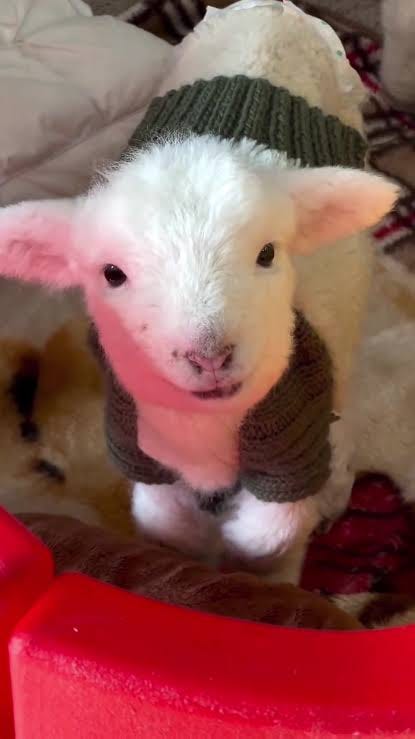
The first time I entered Level 1 was when someone told me the definition of “lamb”. I somehow thought “lamb” was synonymous with sheep.
I was at dinner with my friends when they told me: Lambs are babies.
I felt a bit nauseous the rest of the night.
I was at this stage for a while, feeling a background discomfort whenever I ate meat. There was a nagging thought in the back of my mind, a thought I kept pushing away. I felt like at some point, I should look into it.
It took me a while before I finally did.
Level 1 may feel uncomfortable for a while, like a vague guilt or cognitive dissonance. This is ok—it is uncomfortable worrying that something as comforting and normal as food might be a source of… something else.
But, please, try not to fully ignore that feeling.
High Level Recommendations
- Convince yourself that the animal-pill is not an all-or-nothing change. You can very easily live a much more compassionate life towards animals!
- Eat bigger animals and higher welfare meat (pasture-raised is best!)
- Get curious about factory-farming.
Readings and Ideas for Level 1
Here are two short articles about some common factory farming practices (None of these are graphic).
How has Selective Breeding Changed Chickens?
How do Factory Farms treat Piglets?
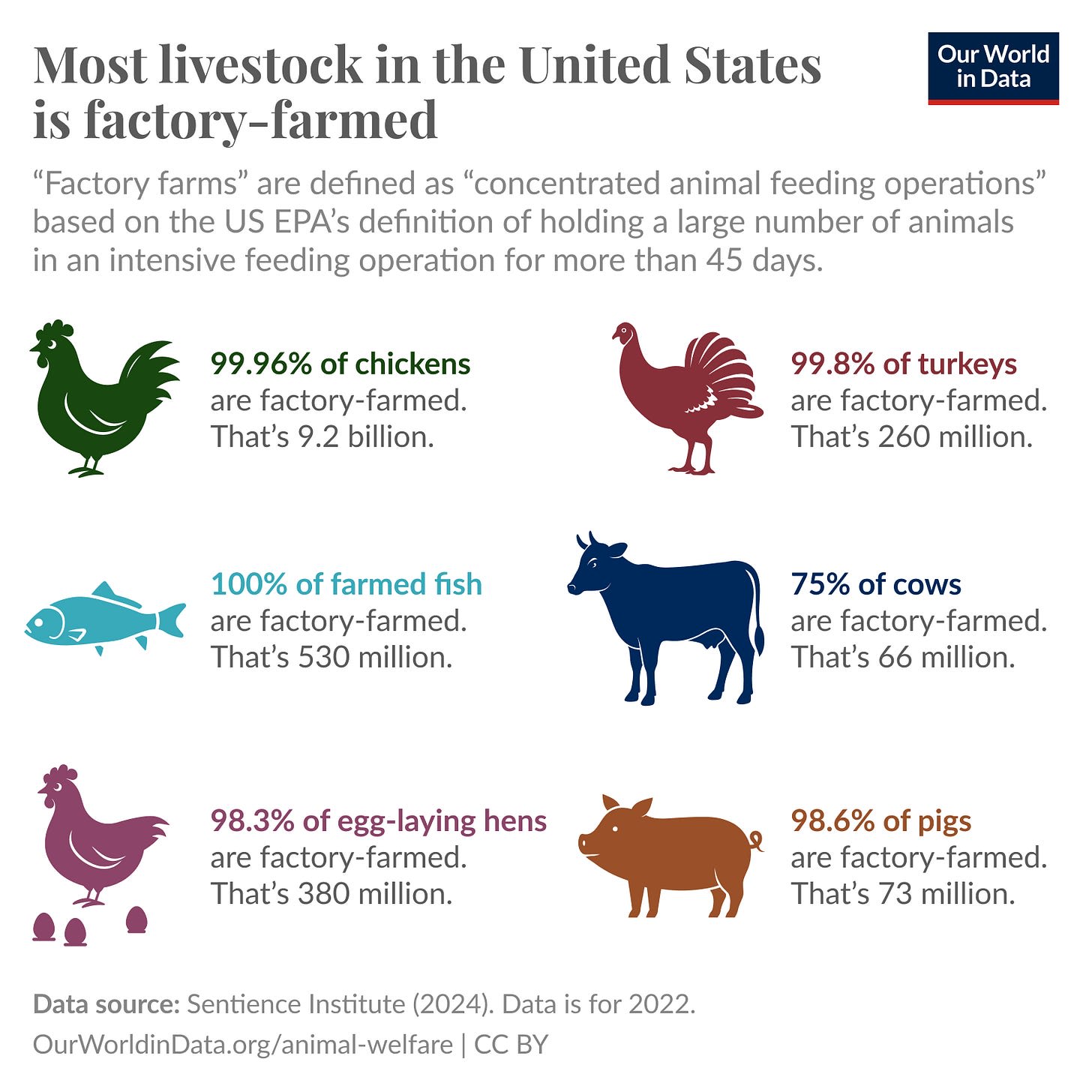
Also take a look at these stats from Our World in Data:
Finally, please read How to Cause Less Suffering While Eating Animals, for some very actionable advice!
Thank you so much for putting this into action and please read on if you are curious.
The next few levels are a bit more extreme, but they are not intended to be overly judgmental.
Once again, you should give yourself time.
Level 2: A Life Worse than Death
A few months after I discovered the definition of lamb, I began looking into more essays. I think I unconsciously stopped myself from ever watching footage.
After reading these essays I arrived at a few conclusions:
- Factory farms have hidden away their cruelty through ad-campaigns and political efforts like ag-gag laws which criminalize filming inside. This, along with our collective repression, has hidden these animals from public awareness.
- The killing of animals is not really the crux. The crux is the life of these animals. Meat companies are engaged essentially in the mass-torture of animals.
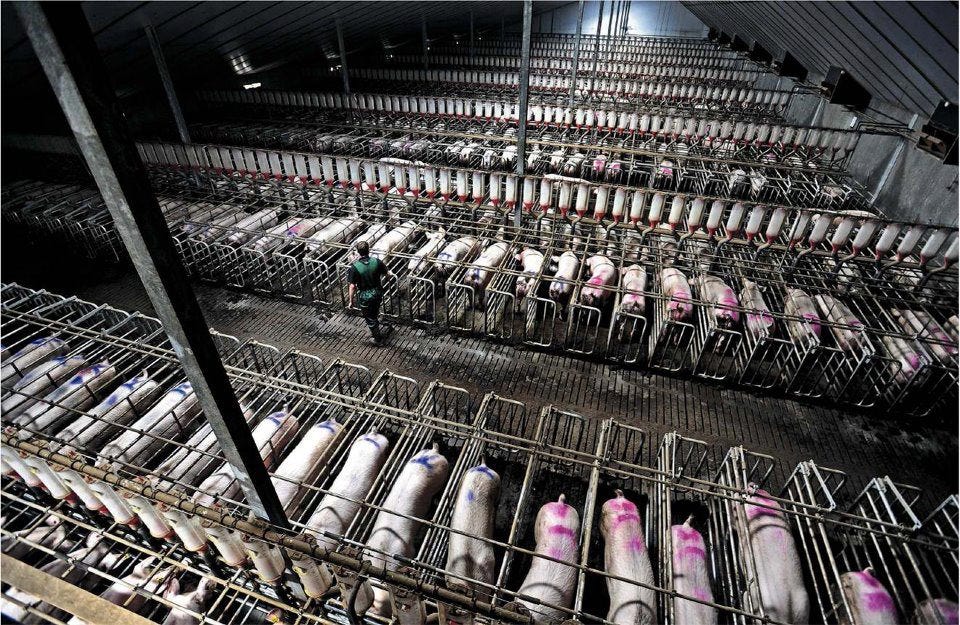
Then, these two moments really fucked with my head.
The first was when I watched this short video filmed by advocates hiding inside a pig gas-chamber. It is relatively non-violent compared to other footage, so I would encourage you to give it a watch.
While watching, this became utterly denaturalized for me. This is supposed to be the humane way to kill factory farmed pigs, I thought.
“Gas Chambers”.
The second was when I learned about ammonia burns. Chickens get burned from living the entirety of their lives on a layer of their own shit. Many are also bred to grow so fast that their legs sprain or break, and they die in the dark, burning in the fumes of their own excrement.
If you’re at this level, I would assume you have some acquaintance with the violence in factory farms. Please take care of yourself, but do not shy away from this violence. There are sentient beings who have to actually experience it. The least we can do is look.
High-Level Recommendations:
- Keep following the rabbit hole. This negativity is not pointless. It will orient you towards action.
- Consider charitable giving. ~$20 to an effective animal charity can offset your monthly impact on animals.
- Consider trying out, as an experiment, a vegetarian diet for 1 week or so. I did this and it made me feel a lot better, and eventually led to me becoming vegetarian.
Readings and Ideas for Level 2
Animal Suffering is Not Pretend by Andy Masley gives a great analysis of how great collective delusions have decentered animal suffering.
At this point, I would also try to get a visceral understanding of what factory farming is like. This can be very disturbing, but it might also be one of the best decisions of your life.
→Watch the first 4 minutes of this video on Broiler Chickens.
→ Watch the entirety of this 2-minute video on Pigs
If you’ve made it to this level, it might seem reasonable to say…
Level 3: The Atrocity of Our Time
After I realized just how bad factory farming was, I began feeling greater degrees of cognitive dissonance. I remember telling a classmate that I think “factory farming is the biggest problem in the world”. But I was not living by this belief.
One night, I opened my laptop and read the essay Avoiding Atrocity. This is Bentham's Bulldog’s best essay in my opinion. I credit this essay as a big reason I became animalpilled. Go read this essay, especially if you care about being a good person.
Then, invigorated, I watched Dominion. This was probably one of the most important nights of my life. Dominion fundamentally changed my worldview. I was sobbing by the end. As a kid, I sometimes had fearful thoughts about hell. I now know it exists.
If you want to take this seriously, I think there’s no better decision you can make than setting aside an evening to WATCH DOMINION! (Try the trailer).
It is obvious to me now that future generations will look back on factory farming with the same unfathomable disgust as we look on slavery. This might also happen faster than we think.
For a more rigorous argument, I recommend The Possibility of an Ongoing Moral Catastrophe, a philosophy paper with an intensely obvious but world-upending conclusion. For a shorter, historical view, see Industrial Farming is One of the Worst Crimes in History by Yuval Harari.
Here are some questions to ask if you’ve made it to this stage.
If you are living in a time of atrocity, how might your obligations change?
How might atrocity demand more from you than other ethical decisions?
And, most importantly,
How can you make the largest possible impact to prevent animal suffering?
To end this essay on a positive note, here are some inspiring recommendations:
Lewis Bollard’s 40 Hot Takes formed a lot of the norms for my theory of change, as well as Aidan Kankyoku’s Vegans are Monks. Try not to enforce moral purity on others (and yourself!) at the expense of impact.
Aidan’s story of the Ridgland Dog Rescue is heroic and has inspired me to participate in public action efforts. I’m super excited to start attending protests and demonstrations!
You should also consider joining a volunteer group like The Humane League Changemakers, where you can meet other activists and help save animals! You can also see some of the most effective public action campaigns on my website: effectiveanimalaction.org
Also, joining a community online or in-person is plausibly the highest impact thing you can do to start. It aligns your identity to help animals for the rest of your life.
Conclusion
Taking the animal pill is hard. It doesn’t go down easy, and it can be nauseating.
The upside of taking the animal pill is that it’s INVIGORATING!
You get to explore such an exciting world of ambitious and compassionate people, who have dedicated their lives to something heroic, through and through, by engineering and writing and protesting and fundraising and speaking, doing everything from careful research-based grant-making to breaking into farms to save dogs.
You get a goal you can orient yourself around and take pride in. It’s painful, it’s alienating, it’s sometimes despair-inducing.
But, I can say confidently that the animal pill is a pill worth taking. No matter what else you do with your life, how much you screw up and fail, a life spent saving animals is a life to be proud of.
More writing on my substack