Cross-posted from my Substack.
Epistemic status: I’ve puzzled over this for a long time but I’m not sure I came to the right answers. I'm sharing this partly because it might help others work on resource allocation, but mostly because some smarter reader might tell me how to do it better.
TL;DR:
* I he...
This post is part of the Cross-Cause Fund (CCF) series by Rethink Priorities — a sequence of articles dedicated to effective giving across philanthropic areas.
TL;DR:
There is a seemingly plausible argument that do...
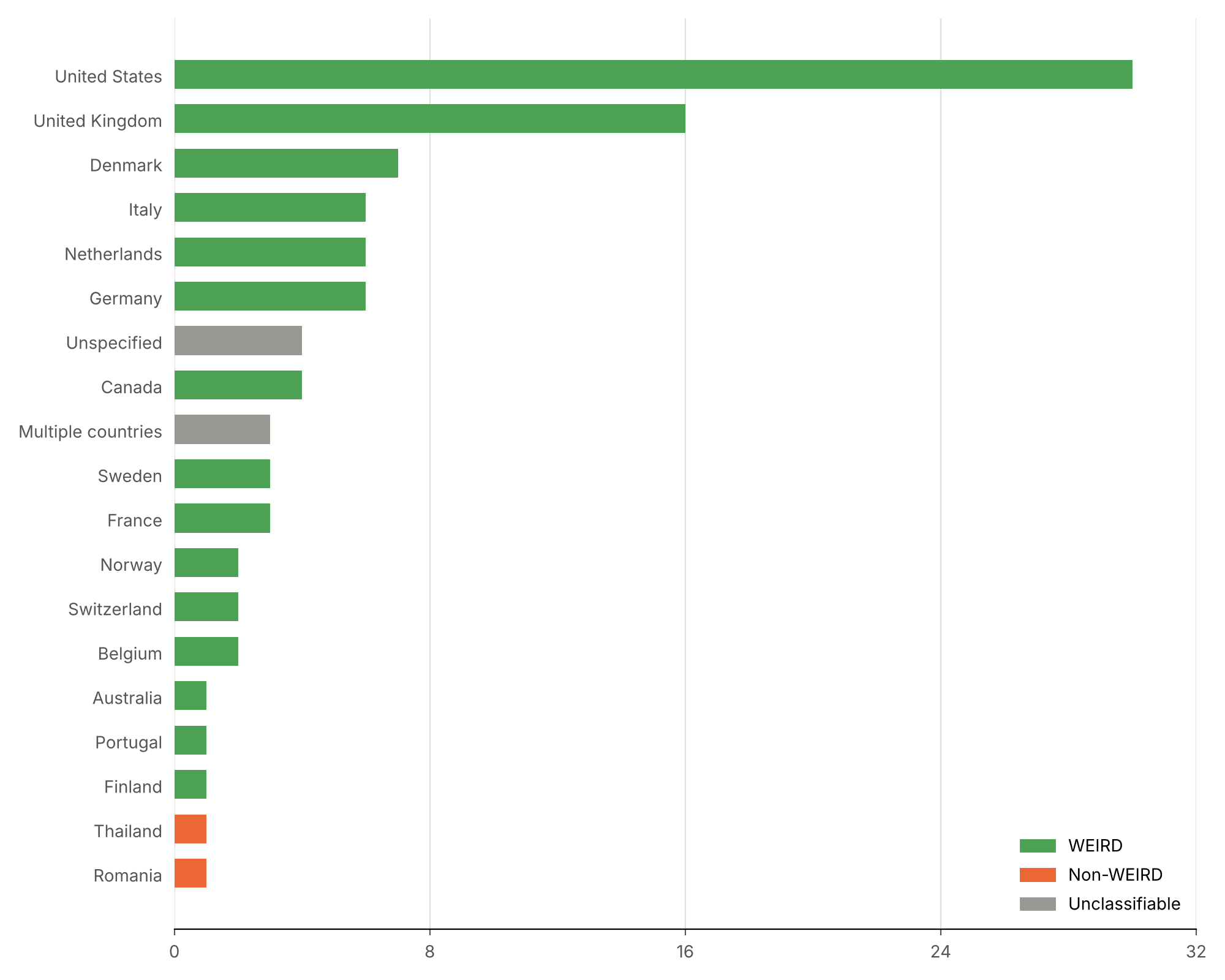
TL;DR: We lack high-quality evidence on what reduces animal product consumption, and I see current academic incentives as part of the reason. Drawing on my experience as a PhD researcher, I describe six ways academic incentives misalign with what animal advocates need:
* 1) research questions follow the literature rather than practitioner decision relevance;
* 2) health- and climate-motivated research leads to disproportional attention to red meat and neglect o...


An opportunity has been evolving over the past year that some of you in the US might find interesting. USCIS Form I-134A allows US residents (with qualifying income, approx. $30k/yr+) to sponsor families or individuals from specific countries (in flux - but presently Ukraine, Afghanistan, Haiti, Cuba, Venezuela, Nicaragua) looking for US visas under humanitarian parole programs. Form I-134A contains scary language in which the sponsor agrees to take on financial responsibility for the newcomers. However, (a) many potential beneficiaries do not need financial support, (b) some of them, especially Ukrainians, are eligible for a wide range of public benefits, and (c) many legal commentators claim the language in the form is unenforceable.
A nonprofit backed by four former US presidents, https://Welcome.US, helps potential sponsors navigate the process and match with potential beneficiaries. Through them, my wife and I recently sponsored a family of three we had never met. It ended up costing nothing and being easier than expected. Every situation will be different but you can meet (video chat is common) the people you consider sponsoring before making a decision.
It's not necessarily the very best use of your time and/or money, but if you've ever felt that US immigration/refugee policy is too restrictive, and you are well-situated to welcome newcomers and/or good at navigating government paperwork, here's a chance to sort of take matters into your own hands. The newcomers aren't immigrants per se; for the most part these are two-year temporary visas. But some of them may find paths to citizenship under other programs now or in the future.
I'm seeing this late, but I love it. Many of my favorite posts on the Forum are things exactly like this — people pointing out interesting opportunities to do good in a nuanced, balanced way. Thank you for sharing!