Comments
It's not on the topic you mentioned, but does he see a path to crypto usage ever overcoming its extremely high barriers to entry, such that it could become something almost everyone uses in some way? And does he have any specific visions for the future of defi, which so far seems to have basically led to a few low-liquidity prediction market and NFT apps, and as far as I can tell not much else. Or at least, does he see a specific problem it's trying to realistically solve, or was it more like 'here's a platform people could end up using a lot anyway, and it doesn't seem like there's any reason not to let it run code'?
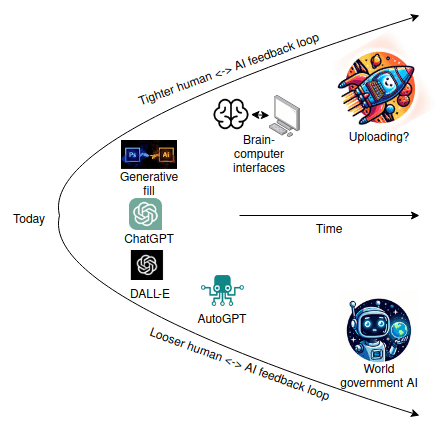


I'd love to hear his thoughts on defensive measures for "fuzzier" threats from advanced AI, e.g. manipulation, persuasion, "distortion of epistemics", etc. Since it seems difficult to delineate when these sorts of harms are occuring (as opposed to benign forms of advertising/rhetoric/expression), it seems hard to construct defenses.
This is a related concept mechanisms for collective epistemics like prediction markets or community notes, which Vitalik praises here. But the harms from manipulation are broader, and could route through "superstimuli", addictive platforms, etc. beyond just the spread of falsehoods. See manipulation section here for related thoughts.
And also: about the "AI race" risk a.k.a. Moloch a.k.a. https://www.lesswrong.com/posts/LpM3EAakwYdS6aRKf/what-multipolar-failure-looks-like-and-robust-agent-agnostic