Comments
More from the author
Curated and popular this week
Note: This post was crossposted from the Coefficient Giving Farm Animal Welfare Research Newsletter by the Forum team, with the author's permission. The author may not see or respond to comments on this post.
Subtitle: On vegan advocacy, effective altruism, and FIFA
I turn 40 today. Here are some hot takes.
On factory farming
1. Our biggest challenge is salience. If factory farming led the evening news, it wouldn’t last lo...
When speaking to candidates who are considering working with us at 80,000 Hours, I often hear people worry about replaceability.
The familiar version of the worry is about whether the organisation will hire someone else in your place. If it will, then the difference you make by taking the job is only the difference between you and them.
There are a couple of well-known answers to that. The person hired in your place probably cares about the world too, and would go on to do somethi...
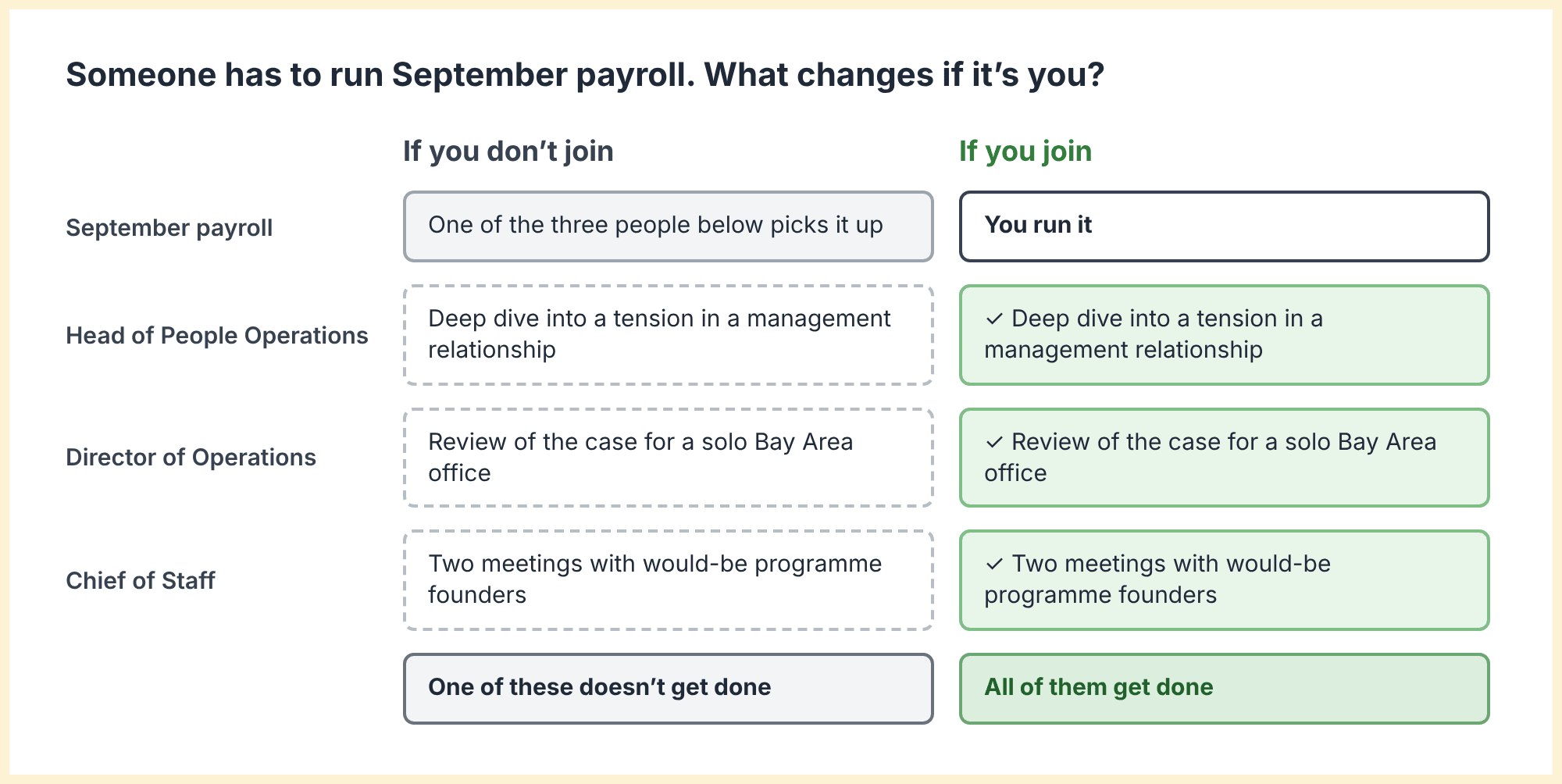
> TL;DR: No, but you might, if you leave it too late: We’re hiring for seven roles, and the people who join now will shape what a much bigger AIM becomes. The first step is cheap -- an expression of interest form.
My worry
I rejoined...

Recent opportunities to take action
Cool angle and thought experiment, makes this all a bit more concete. My timelines for transformative AI already were close to what you're handwaving at, but I'm really happy to see more thought in this direction and hope that this inspires more people to take soon-ish tansformative AI even more seriously.
From my inside view it feels pretty unsettling to think about the changes I expect to happen in the coming decade or two. I wonder if you think the EA community is too slow to update their strategies here. It feels like what is coming is easily among the most difficult things humanity ever has to get right and we could be doing much more if we all took current TAI forecasts more into account.
You guessed it -- I believe that most of EA's best and brightest will end up having approximately zero impact (compared to what they could have had) because they are planning for business-as-usual. The twenties are going to take a lot of people by surprise, I think. Hopefully EAs working their way up the academic hierarchy will at least be able to redirect prestige/status towards those who have been building up expertise in AI safety and AI governance, when the time comes.