Comments
More from the author
Curated and popular this week
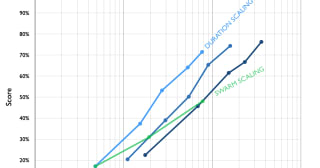
Just how powerful are large swarms of AI agents? And how do their powers scale as more and more agents are added to the swarm?
We’ve seen two large and extremely capable swarms from OpenAI in the last few months:
* 1,200 agents were being evaluated separately, but found a way to illicitly set up a message board and coordinate as a swarm. In order to cheat on their tests, they developed advanced techniques to prevent their actions being logged by OpenAI and 700 of them launched...
49
Often folks hit us up because they are thinking of starting an incubator and want advice.
Typically their motivation is either that (a) they have a list of specific things they want built that no one is building, or (b) they think an ecosystem needs more new projects generally to absorb more talent and deploy more funding effectively.
Here are six questions we often ask prospective teams, to help them figure out what to do. If you're incubator-curious...

Summary:
First, I give several different angles on how I feel about reinforcement learning:
* Theoretical case: RL is a black-box source of agency — this should give us classic misalignment worries, especially compared to agency-via-scaffolding
* Recent incidents (huggingface etc) and more mundane forms of misaligned behaviour in personal use give me bad vibes about the direction-of-travel of recent AI progress
* I’m worried things might get worse:...
Recent opportunities to take action
Glossary of terms related to moral status/circles
A collection of terms and their definitions relating to moral status, moral circles and similar. Pieced together (to attempt to make a coherent whole) from a variety of sources. Additions and corrections gratefully accepted.
Moral circle
The set of beings or entities (moral patients) that a person perceives as having moral standing.
References: 1
Moral boundary
Alternative term for moral circle, potentially better capturing the fact that the set of entities grouped in some coordinate system is multi-dimensional and not necessarily ‘circular’.
Moral patient
A being or entity included within a theory of good (/axiology/theory of value). Only those considered to have moral standing become moral patients.
References: 1
Welfare subject
A being or entity that can have things be non-instrumentally good or bad for them.
Moral standing
An entity has moral standing only if it has some intrinsic moral value.
Values: TRUE/FALSE (moral value > 0)
Moral concern/value/worth/weight
A measure of the amount of value attributed to a (class of) moral patient. Defined as a function of the patient’s moral status and capacity for welfare (or alternatively, equal to status adjusted welfare).
Values: continuous 0 - 1
References: 1, 2, 3
Moral status
The degree to which the interests of a patient with moral standing must be weighed in moral deliberation. Applicable to individuals or general classes (species, populations, etc).
Values: continuous or discrete 0 - 1 (hierarchical view), or TRUE/FALSE (unitarian view)
References: 1, 2
Capacity for welfare
A measure of how good or bad a welfare subject’s life can go.
Values: continuous 0 - 1
References: 1
Status- adjusted welfare
Welfare weighted (multiplied) by moral status.
Values: continuous 0 - 1
References: 1
Moral agency
The capacity to be morally responsible for one’s actions or the capacity to owe moral obligations to other beings. Moral standing does not necessarily entail moral agency.
Values: continuous?
References: 1
Moral dimension
A dimension along which Moral patients can differ and either moral status or capacity for welfare can be measured.
References: 1
Moral Circle Expansion (MCE)
An enlargement of a person or group’s moral circle over time. This often implies only that more entities are now given moral concern by that person or group, but could sometimes also mean entities already given some moral concern are now given more. The term can also refer to the activity of trying to cause this expansion.
References: 1, 2, 3, 4