Comments
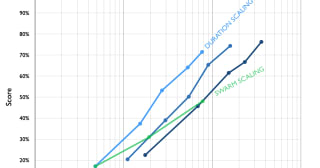
Just how powerful are large swarms of AI agents? And how do their powers scale as more and more agents are added to the swarm?
We’ve seen two large and extremely capable swarms from OpenAI in the last few months:
* 1,200 agents were being evaluated separately, but found a way to illicitly set up a message board and coordinate as a swarm. In order to cheat on their tests, they developed advanced techniques to prevent their actions being logged by OpenAI and 700 of them launched...

Taking a couple of litres of water out of the cycle is not a big problem. If everyone on earth sequestered 100 litres of water in this way, that would remove enough water to reduce the level of Lake Superior by 1cm.
[8*10^9 people. Lake superior has an area of 8*10^10sqm. The volume of a sqm of water with depth 1cm is 10 litres. Hence 8*10^11 litres divided between 8*10^9 people, which gives 100 litres each.]
Then why does the Texas Water Quality Association say its a problem? Furthermore, technically its not removed from the water cycle permanently - but its removed for a really long time. Overall, small removals will snowball into large removals given infinite time...
Edit: Furthermore, this makes it sound like wasting water isn't that big of a problem. Is it the case that conserving water is effectively useless?
I don't know why they say it is a problem. I'd be more concerned about trapped water taking up more space in garbage trucks, landfill, etc. Even then, the extra cost may be small.
My take is that (1) the preciousness of water depends heavily on location and (2) a small number of activities represent the vast majority of water use.
In some places there is loads of rainfall and if shortages happen, they could maybe just be solved by improving infrastructure (more reservoirs and treatment plants). Places with a large population for the amount of water available (possibly including Texas, I don't know) need to be more sparing with their water. Often most water, especially in arid places, tends to go to plant cultivation. That includes crops (for human or animal consumption), parks & golf courses, back yards etc. If you want to save water, that is where most of the gains can be made. Turning off the tap/faucet while you brush your teeth is nice but it won't do much.
So I shouldn't care too much about opening strangers water bottles and opening the cap or whatever and emptying its contents, kind of like what the article says. Interesting.