Comments

Motivation for this report: We ran a medium-scale event using an Unconference framework, and think our learnings could be useful to share. While there have been other AI Safety Unconferences, there's been little in the way of published retrospectives so anyone looking to run a larger cause-specific event – and particularly AI Safety events – may be able to learn from our mistakes and successes.
An Unconference is an event where attendees set the program and format, and can discuss what they think is most important in the topic area. It is different from a typical conference, where organisers have power over the program and speakers.
Our aims in organising an AI Safety Unconference was to:
We hoped to leverage people already travelling from across Australia and New Zealand who were attending the EAGxAustralia conference in Melbourne in September 2023, and intentionally scheduled the Unconference to fit in with the existing EAGx conference. We made the decision to organise the unconference about 6 weeks before the date, with the counterfactual being no event.
We used several reports and guides to understand the promise & reality of an Unconference, and how to plan, design, and facilitate one:
Jo Small acted as project owner, with Alexander Saeri as manager and approver consistent with MOCHA. Eight members of the Australian AI Safety community were consulted and provided significant help with communications & marketing, event design, logistics, and facilitation / volunteering during the event. This included convenors of AI Safety Australia & New Zealand, AI Safety Melbourne, and others in the community.
We coordinated work on the Unconference through a Slack channel and online meetings. We tried to use a 'Working Out Loud' method where updates, discussions, and decisions could be made through Slack without the need for meetings.
We advertised the Unconference through existing AI safety networks and mailing lists, starting about 1 month before the scheduled date. Prospective attendees registered through Humanitix.
We received a AUD $2,000 gift from Soroush Pour for the event, of which ~$1,850 was spent.
The Unconference was held from 11am - 4pm on Friday 22 October 2023, at the Kwong Lee Dow Building at Melbourne University. We booked 4 rooms across two levels in this multipurpose teaching & learning building. We had 41 attendees from about 60 registrations.
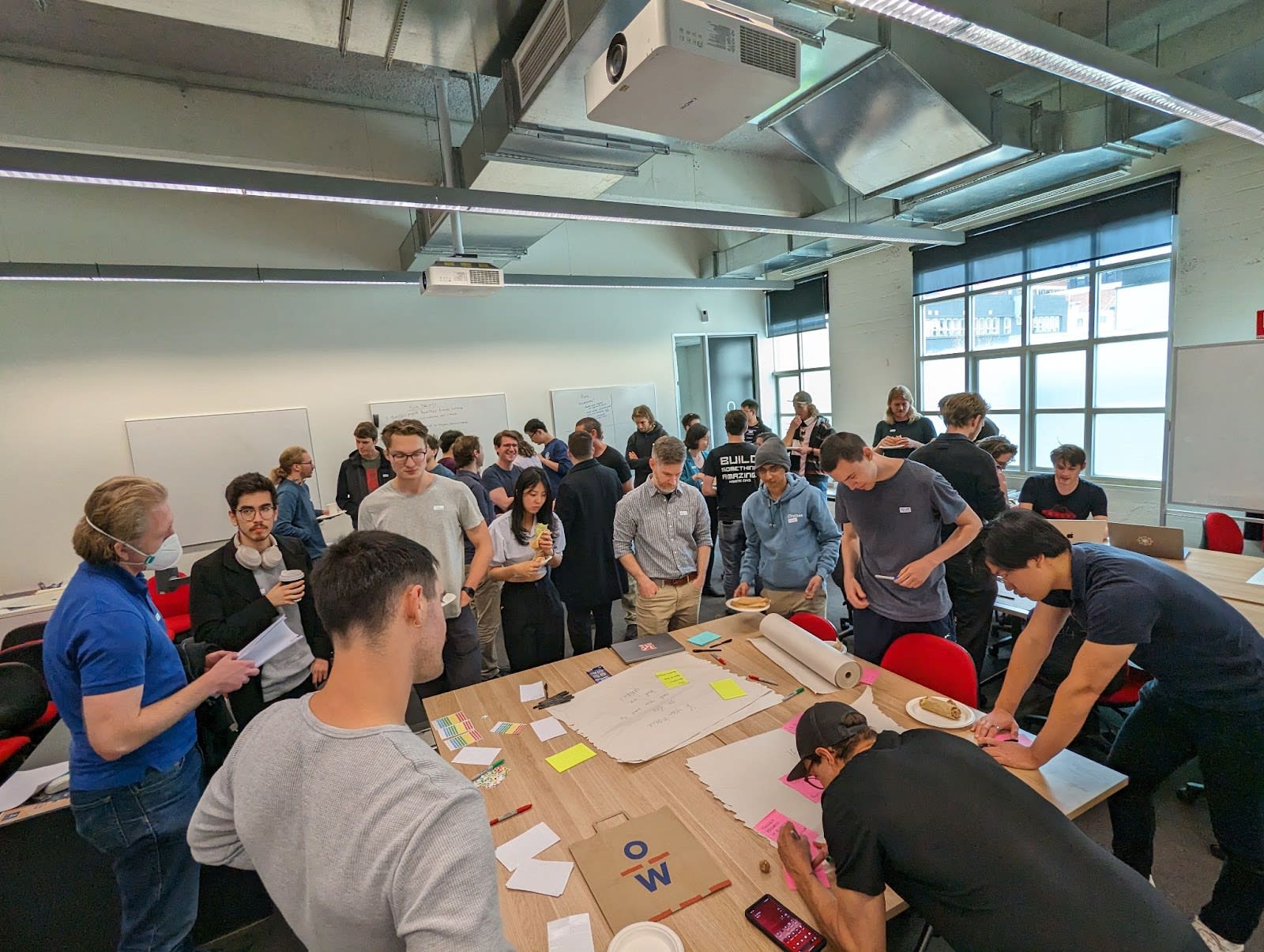
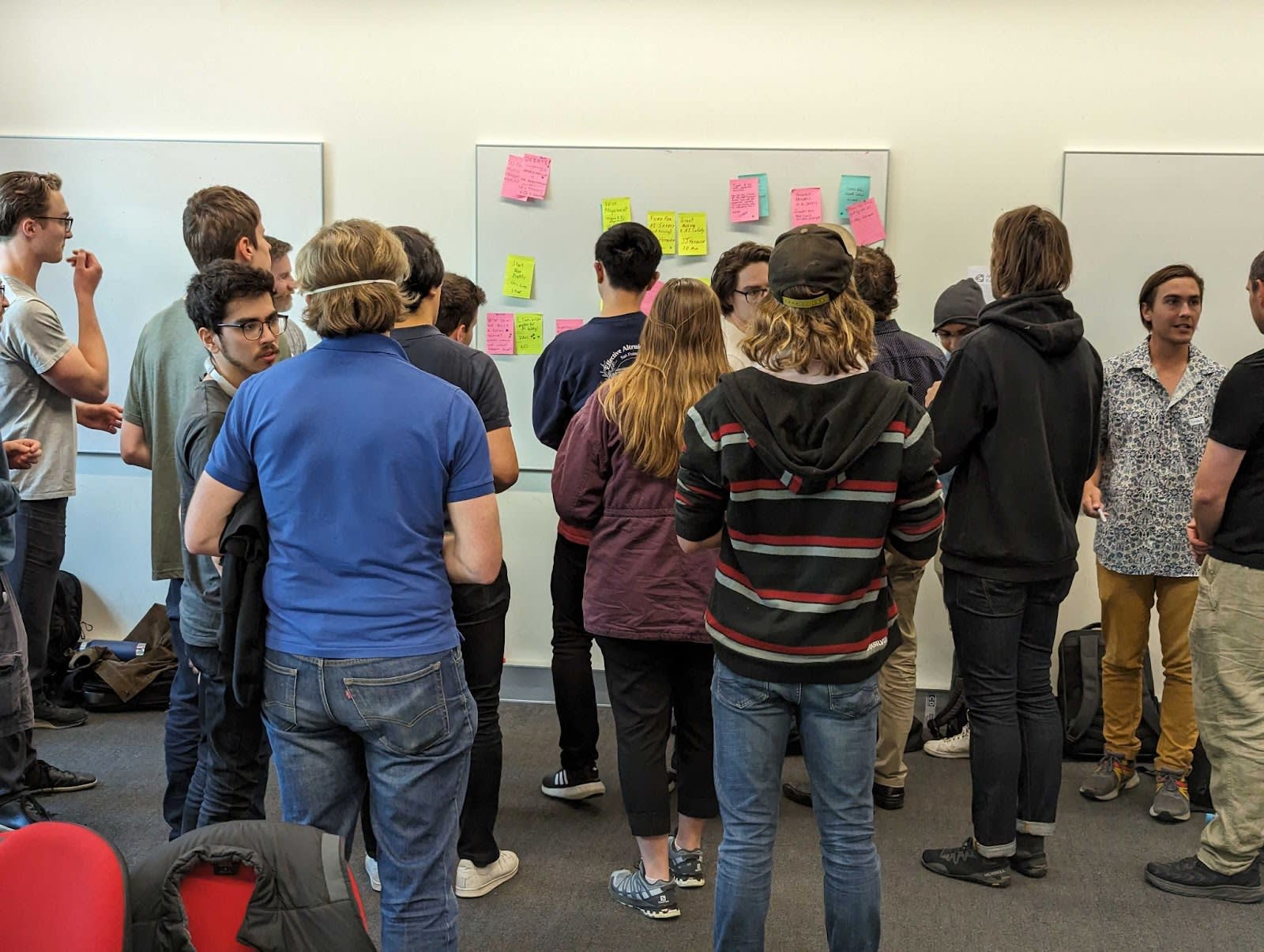
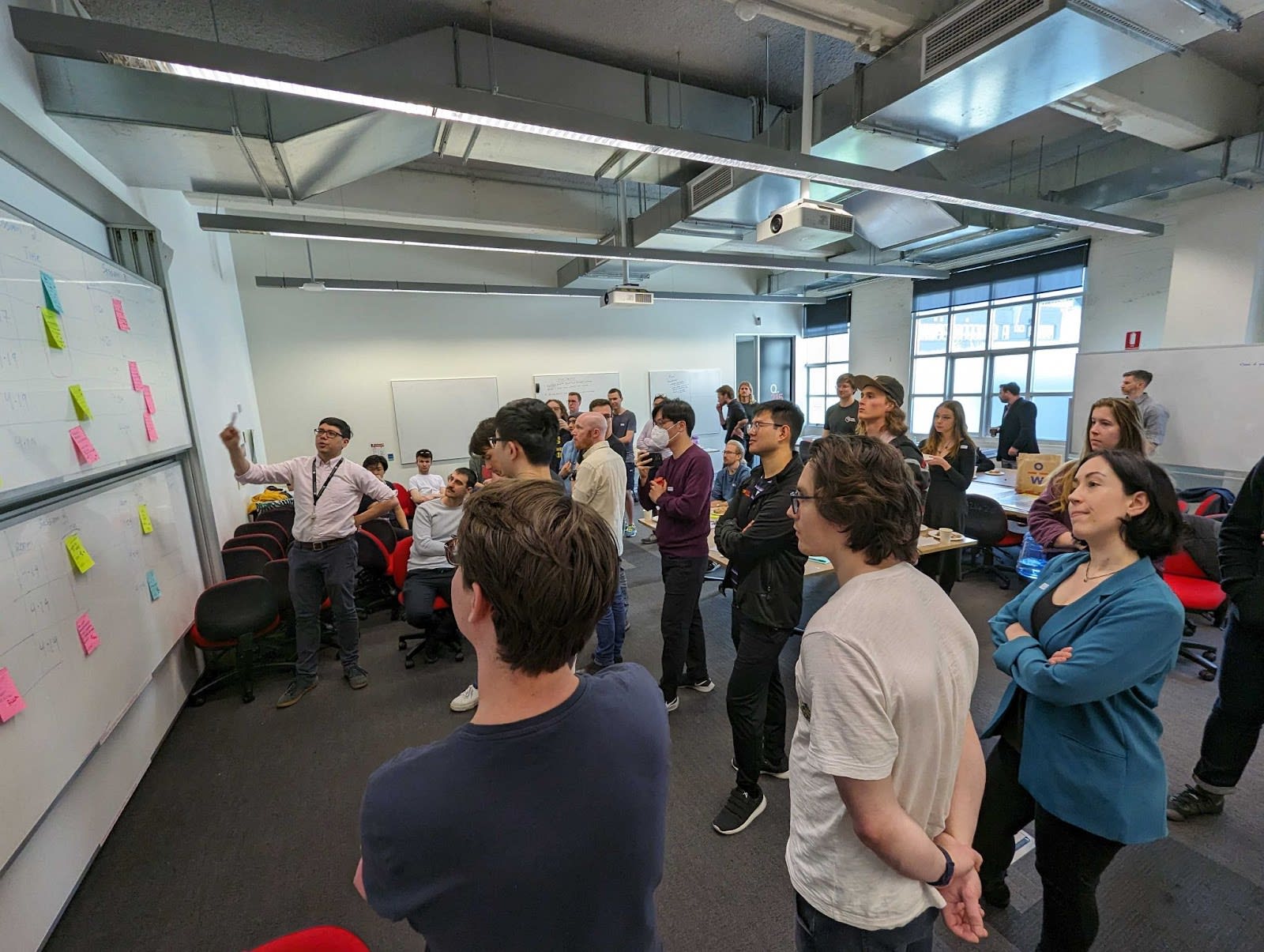
From 11-12:30, attendees arrived, registered, met each other, and ate lunch. They then generated, refined, and prioritised session ideas and topics for the program.
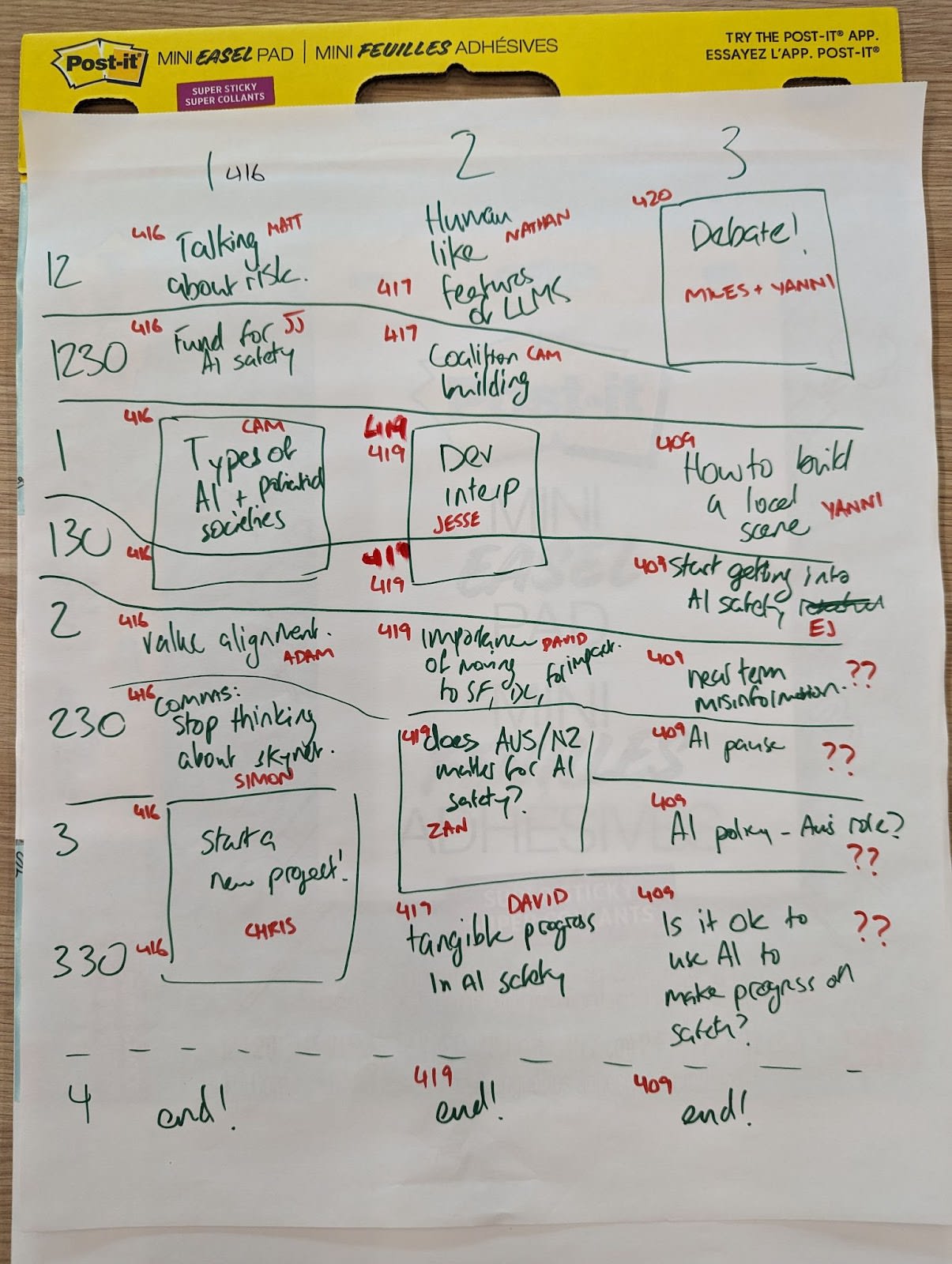
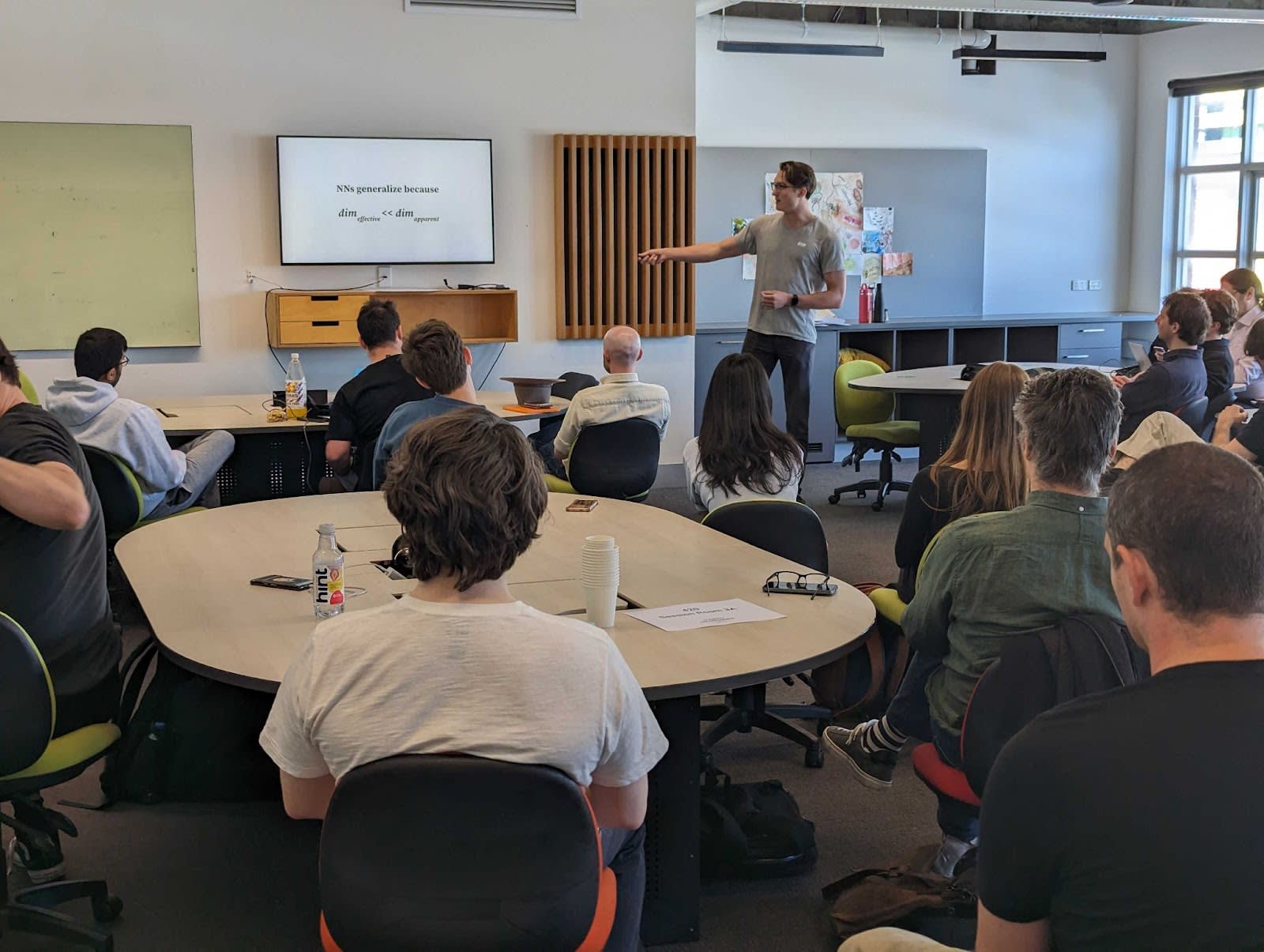
From 12:30-4, attendees participated in or led sessions. Paper versions of the program were posted in each room, and attendees could move between sessions at will.
We conducted a retrospective with organisers after the event (8 attendees), and also requested feedback from attendees through an online survey (20 responses).
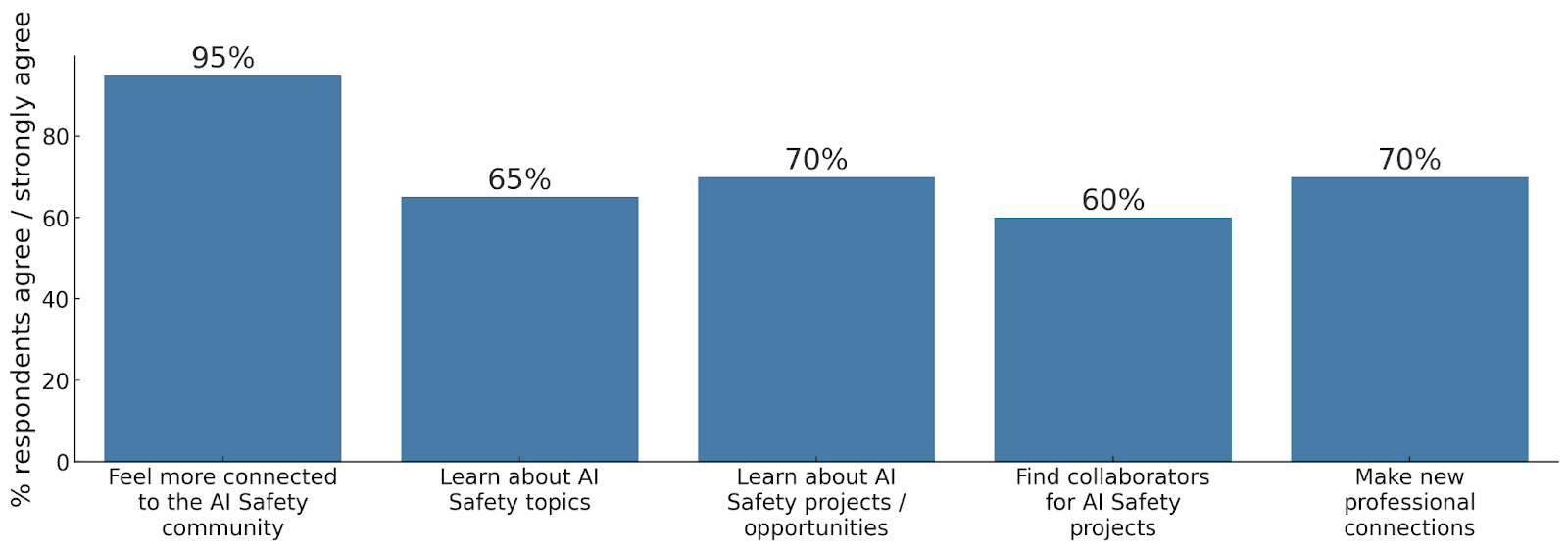
The attendee feedback survey found that the Unconference met its aims of community connection, learning about AI safety, and professional networking:
Most attendees (75-90% agreement) experienced the Unconference as respectful and inclusive (e.g., I felt comfortable sharing my opinions with other attendees; I felt the event was inclusive of diverse perspectives). We noticed a very uneven distribution of men and women; about 8:1, but did not measure any demographic information.
Our Net Promoter Score was 15 (mean likelihood to recommend = 7.75 on a scale of 0-10).
When asked how a future Unconference could change to be more valuable, some attendees wanted more pre-planned structure and more expert facilitation. This suggests that the promise and process of an Unconference was not clearly communicated and/or was not persuasive to those attendees. Another theme was a desire for more structured networking, and/or a way to stay in contact after the event.
The organiser retrospective found the Unconference was worth the effort, but format and planning could be improved:
The AI Safety community in Australia plans to hold future stand alone unconference and conference events, using what we learned from the Unconference experience. This includes a 1-2 day AI Safety conference in Sydney or Melbourne in 2024, and further development of session topics from the Unconference into stand alone events (e.g., coalition building between AI safety and AI ethics; tangible progress in AI safety).
Thanks to organisers & supporters Ben Auer, Sandstone[1], Joe Brailsford, Yanni Kyriacos, Chris Leong, Justin Olive, Soroush Pour, Nathan Sherburn, Bradley Tjandra, Victor Wang, EJ Watkins, and Miles Whiticker for making the Unconference happen.
Thanks to the Unconference attendees for their key role in making the Unconference a success.
We're keen to see more Unconferences used for AI safety and in other cause areas. We think it can be a powerful way to involve participants in taking ownership of 'what needs to be talked about', and can bring new perspectives or discussions that aren't the focus of pre-planned conference programs.
You can request access to a shared Google folder with the Unconference materials, including templates to pitch for funding, advertise the event, communicate with stakeholders, a working document for the event, and feedback surveys & organiser retrospectives. We're happy to grant all reasonable requests - please just tell us in a couple of words how you plan to use the materials!
These sessions are the result of attendee generating ideas, clustering similar ideas, and voting on the clustered ideas. Each attendee received three votes, but not all attendees voted. Ideas that had no one to lead them or which received no votes were not scheduled.
The list of sessions is shown in descending order by number of votes:
We forgot to thank Sandstone in the first version of this post, who was of great help both in planning and on the day.