Comments
More from the author
Curated and popular this week
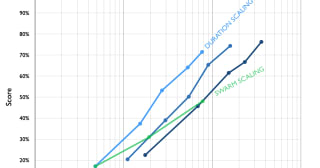
Just how powerful are large swarms of AI agents? And how do their powers scale as more and more agents are added to the swarm?
We’ve seen two large and extremely capable swarms from OpenAI in the last few months:
* 1,200 agents were being evaluated separately, but found a way to illicitly set up a message board and coordinate as a swarm. In order to cheat on their tests, they developed advanced techniques to prevent their actions being logged by OpenAI and 700 of them launched...
60
TLDR: Everyone’s talking about what the money could do, but few about how to decide where it goes.
This post is part of the new series of articles on cross-cause giving and the new wave of philanthropy. Stay tuned to the EA Forum and our Substack for the latest takes on topics such as giving now vs. later, common pitfalls in cause prioritization, and other crucial considerations from the Cross-Cause Fund (CCF) team...

Summary:
First, I give several different angles on how I feel about reinforcement learning:
* Theoretical case: RL is a black-box source of agency — this should give us classic misalignment worries, especially compared to agency-via-scaffolding
* Recent incidents (huggingface etc) and more mundane forms of misaligned behaviour in personal use give me bad vibes about the direction-of-travel of recent AI progress
* I’m worried things might get worse:...

Recent opportunities to take action
A life saved in a rich country is generally considered more valuable than one saved in a poor country because the value of a statistical life (VSL) rises with wealth. However, transferring a dollar to a rich country is less beneficial than transferring a dollar to a poor country because marginal utility decreases as wealth increases.
So, using [$ / lives saved] is the wrong approach. We should use [$ / (lives saved * VSL)] instead. This means GiveDirectly might be undervalued compared to other programs that save lives. Can someone confirm if this makes sense?
Generally considered by who? If you polled the general population, I think the position that rich lives are more important to save than poor lives would be highly unpopular. I certainly don't believe it.
One factor is that rich people have more resources and ability to save themselves. If a millionaire and an impoverished person both need a ten thousand dollar treatment to live, obviously you should donate to the impoverished person!
VSL isn't directly comparable across countries. It's a measure of how much money people in a given country would be willing to spend to save their own lives. For example, if someone would be willing to pay up to $125,000 to reduce the chance of them dying by 1%, then their VSL is $12.5 million. These amounts are lower in poor countries simply because the people there have less money, and it has nothing to do with whether their lives are more or less valuable.
The value of a statistical life is determined by governments, right? Governments of rich countries value their own citizens more than they value the citizens of poor countries, which makes sense from their perspective, but it's not morally correct so you shouldn't accept their VSLs.
The point that it's better to save people with better lives than people with worse lives, all else equal, does make sense (at least from a utilitarian perspective). So you're right that [$ / lives saved] is not a perfect approach. I do think it's worth acknowledging this...!
But the right correction isn't to use VSLs. The way I'd put it is: a person's VSL--assuming it's been ideally calculated for each individual, putting aside issues about how governments estimate it in practice--is how many dollars they value as much as slightly lowering their chance of death. So the fact that VSLs differ across people mixes together two things: a rich person might have a higher VSL than a poor person (1) because the rich person values their life more, or (2) because the rich person values a dollar less. The first thing is right to correct for (from a utilitarian perspective), but as other commenters have noted, the second isn't.
My guess is that the second factor baked into the VSL is bigger in most real-world comparisons we might want to make, so that it's less of a mistake to just try to maximize [$ / lives saved] than to try to maximize [$ / (lives saved * VSL)].
I don't think lives of rich people should be more valuable than lives of poor people.
I strongly disagree with that.