Comments
More from the author
Curated and popular this week
147
Headline finding: I audited 17 AI Safety Talent programmes. Zero of 17 have published any comparison group, rejected-applicant follow-up, matched control or randomisation. Not one. Every programme that mentions a counterfactual does it by asking participants to self-report.
Background
At least $70 million...

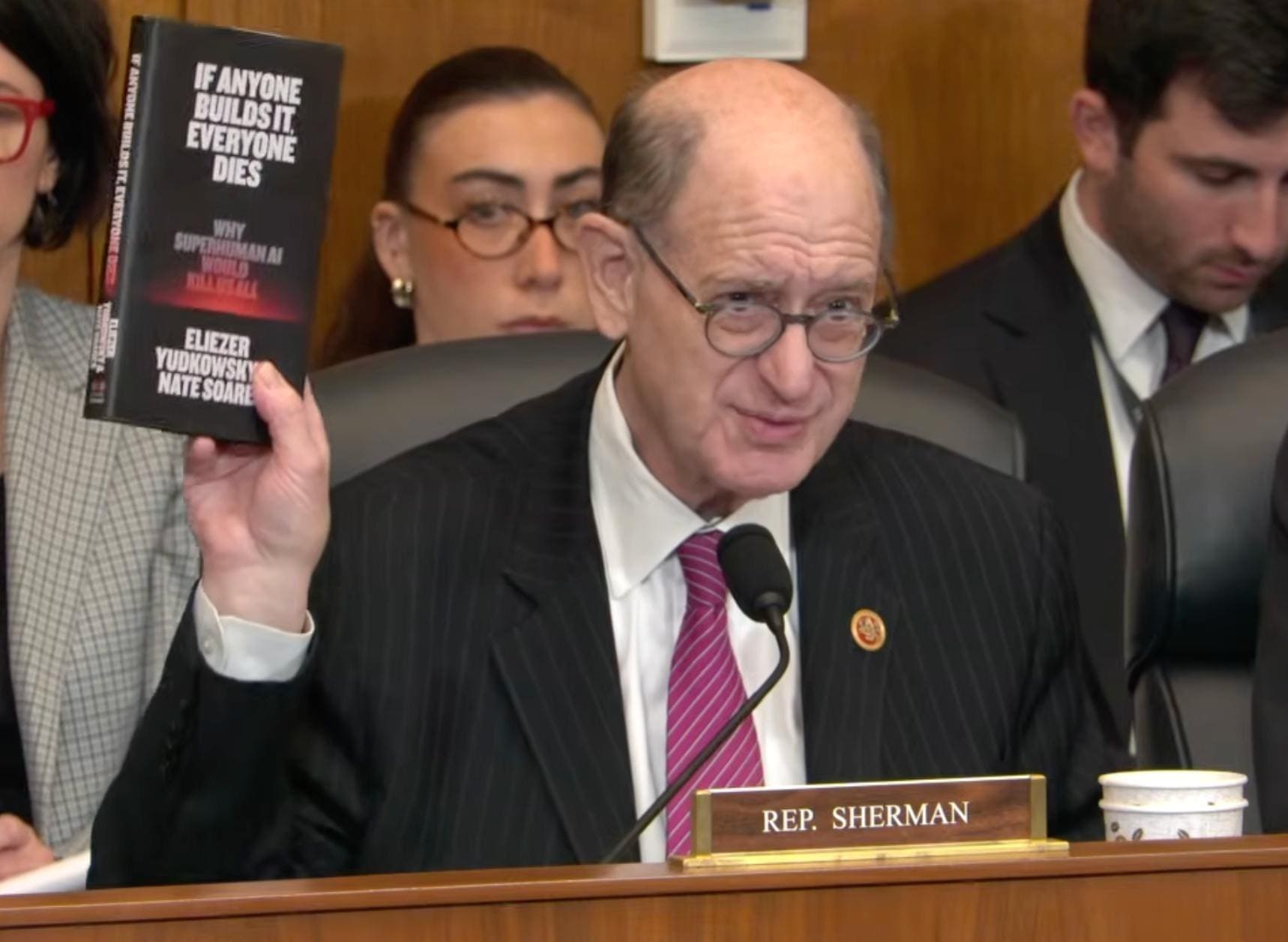
In celebration of still being alive and fighting, we are giving away 1,000 Amazon e-books of “If Anyone Builds It, Everyone Dies”. Feel free to send a copy to yourself, a loved one, or a friend—we need all hands on deck.
Today marks exactly one year since If Anyone Builds It, Everyone Dies: Why Superhuman AI Would Kill Us All, by Eliezer Yudkowsky and Nate Soare...
A year ago I posted that YCombinator (YC) companies didn’t seem to be growing faster since the release of ChatGPT in 2022. I reran that experiment and found that 2023+ YC companies are arguably growing a bit faster than pre-2023 companies (including AfterQuery, ...

Recent opportunities to take action
I think that the short hand of "this person vouches for this other person" is a good enough basis for a lot of pre-screening criteria. Not that it makes the person a shoe in for the job, but it's enough to say that you can go by on a referral.
You might say, this is a strange way to pick people, but this is how governments interview people for national security roles. They check references. They ask questions.
I imagine more questions would be asked to the third party who is 'personally referring' the applicant, leading to a slightly different series of interviews anyway. In my experience, people have to work a lot harder to get a job, than to keep one. I know that it's true with everyone that referred me to just about every position. Then if I perform badly it looks poorly on them, but after a certain time, I'm the one referring people onwards, so I have to make my own assessment of if I'm willing to put my reputation on the line.
It’s a very useful signal as a hiring manager, assuming you trust the reference, but also leads to problematic incentives where people feel like they need to spend resources on being liked by those giving references in order to get a job. “Spend resources” here can be understood to include a wide variety of behaviors, including good things like working well with others, innocuous things like networking, but also dangerous things like flattery or (for example) not advertising that the giver of references is a harasser.