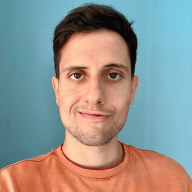
Sergio Rodriguez
Organizational Psychologist & Field Builder
Passionate generalist looking for opportunities in high-impact non-profits to contribute as a Field Builder (Programs Manager, Operational Strategy, Talent Management, etc.).
During the past 9 years I worked as a private psychologist and programs lead for different e-learning companies (including my own businesses). Feel free to reach out if you need help related to entrepreneurship, psychology or how to develop transformative programs!
P.D. I am also a sport enthusiast, willing to join any volleyball match, discharge some adrenaline with sack boxing and express beauty through pole sport.
As you move up that "value-chain" you described, it becomes more important to know what Not to do, instead of doing. You have so many possible tasks in front of you that prioritizing becomes one of the most fundamental skills.
Also, the more you "climb" that ladder the less execution work one tends to do. Organizing events where you might not be present, managing and connecting right people or thinking strategically about decisions, become the key tasks to focus.
I also believe every phase has its amount of value and impact, and we should choose to remain in the layer where we could most contribute.
Nice post! Although I've encountered a few professionals doing the opposite transition. Many thought they were going to produce a higher impact going into AI Safety, but they discovered their career capital or personal fit was better aligned with the cause they came from, and returned as time went by.
If most people in EA go to work on AIS, the rest of causes will get more neglected and the relevance to tackle them will increase over AIS. The opposite is also true, so a balance should be found.
I would also encourage AIS talent to found new organizations, especially meta / field-building ones to guide talent into the sector. There is an important mismatch between talent and hiring managers expectations, addressing it will be one of the most cost-effective ways to help the field.
Much cleared, thanks! Will give it a thought during this week, but I'll probably apply. Seems a great initiative.
On another topic, I was surprised to see that everyone on your team is also volunteering. Are you planning to go full time paid or ask for funding to hire people in the near future? A project like this could be much effective if a full time team could lead it for sure. =)
The fact people know who you are and you don't have any idea about them can lead to awkward moments, but also funny ones! Thanks for your insights Sofia, made me consider even more dedicating my efforts to meta and community building. =)
Arguments like this show why AI Safety could benefit from allocating more attention in nearer-term and certain risks.
Usually, the logic against this lies in allocating more resources into s-risks and x-risks due to their enormous detrimental impact. But building the whole AIS field around them is dangerous for the optics outside the field, especially if slower timelines come to play.
Also, I haven't found much literature on how focusing on more certain risks (cyber-attacks, power concentration, disruption of critical infrastructure...) could help prevent s-risks and x-risks. Could be a field worth exploring of research.
Agree, there is a mismatch in communication between what AIS organizations actually need and what they are telling candidates. And although I consider necessary the talent infrastructure AIS is building, it is quite inefficient and problematic as I discussed here.
The main concern I see: fellowships and most training programs are focused on "low-hanging fruits". They are advertised as ways to bring experienced talent into the field, but rather they tend to select people who either would have less problems to enter a job, or people who were already in the field (I analysed the fellows backgrounds of famous fellowships such as GovAI or MATS and I can confidently say this is the case).
And if we are focused on just draining the talent pool of already best-suitable talent for the sake of short term cost-effectiveness or immediate appealing metrics... AIS is going to have a chunk of a problem in a few years without good talent available.
Sounds great! I´m aware "Mental Health" ranks among the lowest prioritized causes in EA (it doesn't have a core topic tag either in the forum!). Good to know about your project.
As a psychologist and founder of a couple for-profit businesses in the past I might be interested.
What is exactly the profile(s) of facilitators you are looking for?
Also, can you check the SSL and security standards on your webpage? Tried to enter to know more about your organization, but warning messages appeared all over the place.
From a "cost-effectiveness" framework (and the objective of maximizing impact), competition among charities is not detrimental itself. But I agree this competitive drive for funds should be balanced with synergetic approaches.
Reading similar posts, the main issue seems if they are caring indeed for doing most good. If that was the main goal, an "adequate" funded charity would be willing to give up some funding if they believe smaller ones have a higher capacity to allocate more effectively those funds.
Probably, the problem of competition arises when a "survival mindset" is at play, which would rise questions about why funding is scarce. A bad assessment of cause prioritization? Overcrowded sector by similar charities? Or harmful incentives influencing selfish requests for funding?
I would not blame competition alone, but rather conduct an in-depth analysis of all these issues. Probably, would be a nice idea of a non-profit to enhance the collaboration and the cross-working among charities in similar areas.
I strongly recommend reading the book "Quiet: The Power of Introverts in a world that can't stop talking", by Susan Cain. It changed my whole view of introverted people, and think goes quite along with this post. =)
P.S. Planning to go to my first EA event soon. I really appreciate this set of advice you gave!
As a psychologist I might be biased, be I couldn't agree more with your framework.
Humans are the ones developing AI in frontier labs. Humans are deciding what to legislate in government offices. Humans are pushing safeguards and limits on AI. Why AIS seems to forget so much about the human factor in what this technology becomes and its impact?
Even agentic AI evaluations, alignment interventions and interpretability techniques could vastly benefit from social scientists that are the most informed about how decision-making and motivation work (not only computer scientists or philosophers, that are also valuable of course).
I hope to see in the near future a wider range of backgrounds including social scientists positively influencing AIS field.