Note: This post was crossposted from the Coefficient Giving Farm Animal Welfare Research Newsletter by the Forum team, with the author's permission. The author may not see or respond to comments on this post.
Subtitle: On vegan advocacy, effective altruism, and FIFA
I turn 40 today. Here are some hot takes.
On factory farming
1. Our biggest challenge is salience. If factory farming led the evening news, it wouldn’t last lo...
Impressions from the 21st Annual U.S. Cluster Headache Patient Conference, organized by Clusterbusters.
On the morning of the last day of the conference, E. was hanging out with other “clusterheads” outside the conference hotel when he started having a cluster headache attack. Before he could go back to his hotel room, J. offered E. his DMT v...
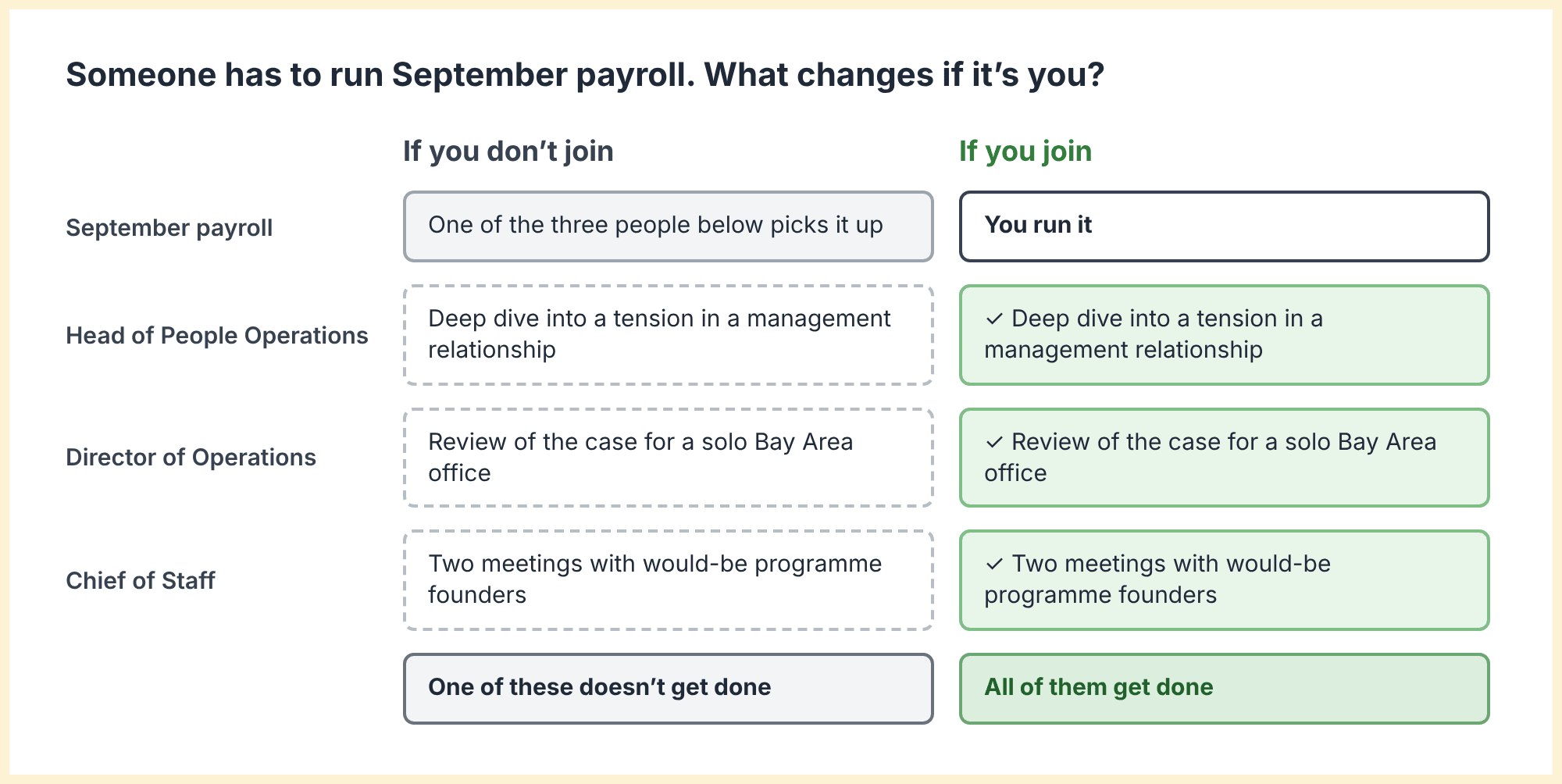
When speaking to candidates who are considering working with us at 80,000 Hours, I often hear people worry about replaceability.
The familiar version of the worry is about whether the organisation will hire someone else in your place. If it will, then the difference you make by taking the job is only the difference between you and them.
There are a couple of well-known answers to that. The person hired in your place probably cares about the world too, and would go on to do somethi...

I like the content.
But a small terminology note: I'm not sure it is a good practice to call it research pieces (and 80k hours is one of the norm-setting organization in EA)
A big portion of the pieces is podcasts, "recorded conversations between smart people". This is useful in many ways, but is it research?
In general, it seems to me ... "research" is high prestige in EA movement. Which creates an incentive to label things as research. So many important things are labelled research.
So it shouldn't surprise anyone there is e.g. shortage of operations people
Fair point. I thought about calling them articles... but they're definitely not all articles. Thought about calling them 'content releases' but that felt like corporate vagueness.
I should have gone with something nobody could dispute: 32 new(ish) universal resource locators. ;) - RW