People in econ academia are worried about the lack of urgency and adaptability amongst peers who hopped on the econ of AI bandwagon, and think there is an overemphasis of empirical work and causal inference on marginal problems (like productivity gains) to impress other economists. Economists aren't rewarded for trying to answer ill defined but important / ambitious / longterm questions about AI e.g. gradual disempowerment, post-labour.
Some technical AI safety people are disillusioned with mech interp and are trying to work in AI policy because they think this is the going to move the needle most now.
1-1 system using the new Swapcard matcher is great, very low friction way to meet specific people where you know there's a high chance the conversation will be very fruitful.
The number and quality of my match requests were starkly higher from EAG London a few months ago, almost certainly due to MATS being on my profile.
I've gotten to the stage where now undergrads match with me for advice (I'm no longer the student!), and they're confused about what to do. I tell them is to remain relentlessly curious but I have no good advice for what the world looks like in 3 years.
People are increasingly supportive of when I say I put off PhD plans partially due to shorter timelines.
People don't have a good pitch to explain gradual disempowerment risks to their non AGI-pilled friends, as it's fuzzier/less obvious than misuse and misalignment. They seemed to like the cattle analogy I overuse.
Fellowship hopping beyond 2 fellowships is seen as an anti-signal in the AI safety space.
As someone who did not attend, this is helpful, thank you.
1: The incentives in Econ academia are terrible. It’s a closed and very hierarchical system in which your career almost exclusively depends from references from top professors, which you will only get if you work on the “approved topics”. At least, this holds for macroeconomics, maybe other fields are more open. Not sure whether EA can do much about this besides offering enough money, and especially prestige, to convince economists to abandon their traditional career ladders.
(Not an economist but I used to work with many of them)
8: I get the same impression, why do you think this is? And how can we as a field reconcile this with the fact that it’s only going to get more common as fellowship spots grow at a much faster rate than full time positions? Related: What do people (or you) think someone should do after 2 fellowships, if they haven’t managed to get a full time research role?
Yea it's bad bad. It sucks because I think the AIS space is also severely neglecting the economic toolkit in regulating AI. Fundamentally AI x-risk is a (rather unique and probabilistic) negative externality but there are like 15 people in the world trying to think about optimal regulation from this lens meanwhile. And ofc there are lots of other important questions as you mentioned that econ has a good framework to bring in.
Grantmakers should probably start handing out grants to phds to write papers (no obligation to publish to a journal or good journal) on AI stuff, and if they write a good paper just ask them if they want to run a few person org studying an important policy topic from an econ lens. This will get you much better research but the issue is then if you can prestige launder them enough for policy makers to take the research seriously.
>Related: What do people (or you) think someone should do after 2 fellowships, if they haven’t managed to get a full time research role?
Just based quickly on your situation, not a great solution but maybe you could get some money from tailwind or someone else to do econ recruiting/grantmaking for important questions? Probably wouldn't be super high probability of landing it though so if you just are mainly concerned about what to do with your time (which I get) idk.
Note: This post was crossposted from Planned Obsolescence by the Forum team, with the author's permission. The author may not see or respond to comments on this post.
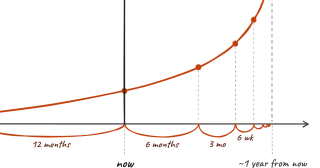
Subtitle: If acceleration compounds, the naive extrapolation implies superintelligence within a year
This post discusses a public METR report on AI R&D acceler...
TL;DR:
* When we started Rethink Priorities (RP) in 2018, our mission was, simply put, to close the knowledge gaps that stopped people from improving the world as much as they could. That hasn’t changed much, but the landscape we’re doing it in is shifting.
* In 2027, we plan to grow our core GHD, Animal Welfare, and Worldview Investigations teams to take on emerging priorities across causes, including those that the forthcoming transformative AI is creating.
...
This post is part of the Rethink Priorities Cross-Cause Fund (CCF) series on how to allocate funding across causes when it is uncertain what matters most.
...

Quick reflections from EAG NYC:
As someone who did not attend, this is helpful, thank you.
1: The incentives in Econ academia are terrible. It’s a closed and very hierarchical system in which your career almost exclusively depends from references from top professors, which you will only get if you work on the “approved topics”. At least, this holds for macroeconomics, maybe other fields are more open. Not sure whether EA can do much about this besides offering enough money, and especially prestige, to convince economists to abandon their traditional career ladders.
(Not an economist but I used to work with many of them)
8: I get the same impression, why do you think this is? And how can we as a field reconcile this with the fact that it’s only going to get more common as fellowship spots grow at a much faster rate than full time positions? Related: What do people (or you) think someone should do after 2 fellowships, if they haven’t managed to get a full time research role?
Yea it's bad bad. It sucks because I think the AIS space is also severely neglecting the economic toolkit in regulating AI. Fundamentally AI x-risk is a (rather unique and probabilistic) negative externality but there are like 15 people in the world trying to think about optimal regulation from this lens meanwhile. And ofc there are lots of other important questions as you mentioned that econ has a good framework to bring in.
Grantmakers should probably start handing out grants to phds to write papers (no obligation to publish to a journal or good journal) on AI stuff, and if they write a good paper just ask them if they want to run a few person org studying an important policy topic from an econ lens. This will get you much better research but the issue is then if you can prestige launder them enough for policy makers to take the research seriously.
>Related: What do people (or you) think someone should do after 2 fellowships, if they haven’t managed to get a full time research role?
Just based quickly on your situation, not a great solution but maybe you could get some money from tailwind or someone else to do econ recruiting/grantmaking for important questions? Probably wouldn't be super high probability of landing it though so if you just are mainly concerned about what to do with your time (which I get) idk.