Summary: Reinforcement/ positive feedback loops can be a big deal and looking for them could be a good strategy to both compare and find causes and interventions.
Most of this post feels pretty obvious and intuitive to me, but I haven't seen anyone else writing it. More importantly, there are important conclusions that I didn't arrive at until I decided to write this post, and I think they could be useful.
Understanding reinforcement loops
Reinforcement loops drive systems toward exponential growth trajectories, provided they are not constrained by balancing feedback loops or resource limits. Depending on whether this runaway growth is considered beneficial or harmful, these loops are generally categorized as 'virtuous' or 'vicious'.
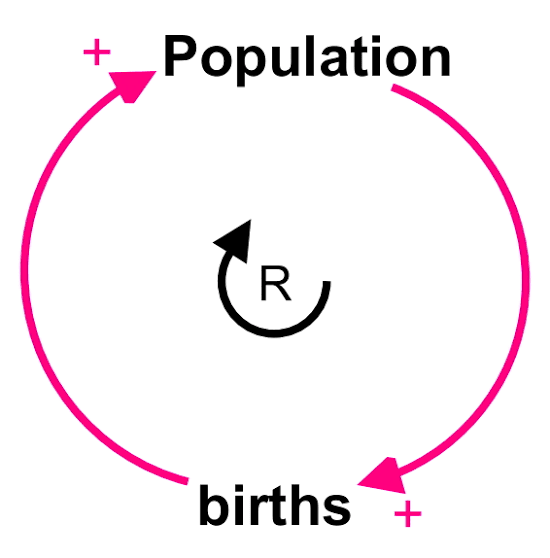
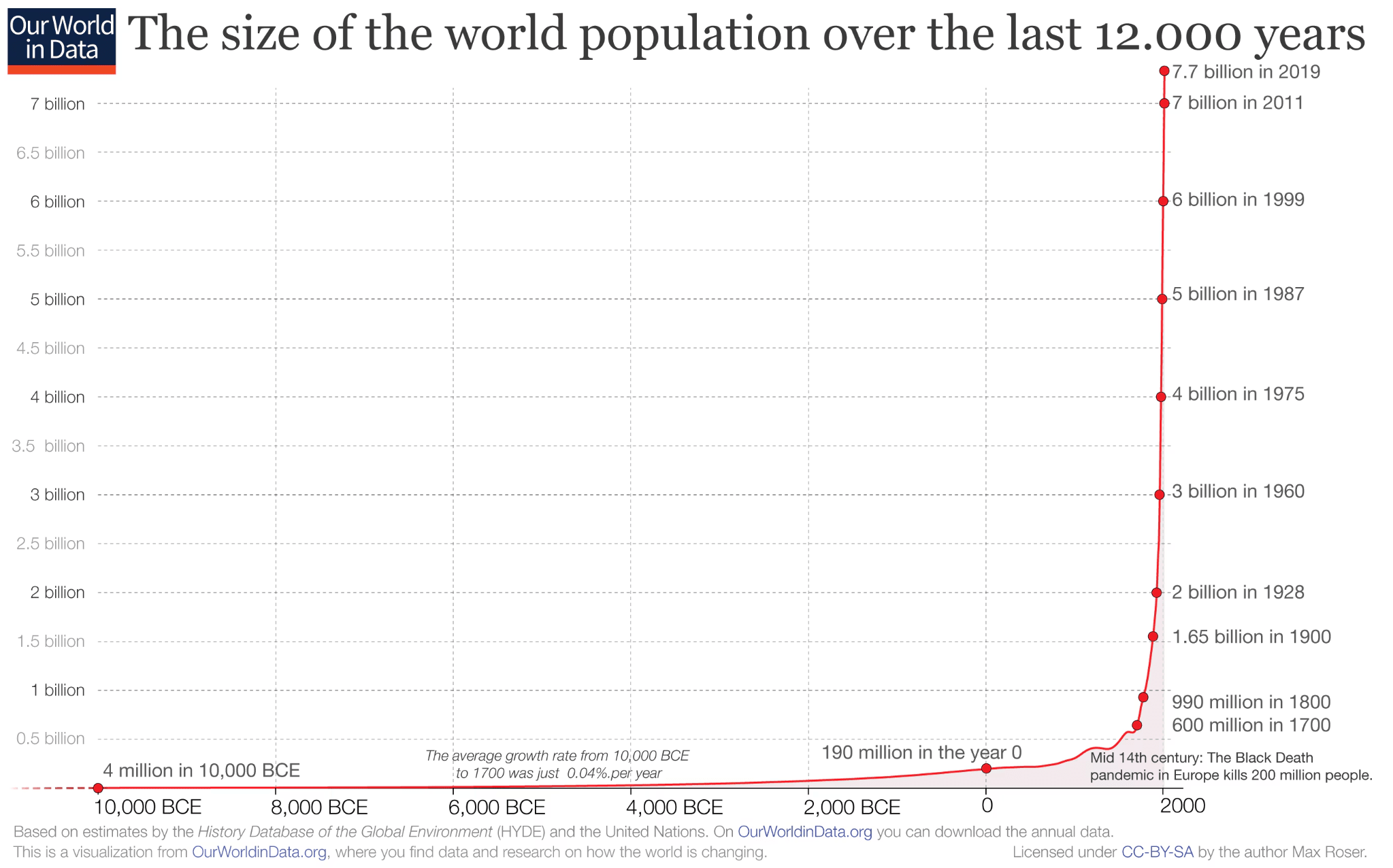
Vicious reinforcement loops
In vicious feedback loops, runaway growth poses a central danger: if humanity generally needs time to adapt to emerging problems, the sheer speed of these accelerating processes leaves very little time to do so. You can find some of these at the core of most x-risks:
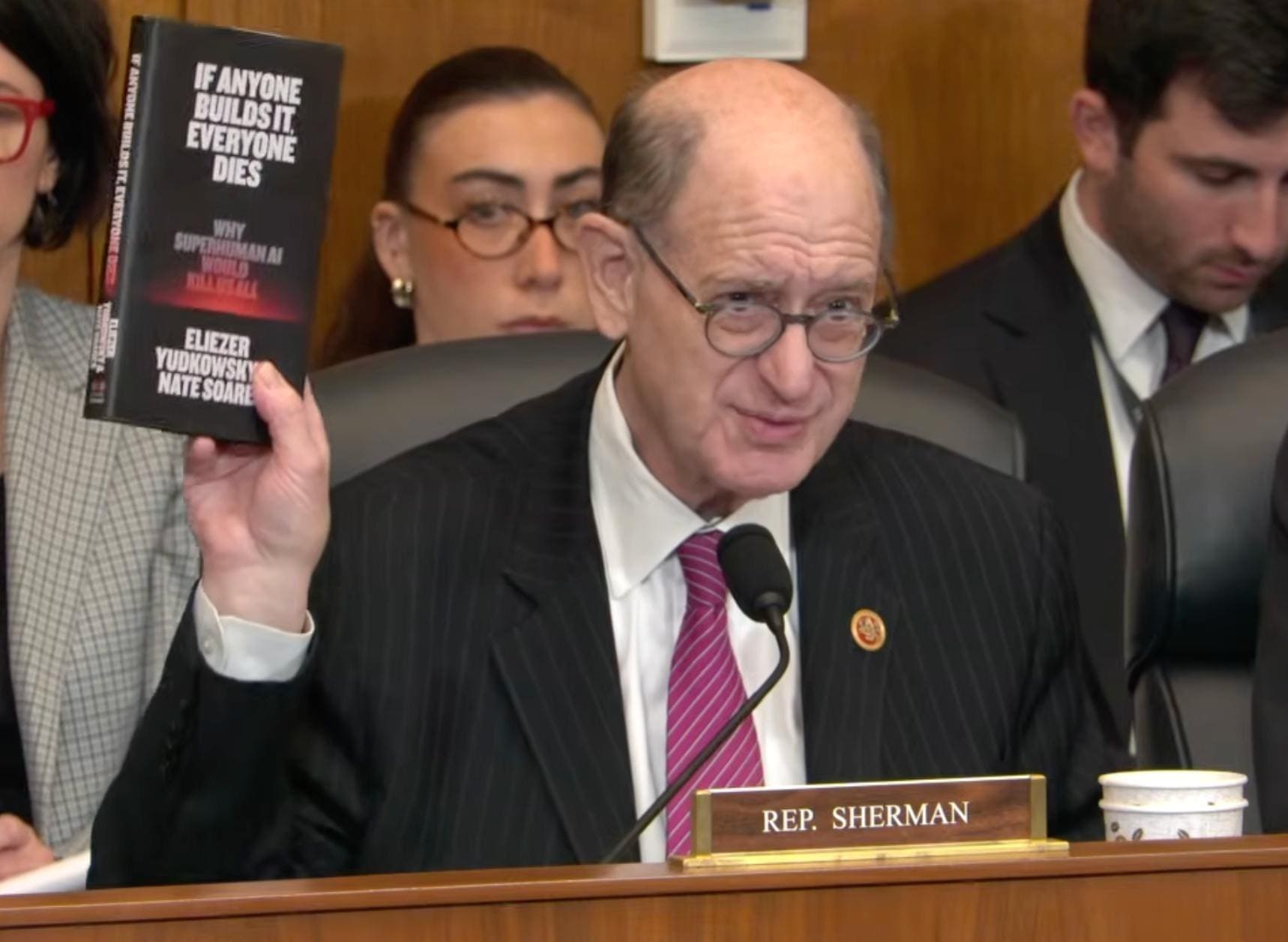
- AI risk: Recursive self-improvement is the classic example of this, where AI progress increases cognitive capability, which is then fed back into accelerating AI research, leading to exponential growth.

- Biorisk: Pandemics are notoriously dangerous because of their potential for exponential transmission, which occurs whenever the reproductive rate of a pathogen remains above 1.
Climate change: Runaway climate change is driven by powerful physical feedback loops, such as the ice-albedo feedback (where melting ice reduces reflectivity, increasing heat absorption and causing more ice to melt) and permafrost thawing (which releases methane and carbon dioxide, further warming the atmosphere). This is why it is expected that after a certain tipping point, it becomes a lot harder to stop the snowball from rolling down the hill.
- Nuclear risk: In nuclear weapons, supercriticality relies on a positive feedback loop of neutron-triggered fission reactions. This exponential release of energy is thankfully arrested by a negative feedback loop known as "hydrodynamic disassembly." At the geopolitical level, nuclear escalation is also a reinforcement loop that would actually make it an x-risk (or at least catastrophic).
- Nanotechnology: The classic "grey goo" scenario represents an existential nanotechnology threat where self-replicating assemblers consume material exponentially to create more assemblers, rapidly depleting resources.
- Extreme power concentration: Theoretically, power recursively grants access to more power. Yet, when we look at empirical data like wealth inequality and the Gini coefficient, the trend toward global, long-term rising inequality is less straightforward. When it comes to real humans (and groups of them), the real dynamics are more complex.
But that could be changing right now. Automation and new technologies like AI, life extension, social media and globalization could end up empowering certain actors more than ever.
Virtuous reinforcement loops
Virtuous reinforcement loops with leverage points could allow for interventions where efforts have Increasing Marginal Returns instead of Diminishing Marginal Returns, which would be amazing. This post goes more in depth on why we might find this leverage in systemic change interventions.
Some potential ones that come to mind:
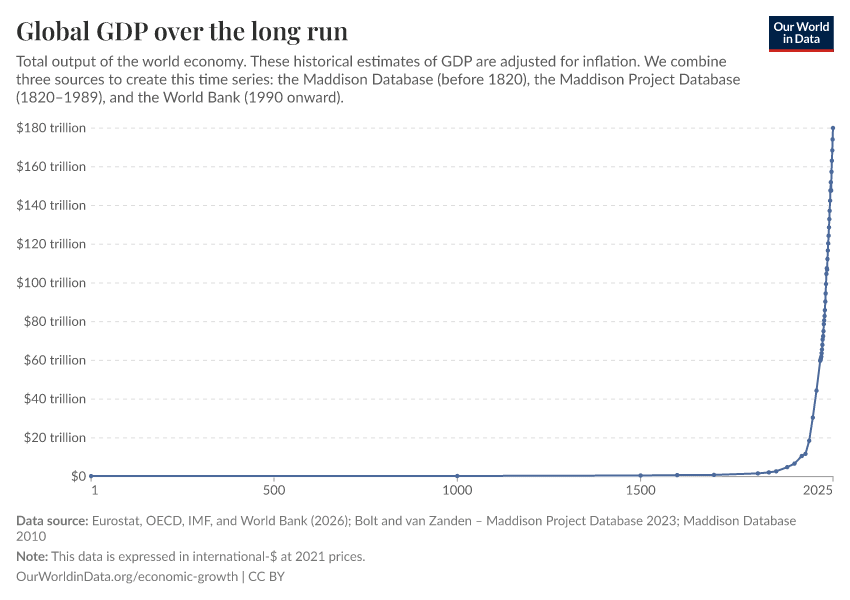
- Economic growth: The problem with increasing this is that I believe it would also accelerate AI capabilities, economic inequality and power concentration.
- Democracy: One obvious way to limit power concentration is to increase the power of everyone else, and the same logic that applies to one person probably applies to a group of them. So I do think of democracy as an attractor state, and the more you can increase it either globally or inside a specific country, the better.
Education: But if you have democracy while the people are uneducated, you can get bad governments. Besides political power, knowledge can also be distributed and, if done correctly, can also trigger positive feedback loops like AGIs. I mean, that’s the story of human learning in general. If we use a wide meaning of “education” I think this can include improving AI character, social media and journalism.
- Self-improvement: Individually, other things can self-improve besides AI, like
- Movement growth: Naively, one could think a movement could grow virally like an internet meme, but in reality people would feel it is some kind of pyramid scheme-ish cult and feel really negatively about it. Furthermore, even if viral growth were possible, there are compelling arguments that rapid growth could be counterproductive.
Conclusions
When comparing causes and interventions, considering virtuous loops in the analysis could be modeled either as an increase in the tractability of the cause/ intervention, or an increase in its impact over time; and considering vicious loops could be modeled as a decrease in them.
Besides this, I believe we could find new cause areas by searching for both virtuous and vicious loops. This can be approached both theoretically, by modeling potential feedback structures, and empirically, by searching for phenomena in the world currently experiencing growth, exponential growth in particular.
Of course, negative feedback loops should be considered too; I just believe it’s more important to look for positive ones.
Do you have any positive feedback loops in mind that you think the community should focus on or investigate further?
(Disclosure: This post was drafted and refined with the assistance of Gemini and Grammarly to help polish some paragraphs, correct grammar and technical terms, and fact-check key arguments.)


Thank you, seems like an important thing to internalize! I think it suggests 2nd order effects are quite important, e.g. consider the example MacAskill gives in WWOTF where slowing down a car by a few milliseconds probably radically changes the genetic make-up of posterity millions of years into the future. :) It also might be an interesting argument for taking a deontolog-ish approach to norms around civility and epistemics. I'm trying to internalize it myself by thinking about myself as "one neuron of humanity". It also well aligns with the recent post summarizing the underrated spillover effects in charity interventions.
What? I never read WWOTF because I thought it was like an introduction to longtermism and I'd probably not learn much from it, but maybe I should check it out.
I didn't get how it could justify a "deontological approach to norms around civility and epistemics"
It sounded more elegant in my head but the idea combines the notions that:
For instance, I think an underrated driver of affective polarization is mutual radicalization - people like to share clips of the most radical and crazy representatives of "the other side". This creates a bad "theory of mind" of the other camp, i.e. people overestimate their craziness/radicalness, and become more permissive of crazy/radical ideas coming from their own camp. This mutual effect creates a self-fulfilling prophecy.
However, virtuous norms seem to have a similar effect. Sacrificing your short-term comfort/interests in favor of acting acording to the moral rules that you would like to see generalized means:
Some examples where this effects seem intuitive: Voting, being vegetarian, attending demonstrations, publicly advocating correct weird-sounding views
Oh, I understand what you mean now.
Yeah, but I think there is a low upper limit to how good a coversation can get.
Also, if there are too many participants and no "moderator", the game theory can benefit defecting from the norms.