Headline finding: I audited 17 AI Safety Talent programmes. Zero of 17 have published any comparison group, rejected-applicant follow-up, matched control or randomisation. Not one. Every programme that mentions a counterfactual does it by asking participants to self-report.
Background
At least $70 million...
Author: Grace Ryba (she/her), Executive Director
TL;DR:
* BluePerch is a new animal welfare grantmaker.
* Grant applications aren't open yet - we're aiming to open applications in roughly mid-2027.
* We welcome early expressions of interest from potential grantseekers so we can notify you when applications open - express your interest here or see further details below.
* We're also seeking boa...
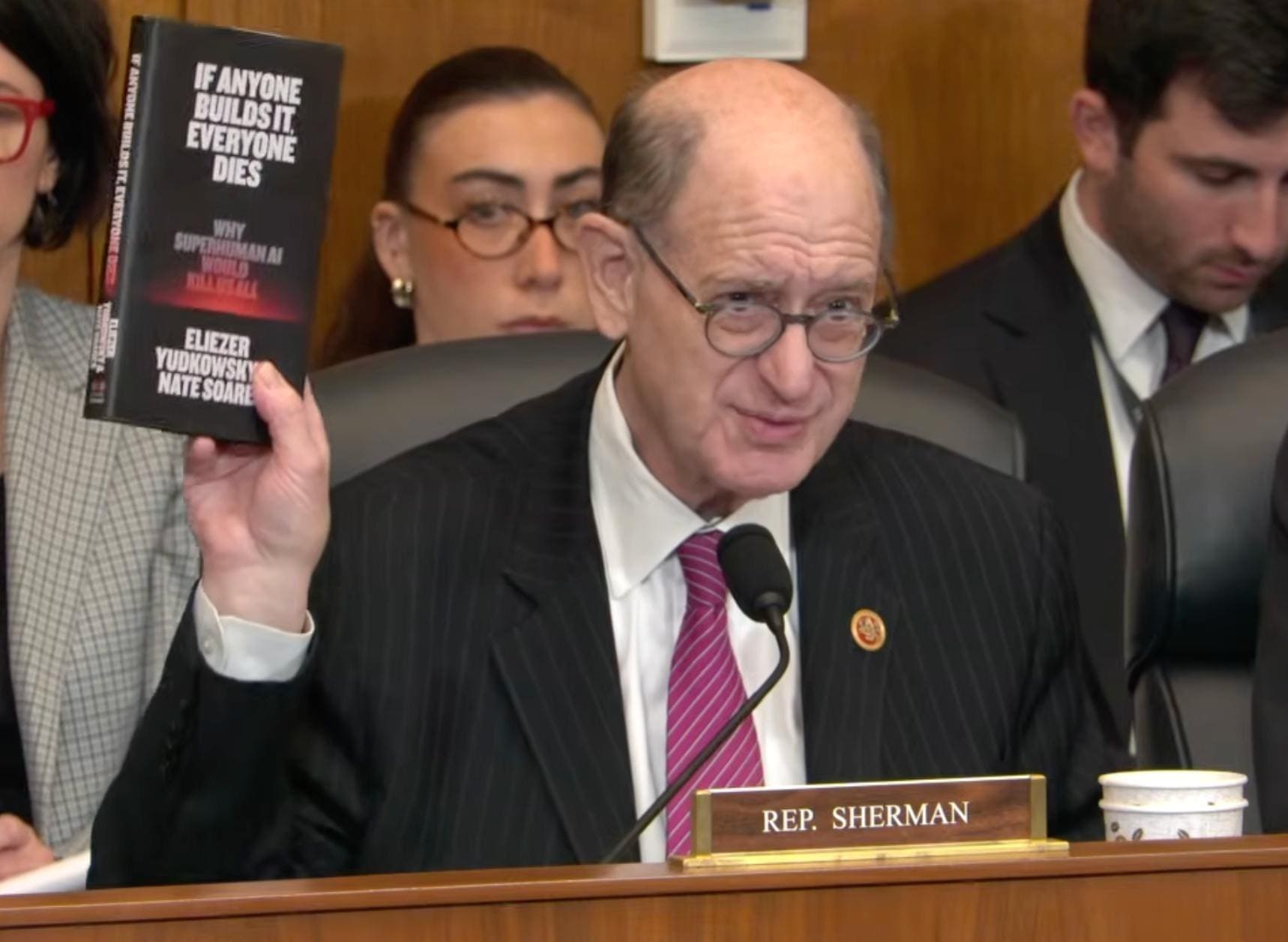
In celebration of still being alive and fighting, we are giving away 1,000 Amazon e-books of “If Anyone Builds It, Everyone Dies”. Feel free to send a copy to yourself, a loved one, or a friend—we need all hands on deck.
Today marks exactly one year since If Anyone Builds It, Everyone Dies: Why Superhuman AI Would Kill Us All, by Eliezer Yudkowsky and Nate Soare...



Consider adopting the term o-risk.
William MacAskill has recently been writing a bunch about how if you’re a Long-Termist, it’s not enough merely to avoid the catastrophic outcomes. Even if we get a decent long-term future, it may still fall far short of the best future we could have achieved. This outcome — of a merely okay future, when we could have had a great future — would still be quite tragic.
Which got me thinking: EAs already have terms like x-risk (for existential risks, or things which could cause human extinction) and s-risk (for suffering risks, or things which could cause the widespread future suffering of conscious beings). But as far as I’m aware, there isn’t any term to describe the specific kind of risk that MacAskill is worried about here. So I propose adding the term o-risk: A risk that would make the long-term future okay, but much worse than it would optimally be.
might want to check out this (only indirectly related but maybe useful).
https://forum.effectivealtruism.org/posts/zuQeTaqrjveSiSMYo/a-proposed-hierarchy-of-longtermist-concepts
Personally don't mind o-risk think it has some utility but s-risk ~somewhat seems like it still works here. An O-risk is just a smaller scale s-risk no?