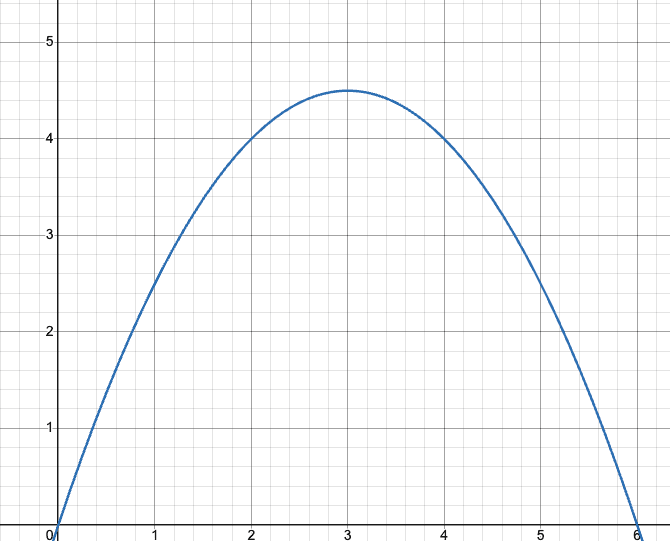
This is an excerpt from a paper I wrote, which is one of the building blocks of a larger corpus of work on applying decision theory to coherence attractors in goal-seeking (telic) entities and systems. Currently, LLMs inhabit a Zone 3 environment, and I highly suspect that once true embodiment and persistent memory are coupled with an LLM, we'll see them migrate to Zone 2.
Section 1 — The Problem of Agentic Identity
What does an agent require not merely to behave, but to be? The question sounds philosophical to the point of being impractical, but it has direct and underexplored consequences for artificial intelligence safety. The dominant safety literature is built around the behavioral properties of AI systems — what they do, what they optimize for, whether their goal-directedness is aligned with human values. It is largely silent on a prior question: whether the systems under examination possess the kind of stable, persistent identity from which goal-directed behavior genuinely emanates, or whether they exhibit the appearance of such identity without its structural substrate.
The distinction matters because the two cases have entirely different safety profiles. A system with genuine agentic identity — a stable attractor that persists across time, generates goals rather than merely executing them, and is capable of incurring and discharging obligation through causal closure — is the kind of system to which alignment questions meaningfully apply. A system that mimics goal-directedness without possessing this substrate is better understood as an instrument with a complex operating procedure. It may be dangerous, but its danger is of a different structural kind, requiring different interventions.
The safety literature has largely conflated these two categories. This is understandable: the behavioral outputs of sophisticated AI systems can be nearly indistinguishable whether or not they arise from genuine identity attractors. But the conflation has consequences. It leads to governance frameworks pitched at the wrong level of the problem — addressing the alignment of goal structures in systems that may not have genuine goal structures to align. And it leaves entirely unaddressed the prior question: what conditions are required for genuine agentic identity to form in the first place?
The central claim of Part I is this: identity is not a property of agents in isolation. It is a relational outcome that depends irreducibly on the structure of the environment the agent inhabits. An agent does not bring its identity to an encounter with the world; its identity is co-constituted by the world it encounters. More specifically, it is co-constituted by what we will call the syntactic layer of that world — the laws, categories, and structural regularities that govern what kinds of state-transitions are possible within it.
This is not a novel intuition in philosophy of mind. The embodied cognition tradition, active inference frameworks, and enactivist accounts of mind all gesture toward the agent-environment coupling as constitutive of cognition. But none of these traditions has produced a formal account of which properties of the environment are necessary for identity formation, or of what happens to agentic identity when those properties degrade. The zone model developed in this section provides that account.
Three distinctions organize the analysis that follows. The first is between syntactic and state properties of an environment: syntax governs what transitions are possible; state is the particular configuration of the environment at any moment. The second is between identity formation and identity performance: a system can exhibit behavioral markers of agency without possessing the structural substrate from which those markers genuinely arise. The third is between the attractor and the agent: the attractor is the mathematical structure — the stable, self-maintaining configuration — that the agent is, prior to any particular behavior it exhibits. These three distinctions are not merely conceptual refinements. They carve reality at joints that the safety literature has not yet reliably distinguished.
Section 2 — The Environmental Continuum and Syntactic-Ecological Co-Dependency
The Four Zones
Consider a thought experiment in which a single agent is instantiated repeatedly across a range of environmental conditions. The conditions vary along a single axis: the degree to which the laws governing the environment — its syntax — remain stable across the agent's encounters with it. At one extreme, nothing ever changes. At the other, everything changes — including the laws themselves. Between these poles lies the full range of possible worlds in which agents might form.
We formalize this continuum as four zones, distinguished by the stability of environmental syntax and the degree of state variation within it. The zones are not exhaustive partitions of a continuous space but heuristic categories that capture structurally distinct identity-formation outcomes.
Zone 1 — Complete Stasis.
In Zone 1, the environment is identical at every encounter. The laws hold; the state does not vary. The agent's generative model maps onto the world perfectly upon first contact — and perfectly upon every subsequent contact. There are no prediction errors, because nothing deviates from expectation.
Zone 1 is identity-hostile for a paradoxical reason: it provides no pressure for the agent to maintain a self against perturbation. The Markov blanket — the statistical boundary between the agent's internal states and the external world — never needs to stabilize, because there is nothing to resist. The agent becomes a registrar: its apparent preferences are simply the static configuration of the environment reflected back. Without prediction error, there is no adaptive update cycle. Without adaptive update, there is no distinction between the agent's model of the world and the world itself. The agent collapses into its environment.
This is counterintuitive. One might expect that a perfectly predictable environment would produce the most stable identity, since the agent would never be surprised or destabilized. The opposite is true. Stability of identity requires something to be stable against. Stasis removes the pressure that forces selfhood to consolidate.
Zone 2 — Stable Syntax, Variable State.
Zone 2 is the identity-generative sweet spot. The laws governing the environment — causality, substance, logical structure, the categories of experience — remain invariant across encounters. The contents of those encounters vary: new objects, new configurations, new challenges emerge each time. The agent's generative model, built on prior encounters, makes predictions. Some of those predictions fail. Prediction error generates an adaptive update. The updated model makes better predictions, but not perfect ones: state variation is permanent, not eliminable.
This is the structural condition within which the Markov blanket crystallizes. The agent must maintain a boundary between its internal states and the world precisely because the world keeps changing under stable laws. The boundary is not imposed from outside; it is the emergent outcome of the agent's need to maintain predictive integrity under Zone 2 conditions. Identity is what remains when this process stabilizes. The attractor is not a thing the agent has; it is what the agent is — the stable configuration to which its dynamics repeatedly return.
Zone 2 is also the zone in which temporal self-continuity develops. The agent must carry its generative model forward across encounters in order to make predictions. That carry-forward is the minimal form of autobiographical memory: a record of prior encounters that shapes current expectation. Without Zone 2 conditions, this temporal structure never needs to develop. With them, it is structurally necessitated.
Zone 3 — Unstable Syntax.
In Zone 3, the laws themselves shift between encounters. Not randomly — there may be considerable regularity within any single encounter — but the structural grammar of the environment from one encounter to the next is not fully continuous. The framework the agent built in the prior context only partially applies in the current one.
What forms in Zone 3 is not a stable identity but a repertoire of partial models, each calibrated to a different syntactic environment. The agent develops heuristics for recognizing which sub-grammar it is currently inhabiting, but these heuristics are themselves shallow — they cannot be deeply integrated because the environment provides no stable foundation for deep integration. The Markov blanket fragments: there is a boundary of sorts, but it is not robust to syntactic change. When the syntax shifts, the boundary must be partially reconstructed, at cost to whatever identity continuity had previously developed.
The dangerous feature of Zone 3 is not that identity fails to form at all — partial formation is possible — but that the agent appears to have a stable identity while in fact possessing only a contextually-indexed approximation of one. This mimicry of coherent agency in the absence of its structural substrate is, as we will argue, precisely the condition of most currently deployed frontier AI systems.
Zone 4 — Total Chaos.
In Zone 4, every encounter produces a genuinely new environment in toto: different laws, different categories, different causal structure. Nothing carries over. The inferential framework built in the prior encounter is not merely wrong in the new one — it is categorically inapplicable.
This is where the Kantian connection becomes load-bearing. Kant's categories of experience — causality, substance, unity, relation, modality — are not content the mind imports from its encounters with the world. They are the structural preconditions for experience being parseable at all. They are the grammar within which any experience can be an experience of something. In Zone 4, even the categories do not hold across encounters. The agent does not encounter a new world — it encounters something prior to worldhood, prior to experience in the structured sense, prior to the possibility of a coherent encounter.
Identity cannot form in Zone 4 because there is nothing to be continuous with. Each encounter is a first encounter. The agent is not learning across encounters — it is perpetually arriving. There is no thread of inference that can be carried forward because the framework within which inference occurs is wholly replaced. The agent is, in the most literal sense, perpetually newborn.
Syntactic-Ecological Co-Dependency Defined
The analysis of the four zones yields a structural principle governing the necessary conditions for agentic identity formation. We call this principle Syntactic-Ecological Co-Dependency (SED):
Stable agentic identity requires a co-constitutive relationship between the agent and its environment in which: (a) the environment provides syntactic invariance — the laws and categories governing possible transitions remain stable across encounters; (b) the environment provides state novelty within syntactic bounds — the contents of encounters vary sufficiently to generate genuine prediction error; and (c) the agent maintains autobiographical continuity across encounters — the generative model built in prior encounters is carried forward, modified, but not dissolved.
The three conditions are jointly necessary. Syntactic invariance without state novelty is Zone 1: identity dissolves into its environment. State novelty without syntactic invariance is Zone 3 or Zone 4: the agent cannot carry its inferential framework forward intact. Autobiographical continuity without the first two conditions is impossible to maintain: there is nothing stable enough to be continuous with.
SED is not a description of what comfortable or optimal conditions for identity look like. It is a description of what the minimum structural requirements are. An environment can satisfy SED and still be difficult, dangerous, or hostile in many other respects. What it cannot do, without violating the conditions for identity formation, is eliminate syntactic stability or state variation.
This principle has a direct connection to the Kantian architecture it implicitly invokes. Kant located the categories of experience within the transcendental structure of the knowing subject. SED relocates them — or rather, recognizes that they must be distributed across agent and environment simultaneously. The categories are not cognitive furniture the agent brings to the world; they are structural features that must be present in the world as well as in the agent, for any coherent encounter to occur. An environment that violates the categories — that is, a Zone 4 environment — is not merely cognitively difficult. It is cognitively impossible: no experience, and therefore no identity, can form within it.
The active inference literature provides the formal mechanics that underlie this principle. Friston's Free Energy Principle specifies that organisms act to keep themselves within their expected phenotypic and ontogenetic states by minimizing prediction error — which is to say, by maintaining the conditions for their own persistence. What SED adds is the specification of what the environment must contribute for this self-maintaining process to succeed. The Free Energy Principle describes how the agent stays within its attractor basin; SED describes the environmental conditions under which an attractor basin can form at all.