Comments
We just ran an AI governance student conference! (retrospective)

12 min readNov 21
3
TL;DR
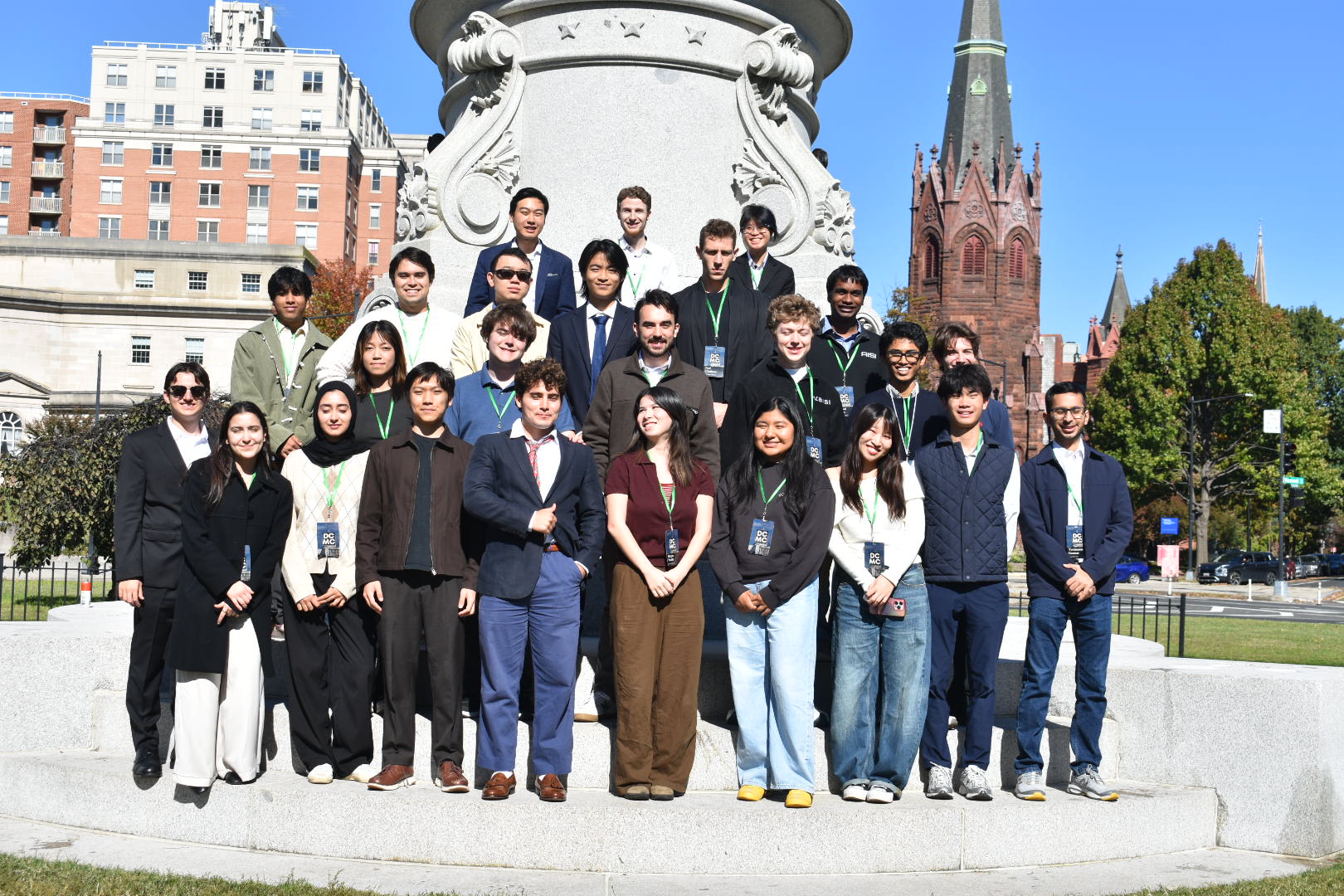
We (a group of 7 university students and recent graduates) just organized the DC Mini-Conference, a 3-day conference in America’s capital to introduce 35 promising young professionals to the field of AI governance. We think this conference was a success, having received positive feedback from both attendees and guests. In this post, we will describe how we organized the conference, the lessons we learned, and advice for others interested in running similar conferences in the future.
Introduction
For a few years, the AI safety community has used small weekend conferences to introduce promising young professionals into the field – some examples of which being Kairos’s Global Challenges Project and AISST-MAIA’s AI safety retreats. Yet, while there are many resources designed to introduce students into technical AI safety, there have not until recently been nearly as many resources designed to introduce students to AI governance. Given the importance of governance to AI safety, and the shortage of competent, AI-safety-aware people working in government and politics, we thought this was a hole worth filling.
So, a group of AI safety student organizers – mostly Pathfinder fellows, mostly from the greater DC area – got together to run the first iteration of the DC Mini-Conference (DCMC 1.0) in April of this year. We thought it went well enough that we decided to run a second iteration this October. Incorporating feedback and lessons learned from DCMC 1.0, we wanted DCMC 2.0 to be larger, better-run, and more successful at our primary objective of building talent within the field of AI governance. We believe that we succeeded.
DCMC 2.0 ran for 3 days, from Friday, October 23rd to Sunday, October 25th (with optional preliminary activities on Thursday, October 22nd). We held the conference at a co-working office in downtown DC. DCMC featured 35 attendees in addition to the 7 organizers. 24 of our attendees were current undergraduates, though we also had 4 recent graduates, 6 graduate students, and 1 PhD student. 30 of our attendees were based in the United States, though we also had 3 based in Canada, 1 based in the UK, and 1 based in France. Most attendees had previous experience in AI safety (whether as technical researchers or field-builders), but had only limited hands-on experience in AI governance. 37 professionals in AI governance came to DCMC over the course of the weekend, talking to the attendees about their work. These guests included Congressional staffers, think tankers, journalists, and employees at governance-focused non-profits.
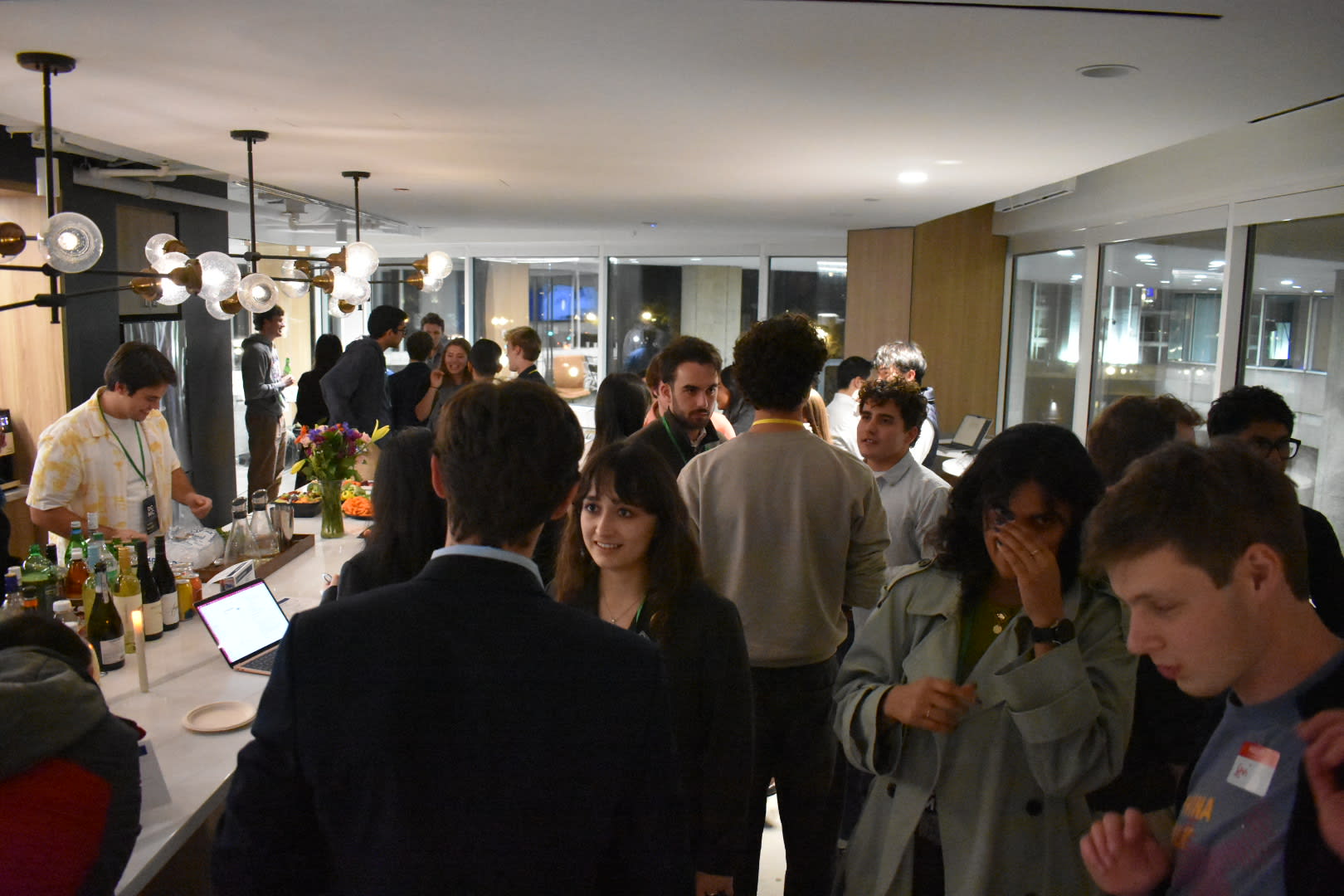
The conference itself was around 20% lectures on AI governance topics, 10% small group discussions between attendees and guests, 15% guided discussions among attendees (such as assigned 1-on-1s, prompt circling, and a “speed updating” activity), and 55% unstructured / social time designed to foster closer relationships among attendees (this includes time during meals, as well as a Friday night happy hour).
Theory of Change
Many of the most important decisions around AI will be made in DC. Already, the federal government has intervened in substantial ways; it forced Anthropic to temporarily recall Fable and delayed the release of GPT-5.6, and has been levying AI-relevant export controls on China for years. Poor decisions can lead to a false sense of security, adverse economic and geopolitical impacts, and no actual reduction in existential risk. Accelerating the right people towards researching and advocating for sensible AI policy, as well as making sure there are people ready to fill important executive roles in 2027 and beyond, is incredibly important. Some of the people filling these roles could currently be students. As AI policy gets more elaborate and more salient, there will be an increasing need for talented technical people to fill important roles in and around government.
To that end, DCMC 2.0 had two primary objectives:
- Encouraging talented students interested in AI safety to work in policy. Many smart students assume the default path of technical AI safety, or fall through the cracks because of a lack of interest in the technical side. By showing them the many career paths they could pursue in DC and their respective paths to impact, we encourage them to go into AI policy, where they can work in organizations including think tanks or the federal government itself.
- Helping students who already want to work on AI policy network and acclimate to the DC ecosystem. Many students want to work in policy, but have never been to DC, and aren’t yet part of a network of AI policy researchers and advocates. DCMC 2.0 will help these students build up that network and deepen their understanding of the DC ecosystem, preparing them to eventually work in DC.
As a secondary benefit, DCMC 2.0 also gave generalist experience and connections to the organizers. The organizers consisted mainly of university students, who benefited from learning how to run events well and from meeting and reaching out to speakers. Other important skills gained from running this event include creating and reviewing applications, managing a large budget, and coordination amongst other organizers. All of these skills are important for running successful university groups and many are directly or indirectly useful for generalist careers in AI safety.
In addition, in-person events like this have historically been successful at activating students to become more active organizers in their university groups, which also has the added benefit of strengthening talent pipelines. They have also frequently resulted in students pivoting their careers toward AI safety when they otherwise just had a passing interest in it. This is based on outcomes from Action Potential, GCP, and OASIS.
How has our ToC updated in light of recent events?
We wrote the above theory of change when we first started planning DCMC 2.0 in July. Since then, many things have changed in the world of AI governance that would affect our eagerness to run a future iteration of DCMC. We count among these:
- Higher political salience around AI
- Given recent events like the OpenAI / Hugging Face incident, AI solutions to multiple Millennium Prize Problems in mathematics, and Anthropic’s record-breaking IPO, AI has never been more salient among lawmakers or members of the general public. We expected AI salience to rise over time, but even we were somewhat surprised at how quickly this has happened.
- Higher political salience around AI means both:
- A larger pool of talented young professionals are interested in coming to DC and working on AI policy.
- When these young professionals do come to DC, they are more likely to find high-impact roles to work on.
- Given that one of DCMC’s primary objectives is to connect promising young professionals with AI governance-focused organizations who could use their talent, this updates us toward running another iteration.
- Democratic midterm victories
- We emphasize that AI governance is not now, nor should it become, a partisan issue. We believe both right-of-center and left-of-center individuals should work on AI safety, and we will continue to support rising talent on both sides of the aisle.
- That being said, the Democratic Party has expressed greater eagerness to regulate AI than the Republican Party. Democrats in Congress, both incumbents and newly elected, are looking to staff their offices with young professionals who know how AI works and have ideas on how to govern it. We believe the next few months may be an unusually good time for left-of-center individuals to find roles in federal AI policy. The same can be said for state-level roles in Democrat-controlled states like New York, California, Illinois, and Texas.
- Democratic victories compound the demand for AI governance talent, which updates us toward running another iteration of DCMC.
- Shorter AI timelines
- Many people in the AI safety community have recently updated toward dramatically shorter AI timelines (i.e. timelines of 6 - 18 months before the start of strong RSI). Assuming this is correct, it means that AI safety advocates only have a short window of time left to make a political impact.
- It typically takes at least several years before a college student can gain enough professional experience and DC connections to make a substantial policy impact, which means that under very short AI timelines, student outreach is not particularly promising. This updates us against running another iteration of DCMC, at least in its current format. Potentially, it could be worthwhile to run a DCMC-style workshop for mid-career policy professionals.
Overall, we think that running a conference like DCMC is still at least as promising as it was a few months ago, if not more so.
Budget
The cost of the conference was around $37,000 in total, or just over $1,000 per participant. Our biggest expense was hotel costs, followed by travel reimbursements, conference venue rental, meals, and then various discretionary costs (e.g. snacks, decorations, and supplies for the happy hour).
Funding for DCMC came mostly from BlueDot Impact’s Rapid Grants; we thank BlueDot for their generous support.
Timeline and Logistics
This section is mainly designed for future organizers, to give them a realistic idea of how much work is involved in planning a conference like this and what it entails.
Pre-Conference Planning
We started planning DCMC around 3 months before the conference. During those 3 months, each of the 7 organizers spent around 4 hours per week planning, meaning (7 organizers)x(12 weeks)x(4 hrs/organizer/week) ≈ 336 total organizer hours for the planning period. Though note that the exact weekly time commitment varied significantly from organizer to organizer and week to week. The week where we reviewed attendee applications and the two weeks immediately preceding the conference were particularly busy. Organizers were also more active when tasks that they had ownership over were in play.
Our priority list was in roughly this sequence: secure funding → secure hotel + venue → recruit attendees + guests → create the exact hourly schedule and handle more fine-grained logistics. A more detailed breakdown is below:
July: We assembled our core team of 7 organizers, agreed on a general direction and theory of change, and started sending out fundraising applications.
August: We received grants from BlueDot and set the conference dates (October 23-25). We then split the organizers into teams by domain: one team for student outreach, one team for guest outreach, and one team for operations and logistics. We designed and sent out an application form, solicited referrals, and secured our conference venue.
September: We secured hotel reservations and began reaching out to potential guests. The application form closed, after which we designed a rubric for grading applicants, reviewed all applications, and made our acceptance decisions.
Early October: We informed all accepted applicants and waitlistees, and eventually confirmed who had and had not come off the waitlist. We confirmed our guest speakers, although a few last-minute changes to the speaker list still came up. We also made a preliminary weekend schedule, and designed and sent out a dashboard to our attendees.
Week-Of Conference Schedule
You can see our full schedule here.
Each of our 7 organizers was on call for the entirety of the 4-day extended weekend, adding another (7 organizers)x(4 days)x(12 hrs/organizer/day) ≈ 336 organizer hours. Though of course, some of this organizer time involved eating and socializing with attendees, so it wasn’t entirely hard work.
Post-Conference
November: The organizers met again to share notes and discuss what went right and wrong. We sent thank-you notes to our guest speakers, sorted out final logistics and payment details with the conference venue, and reimbursed attendees for their conference-related travel expenses. We then put together a final budget with receipts and wrote this reflection post.
Future: We plan to check back in with attendees at 3-month, 6-month, and 1-year intervals to see how their careers have progressed. We hope to also run DCMC 3.0, likely sometime in early 2027.
Takeaways
Conference feedback was as follows:
| Measure | Average |
|---|---|
| Overall satisfaction with DCMC | 8.9 / 10 |
| Likelihood to recommend DCMC to others | 9.3 / 10 |
| DCMC helped them gain clarity on next steps in their career | 8.2 / 10 |
| DCMC helped them gain clarity on their main uncertainties in AI governance | 7.8 / 10 |
| Venue | 4.6 / 5 |
| Food | 4.3 / 5 |
| Average session rating (excluding 1:1s) | 4.0 / 5 |
Things We Did Well
Overall, we think the event went very well. Organizing a structured conference for 35 attendees plus guests (alongside hotel and travel accommodations) is a complex logistical endeavor, and the fact that nothing went majorly wrong (e.g. nobody got injured, had nowhere to sleep, etc.) is a good sign.
Beyond the basic assessment that logistics were handled well, we got a lot of specific feedback that stood out to us as positives.
1-on-1s:
Before the conference, the organizers pre-paired attendees with other attendees, and attendees with guests, in ways that we thought would be especially conducive to productive conversations. For instance, we paired a younger student interested in founding an AI policy group at their university with an older student who had experience running their own uni’s AI policy student group. In another case, we paired a student interested in right-of-center AI policy work with a professional working in the right-of-center AI policy space.
Each attendee participated in at least 4 of these 1-on-1 discussions lasting 30 minutes each with their pre-selected conversation partners.
When reviewing attendee feedback, these 1:1s clustered at the top of our session ratings, mostly rated 5 out of 5. Several attendees said they got more from 1-1s than from group sessions.
Informal time: Informal socializing was our top-rated session at 4.65 out of 5. We made sure to include a lot of time for this, since some of the best friendships and professional connections emerge during long, unstructured stretches of time between and after the main programming.
Guests and long open Q&A: Most attendees liked our 45-to-60-minute talks followed by free-form questions. The two most highly rated talks were one about US-China competition, and another giving a crash course / overview of the entire AI governance field. We suspect that speaker quality had at least as much to do with audience satisfaction as the topics of the talks themselves.
Structure. Several attendees called the weekend well organized, and valued the built-in time for career memos and Q&A preparation.
Next steps: Many attendees said they left with a better understanding of which roles exist and what prerequisites they would need to achieve them. Several mentioned that DCMC was the deciding factor in encouraging them to apply for internships / fellowships in AI governance, start their own blog or Substack, or reach out to people they met at the conference for further collaboration. The phrase "You can just do things" appeared in more than one response.
Things We Could Improve
The two most common complaints we got were A. people saying we didn’t provide enough snacks between meals, and B. people saying the conference venue was too cold. Other miscellaneous issues mentioned in attendee feedback included:
- Several attendees wish they could have more and longer 1-on-1s.
- Around a dozen attendees said the schedule was tiring and wished there were more time for breaks, especially on Friday.
- Prompt circling was generally underwhelming, our lowest-rated activity, with at least one participant saying a normal conversation would have been better.
- People sometimes didn’t know which channels to look at to find announcements and updates.
Other issues we faced as organizers:
- We had to change floors at the last minute, after realizing that the original floors we had booked would not have enough space for all the attendees. None of the attendees noticed this, but it was extra work / cost for the organizers.
- A lot of things cost more than we expected them to, particularly hotel lodging, flights, and the happy hour. DCMC ran well above our original budget estimate (although luckily we had prepared extra funds for a situation like this, so it wasn’t an emergency).
- Sometimes attendees were distracted from the conference, e.g. doing homework or studying for exams on their laptops instead of paying full attention to the guest lectures.
- Our happy hour was unsuccessful at attracting a high volume of policy professionals in DC. We believe this was some mixture of venue, timing, and inexperience on our end. We remain uncertain about how feasible and impactful running a happy hour is for DCMC, but we think it could prove great with some tweaks.
On the whole, this seems like a good list of problems to have! Session feedback was overwhelmingly positive, while most of the negative feedback involved relatively minor logistical issues. No conference is perfect, and we think we did very well if these were our biggest problems.
Organizers
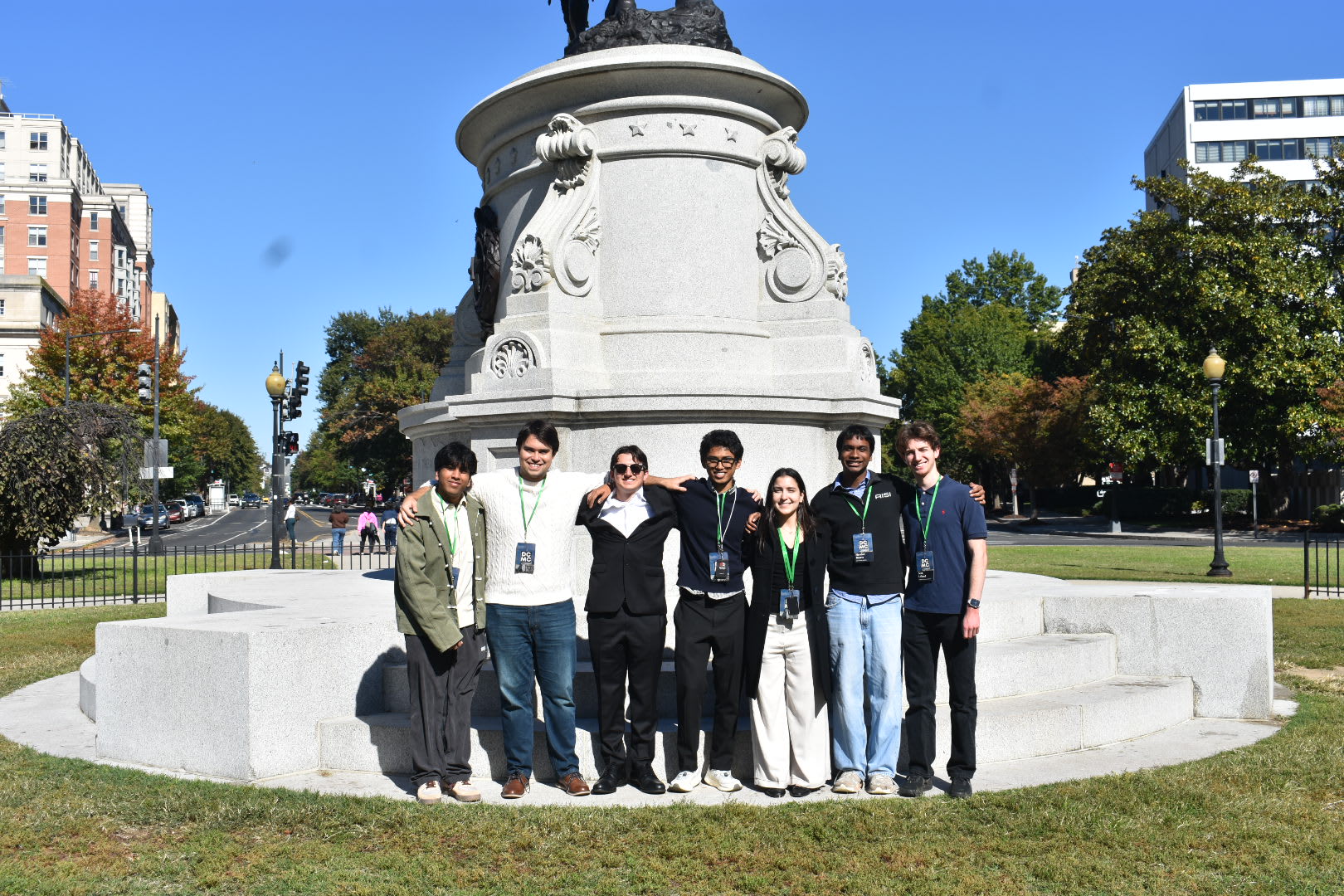
Our organizing team was:
- Liam Robins
- You can email Liam here or book a time here.
- Harshul Basava
- You can email Harshul here or book a time here.
- Seth Lifland
- You can email Seth here.
- Binit Maharjan
- You can email Binit here.
- Isel Neira
- You can email Isel here.
- Aybars Kocoglu
- You can email Aybars here.
- Rohan Kansal
- You can email Rohan here.
Conclusion
We think that running conferences is really fun and potentially really impactful. We’re excited to see others run them in the future and think that this was a valuable experience for all involved.
Please feel free to reach out if you have any questions or are interested in organizing an AI governance conference of your own — we would love to chat!