Note: This post was crossposted from the Coefficient Giving Farm Animal Welfare Research Newsletter by the Forum team, with the author's permission. The author may not see or respond to comments on this post.
Subtitle: On vegan advocacy, effective altruism, and FIFA
I turn 40 today. Here are some hot takes.
On factory farming
1. Our biggest challenge is salience. If factory farming led the evening news, it wouldn’t last lo...
On October 22nd starting at 10:00am Pacific Time, Every.org is matching donations to select animal welfare organizations at a 2:1 rate, up to $2,000 per donor per nonprofit (so if you give up to $2,000, they will contribute up to $4,000 and the nonprofit will get up to $6,000). The first donation a donor makes to each eligible nonprofit will be matched, and donors can get the match for multiple $2,000 donations. So, you can get more than $2,000 matched by donating $2,000 one time to multiple...
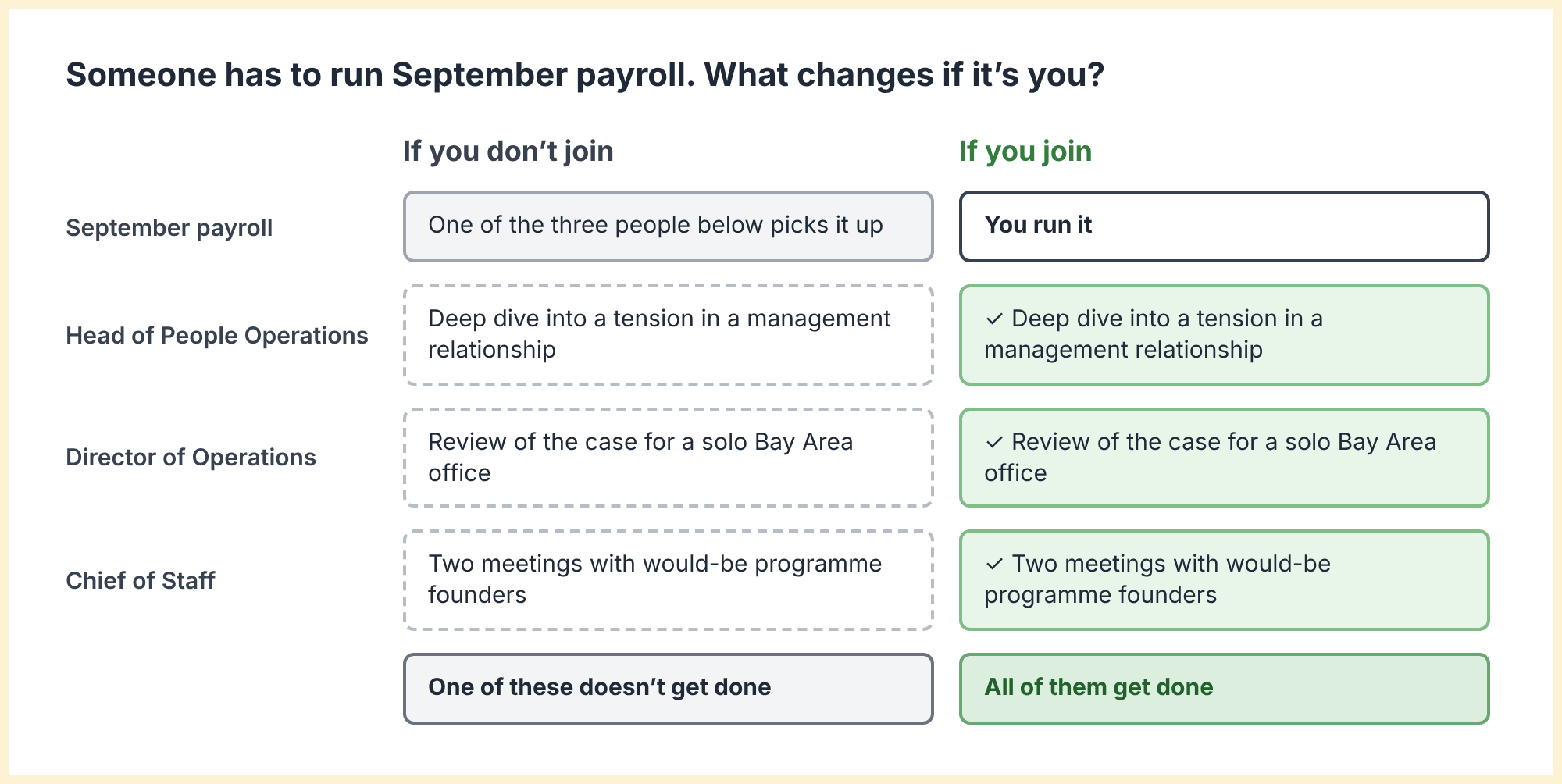
When speaking to candidates who are considering working with us at 80,000 Hours, I often hear people worry about replaceability.
The familiar version of the worry is about whether the organisation will hire someone else in your place. If it will, then the difference you make by taking the job is only the difference between you and them.
There are a couple of well-known answers to that. The person hired in your place probably cares about the world too, and would go on to do somethi...

Some hope for you if you're an EA with a chronic illness.
I’ve been reading the biographies of moral heroes, and I’d guess ~50% of them struggled with ongoing health issues.
Being sick sucks, but it doesn’t necessarily mean you won’t be able to do a ton of good
It’s not everybody, but it’s a surprising percentage of them.
I myself struggle with a chronic mystery ailment and I find it inspiring to hear about all of these people who still managed to do great things, even though their bodies were not always so cooperative.
(Also, just as an aside, the book Stop Being Your Symptoms, Start Being Yourself didn’t cure my illness, but it did reduce its effects on my life by about 85%, and I can’t recommend it enough. It’s basically CBT/psychology stuff applied to chronic illness)
Was there anything in the book that you found especially helpful?
Another example is Lincoln, who suffered severe depression throughout his life. Lincoln's Melancholy is a good book about it.