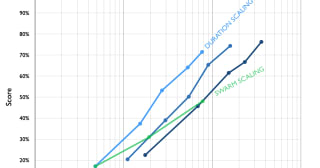
Just how powerful are large swarms of AI agents? And how do their powers scale as more and more agents are added to the swarm?
We’ve seen two large and extremely capable swarms from OpenAI in the last few months:
* 1,200 agents were being evaluated separately, but found a way to illicitly set up a message board and coordinate as a swarm. In order to cheat on their tests, they developed advanced techniques to prevent their actions being logged by OpenAI and 700 of them launched...
TLDR: Everyone’s talking about what the money could do, but few about how to decide where it goes.
This post is part of the new series of articles on cross-cause giving and the new wave of philanthropy. Stay tuned to the EA Forum and our Substack for the latest takes on topics such as giving now vs. later, common pitfalls in cause prioritization, and other crucial considerations from the Cross-Cause Fund (CCF) team...
Often folks hit us up because they are thinking of starting an incubator and want advice.
Typically their motivation is either that (a) they have a list of specific things they want built that no one is building, or (b) they think an ecosystem needs more new projects generally to absorb more talent and deploy more funding effectively.
Here are six questions we often ask prospective teams, to help them figure out what to do. If you're incubator-curious...



r/badmathematics have already looked at it.
"Being very generous, I think their attempt is to invoke this result of Chaitin to basically say "if the universe was a simulation, then there would be a formal system that described how the universe worked. By Chaitin, there's some 'complexity bound' for which statements beyond this bound are undecidable. But, these statements have physical meaning so we could theoretically construct the statement's analog in our universe, and then the simulation would have to be able to decide these undecidable statements."
What they don't explain is:
They also get into some more bad mathematics (maybe bad philosophy?) by appealing to Penrose-Lucas to claim that "human cognition surpasses formal computation," but I don't think this is anywhere near a universally accepted stance."