This month effective altruism has gotten lots of attention, including a cover story in The Economist. It feels pretty surreal to be on the receiving end of it. But I feel grateful these ideas have caught on, and even more grateful for the drive, earnestness, and compassion of so many people who took strange but well-argued ideas seriously and then actually acted on them....
TLDR
* We are Scale Welfare, a fish welfare charity incubated by AIM in early 2025, working in the Philippines and Vietnam. This is our first Forum post.
* Farmed fish welfare has no proven, scalable interventions. In our first 1.5 years we went from scoping and 123 intervention ideas to one pilot: on-farm ice slurry slaughter for tilapia in the Philippines, replacing 5 to 15 hours of live transport.
* ...
Cross-posted from my new Substack, Alternative Perspective. Views my own.
Part I of Do Beans Beat Alt Meat?
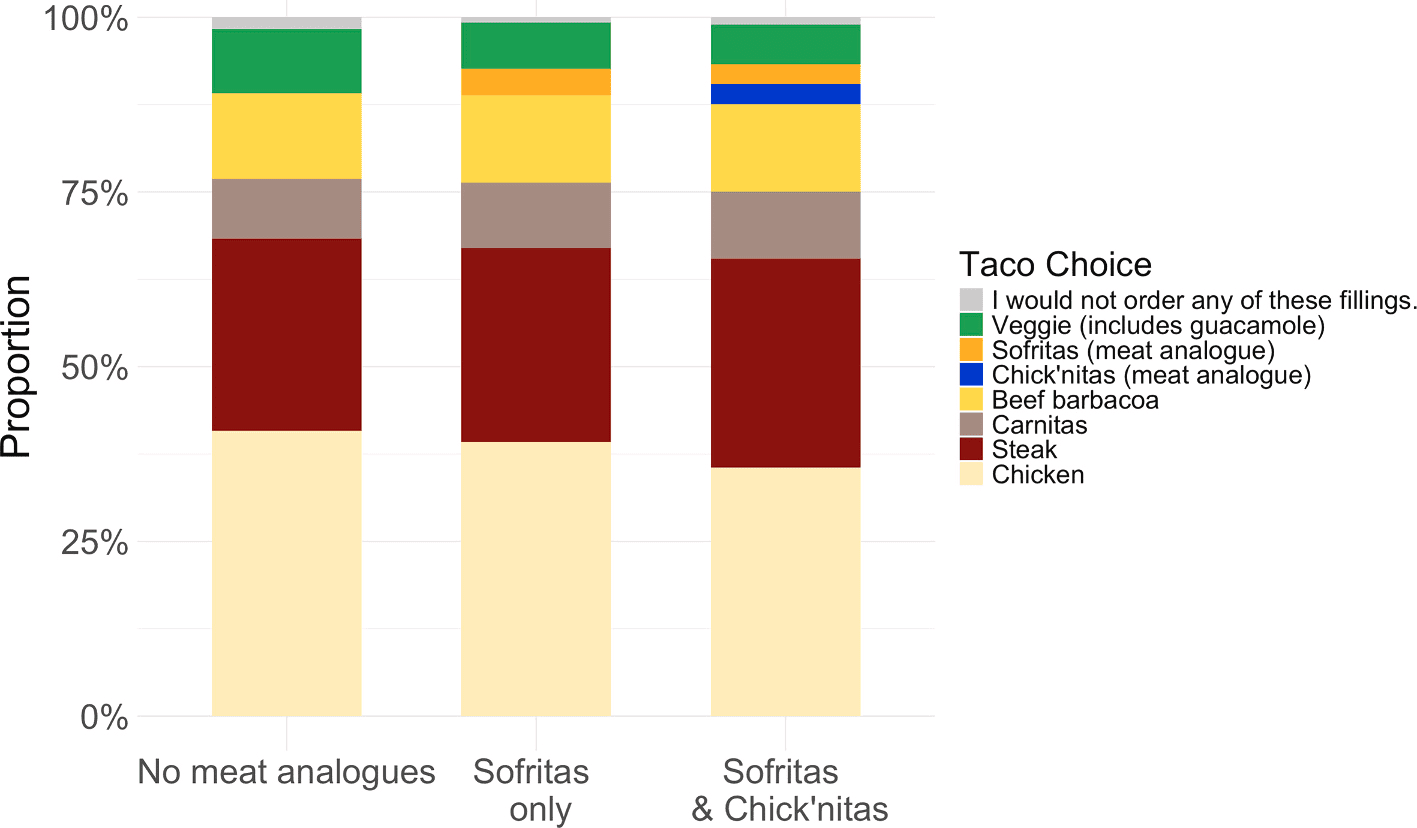
People know me as a plant-based meat pessimist, mainly for my review “Price-, taste-, and convenience-competitive plant-based meat analogues would not currently replace the majority of meat consumption” (published...


Recently, I was reading David Thorstad’s new paper “Existential risk pessimism and the time of perils”. In it, he models the value of reducing existential risk on a range of different assumptions.
The headline result is that 1) most plausibly, existential risk reduction is not overwhelmingly valuable–though it may still be quite valuable, it doesn’t probably swamp all other cause areas. And 2) thinking that extinction is more likely tends to weaken the case for existential risk reduction rather than strengthen it.
It struck me that one of the results is particularly interesting, I call it the repugnant solution:
If we can reduce existential risk to 0% per century across all future centuries, this act is infinitely valuable, even if the initial risk was absolutely tiny and each century is only just of positive value. This act is therefore, better than basically anything else we could do.
Perhaps, in a Pascalian way, if we think there is a tiny chance that some particular action will lead to a permanent reduction in existential risk, that act too is infinitely valuable, and everything breaks.
This is also true even if we decrease the value of each century from “really amazingly great” to “only just net positive”.