Comments
More from the author
Curated and popular this week
147
Headline finding: I audited 17 AI Safety Talent programmes. Zero of 17 have published any comparison group, rejected-applicant follow-up, matched control or randomisation. Not one. Every programme that mentions a counterfactual does it by asking participants to self-report.
Background
At least $70 million...

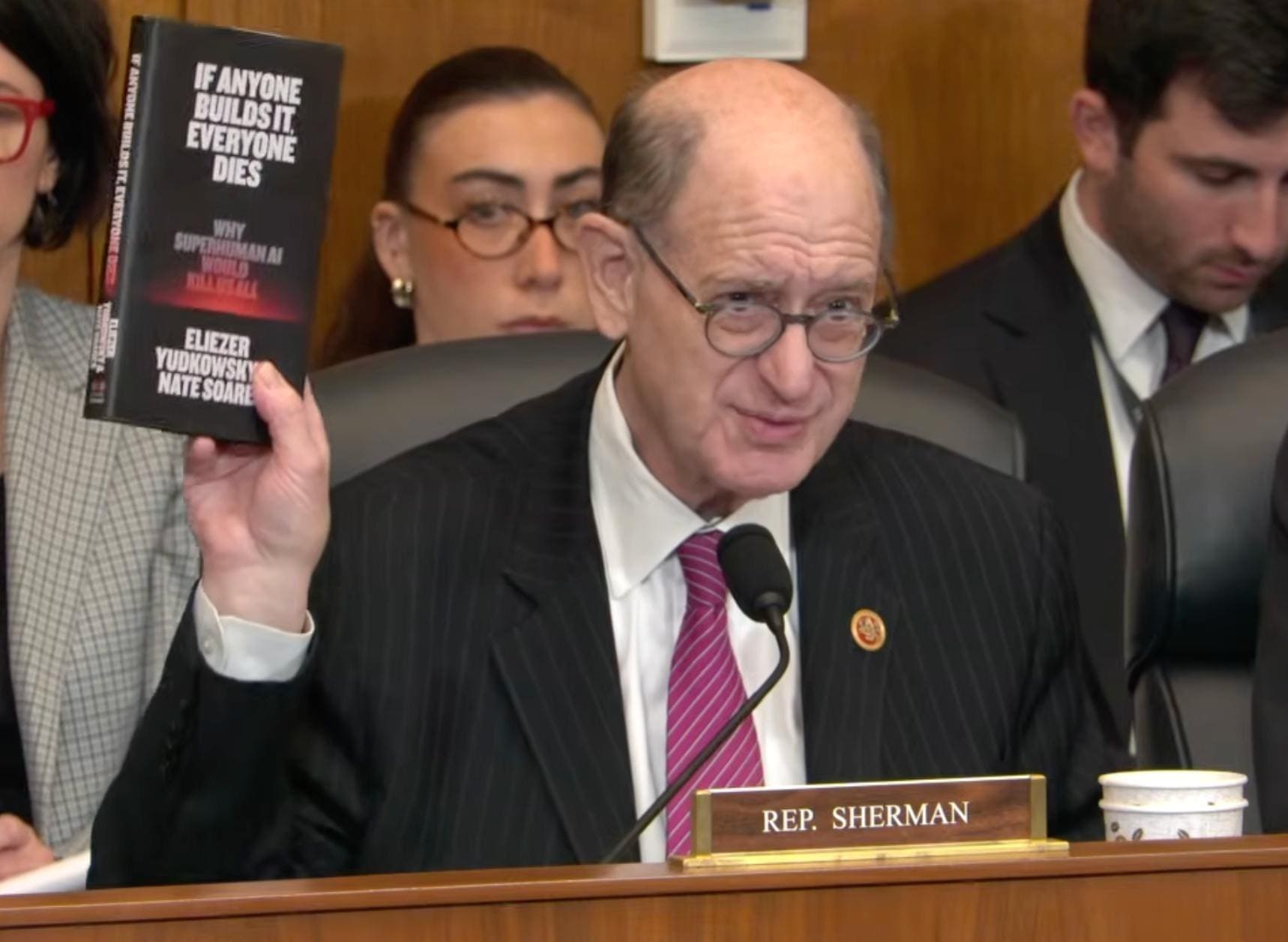
In celebration of still being alive and fighting, we are giving away 1,000 Amazon e-books of “If Anyone Builds It, Everyone Dies”. Feel free to send a copy to yourself, a loved one, or a friend—we need all hands on deck.
Today marks exactly one year since If Anyone Builds It, Everyone Dies: Why Superhuman AI Would Kill Us All, by Eliezer Yudkowsky and Nate Soare...
A year ago I posted that YCombinator (YC) companies didn’t seem to be growing faster since the release of ChatGPT in 2022. I reran that experiment and found that 2023+ YC companies are arguably growing a bit faster than pre-2023 companies (including AfterQuery, ...

Recent opportunities to take action
Considering this, I think the videos being short may have some risks, I have some suggestions.
Ideally, I think the videos should explain things at least as good as this, with really nice graphics like this or simple ones like this to increase attention, subtitles in different languages (when appropriate), and use analogies for simpler communication.
Some considerations and questions:
Addendum #1: according to the 2018 EA survey, most people got introduced to effective altruism through media like books and blogs.
https://image.ibb.co/dQWch0/first-hear-bar.png
#2 Translating material would be easier because of subtitles.
Short videos and the fidelity model.
There are four components of the fidelity model
Breadth: How many ideas can you explore?
Depth: How much nuance can you add to the ideas?
Environment: Will the audience be in an environment that is conducive to updating their opinions?
Feedback: Can you adapt your message over time to improve its fidelity?
While Depth and Breadth won’t be a problem for the venue if the videos are long enough, Environment and Feedback may cause some problems.
I’m uncertain about what percentage of viewers use YT and/or Facebook videos educationally, and about the extent to which they update their beliefs by them.
Concerning Feedback, my intuition is that YT comments are somewhat more hostile than other platforms (i.e. blogs, specific websites). I also think that there is a direct relationship between length and (intellectual/informative) engagement.
Although, you could make video versions of conceptually-like articles. Which are quite short. But I suppose the difference is that it is not aimed at the general population at large, at least not to the extent of regular short videos I've seen before.