TLDR:
- Between 30 Nov – 6 Dec we’ll debate the question: “What % of EA resources should go to making AI go well?”. This question is disambiguated below.
- 80,000 Hours advisors will host an Ask Me Anything thread during the week for anyone considering whether to make a career shift into making AI go well.
- You are invited to write a post for the week - or otherwise engage in debate during the event.
Add this (and other) events to your GcalThanks to @brentonmayer for nudging me to host this debate week. Clearly, the question of just how much EA as a movement should be investing in making AI go well is particularly pertinent at the moment, as more funding is (possibly) on its way, AI safety work is becoming more and more mainstream, and AI capabilities continue to advance.
I want debate weeks like this to be a chance for the community of EAs who are usually heads-down and focused on their work to look up, and consider whether they are using their resources in line with their values. Personally, I'm uncertain on this question. I see the case for urgency – but urgency can mask low tractability. And I'm always prima facie sceptical when EA – the impact avant-garde – sticks around once a cause becomes more mainstream.
Brenton and some staff from Rethink Priorities have committed to writing something for the event. A few words from Brenton to kick us off:
Brenton (80,000 Hours):
The question of effective altruism is “How can I do the most good, with the resources available to me?” In 2026, I think the answer for most people is “something to help make AI go well”.
I’m unsure what fraction of EA resources is right. But I expect the share going to making AI go well should be higher than what we thought in 2024.
Getting the EA ecosystem better allocated will mean lots of people checking in on whether they’re in the right place to help others as best as they can. I’d love for people to use the Forum debate week as a prompt to do so: by reading Rethink’s work, making use of the 80,000 Hours advisor AMA, and reading other perspectives which folks contribute during the week.
In my post I’ll go through what I think are the most important updates for people’s decisions: that the case for AI risk has become much less speculative, and that people have a better chance of finding a role in making AI go well that suits them than they used to.
Clarifications and disambiguations [don’t skip]
“During the week, we will discuss what percentage of EA resources [1] should be spent [2] on making AI go well [3]”.
- ‘EA resources’: This is, of course, a fuzzy category. We do not own our donors money, and foundations which are mostly EA aligned may also decide to give to far less effective interventions. Where you draw the boundaries is up to you, but my proposed definition is ‘resources controlled by impartial altruists’. This includes labour. It’s reasonable to focus your vote or post on only one of labour or funding - your vote on both is likely to be pretty similar, and it’s best to vote based on what you know best.
- ‘Should be spent’: Let’s bound this to 2027 spending. Take the total EA resources that will be spent in 2027 as fixed: 100% means all of it goes to making AI go well. The question of how fast to spend down reserves of funding is a separate one.
- ‘Making AI go well’: I’ve gone for this purposefully broad statement (rather than ‘AI safety’) to encompass a range of work that assumes societal transformation from AI, inclusive of but not limited to risks of extinction. For this event, digital minds and better futures work count as 'making AI go well'.
As always, your vote won’t be perfectly unambiguous. When you vote, you’ll be prompted to leave a linked comment — that’s your chance to explain how you understand the debate question, and what you take your vote to mean.
What to expect during the event
During debate weeks, the centrepiece is a banner at the top of the EA Forum homepage, where logged-in users can vote along a spectrum. It looks a bit like this:
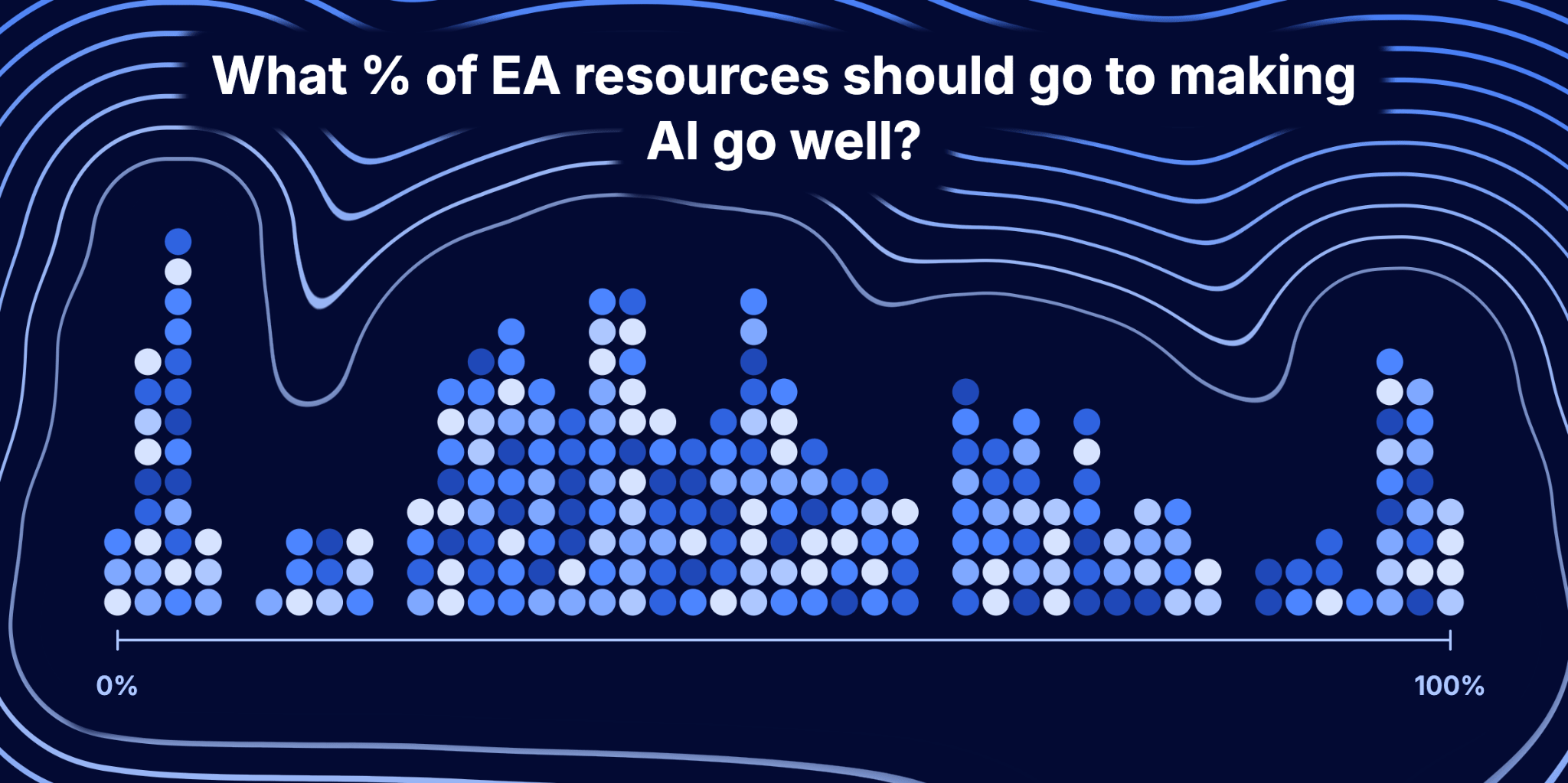
When you vote, you'll be prompted to leave a comment in a discussion thread, which then encourages conversation about the issue. The best outputs of debate weeks, however, are the posts. You could write one.
Debate week posts will be highlighted during the week, in a separate frontpage tab on the Forum. If you feel strongly about this debate question, this is a great opportunity to test your viewpoints, and have some influence on how the EA community thinks.
What counts as a debate week post? Any post which contains information or an argument which could reasonably be expected to update an impartial altruist on the central debate question. In other words, your post doesn’t have to be a debate-style argument to be a great debate week post. Great posts could be:
- A post sharing a tool that tracks EA-aligned grants and careers.
- An argument that the recipients of EA focus — the global poor, animals, future people — are best served by working on helping the transition to AGI go well.
- Your own model of how much funding is likely to be deployed next year and where.
- An argument that, due to cluelessness, we should not invest further in making AI go well and should instead focus on near-term more certain routes to impact.
Pre-reading, for developing your takes
- Background information on the distribution of funding, now and in the future:
- Giving and AGI: Why “just AI now, save rest for later” is a risky plan, Hayley Clatterbuck (Rethink Priorities)
- Do short AI timelines make other cause areas useless?, Hayley Clatterbuck, arvomm
- Causes and Uncertainty: Rethinking Value in Expectation, Bob Fischer (Rethink Priorities)
- Effective altruism in the age of AGI, William MacAskill
- 80,000 Hours is shifting its strategic approach to focus more on AGI, 80,000 Hours, Niel Bowerman
- Animal Welfare is Just Part of AI Alignment Now, Aidan Kankyoku
- EA is underfunding animal advocacy according to our own preferences, ElliotTep
- Recommend additions to the reading list in the comments.
Feedback? Questions? Leave your comments below.



I think one consideration to be aware of is that in the past few days timelines have accelerated really, really dramatically; a lot of people are now predicting 2027 (the year this debate is discussing) or 2028 may be the year AI becomes superhuman across all domains:
I would be happy to take the other side of this bet if there is a way to set reasonable resolution criteria we could agree on. The arguments for AGI or superintelligence within the next few years are intuition-based, not evidence-based, yet it's often insinuated that they are evidence-based. There is little if anything offered to persuade readers who do not already share these intuitions to think they are correct. Personally, I am more than 99% certain we will not see AGI or superintelligence in the next few years, but I would be open to looking at any kind of objective evidence.
A difficulty with the resolution criteria for any bet on AGI is that the term "AGI" can be abused to mean anything, including nothing of significance. The economist Tyler Cowen applied the term AGI to o3. OpenAI President Greg Brockman and former Nvidia CEO Jensen Huang both called GPT-6 Astra AGI. In the bizarre essay "Situational Awareness", hedge fund manager Leopold Aschenbrenner has a graph that seems to indicate he believes GPT-4 had human-level general intelligence.
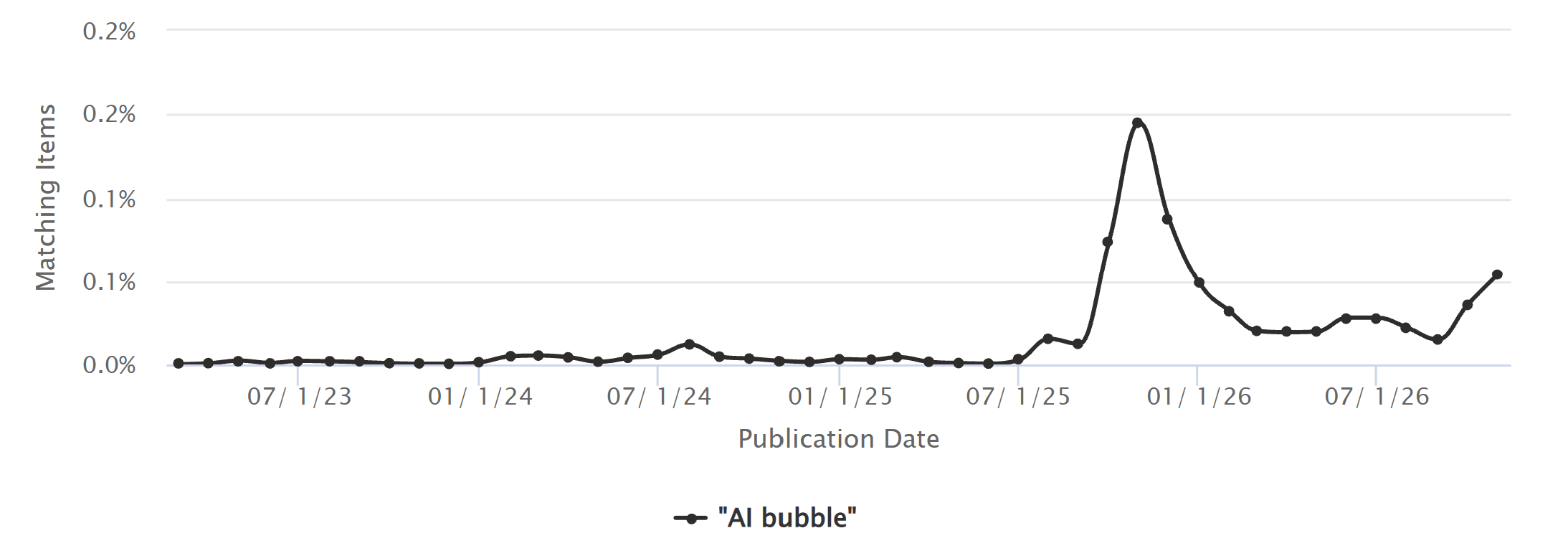
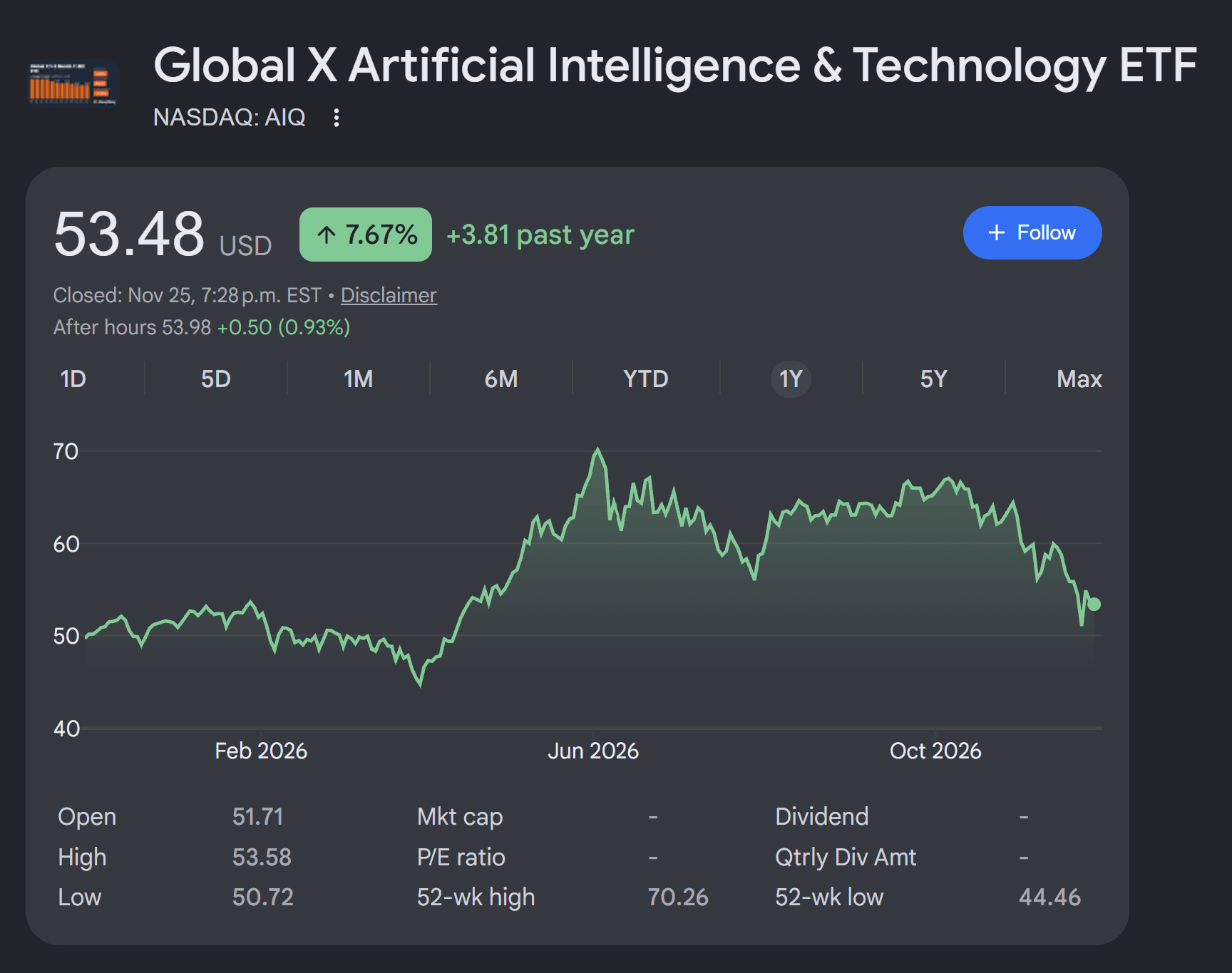
Maybe the most straightforward proxy for AGI or superintelligence within the next few years is whether there is an AI bubble. To cleanly avoid an AI bubble, companies would only need to develop AI systems that can increase productivity moderately, for a wide enough range of workers. If AGI is a more significant technology than that — which it is, if you go by how it's historically been defined — then its development is incompatible with an AI bubble. I have an open offer for anyone who likes to bet against me on the AI bubble. I'm also open to rejiggering the specific terms of that bet, and I'm open to proposals for new kinds of bets altogether, if someone thinks there is another clear way to bet on AGI.