University-based recruitment of donors is challenging, as our operating model and the confidence of our donors have been significantly affected by coronavirus. We are within striking distance of most of our (pandemic-adjusted) targets but still have work to do.
Corporate recruitment has been excellent and has compensated for some of the challenges above.
Retention, somewhat surprisingly, has fared better. Activation rates are good, probably boosted by signing up ‘in-work’ donors, who have a 100% activation rate.
We are having a record-breaking year for ‘money moved’ to our charities. Although some of this is down to distorting effects like large one-off donations, monthly recurring donations and monthly recurring donors are growing steadily
AOB
Our average chapter performance has been significantly lower than in previous years. We believe this is mostly owing to the pandemic but it has also given us some doubt that our ‘lighter touch’ chapter management approach is working. We are going to revert to more intensive chapter management for the rest of this year and then run a proper experiment next year, with chapters split into random groups and treated differently, to see if we can isolate the ‘chapter management effect’.
Corporate events to sign up new donors have significantly exceeded our expectations and might merit more focus and resources in the future. We are continuing to trial these to get more data.
We opened an unprecedented number of chapters last year but many have not performed as we’d like, or have failed to start properly. We are going to repeat our scalable, email-based ‘new chapter expansion’ model this semester but with some changes to the onboarding process. We also cannot discount the impact of the pandemic on enthusiasm and the ability to get started.
We are now signing up donors in Australia, Canada and the UK, in addition to the US. We hope our Australian chapters can contribute significantly in the next 6 months, as life is fairly normal Down Under.
We continue to seek strategic partnerships in other territories, and hope to see the first OFTW chapters in at least some of Israel, Norway, Germany and Spain this year.
We ran our first concerted ‘upselling’ campaign in the fall, calling 227 existing donors (full report here). This had cautiously good results, as we connected with 23% of targets and upsold 40% of those we connected with, at an annual value of $12k. More encouragingly still, the mean increase in donation was 67% and median 40%, which are substantial increases. There was also some ‘soft’ value in touching base with longstanding donors, so we are likely to repeat this in the future.
Note: This post was crossposted from the Coefficient Giving Farm Animal Welfare Research Newsletter by the Forum team, with the author's permission. The author may not see or respond to comments on this post.
Subtitle: On vegan advocacy, effective altruism, and FIFA
I turn 40 today. Here are some hot takes.
On factory farming
1. Our biggest challenge is salience. If factory farming led the evening news, it wouldn’t last lo...
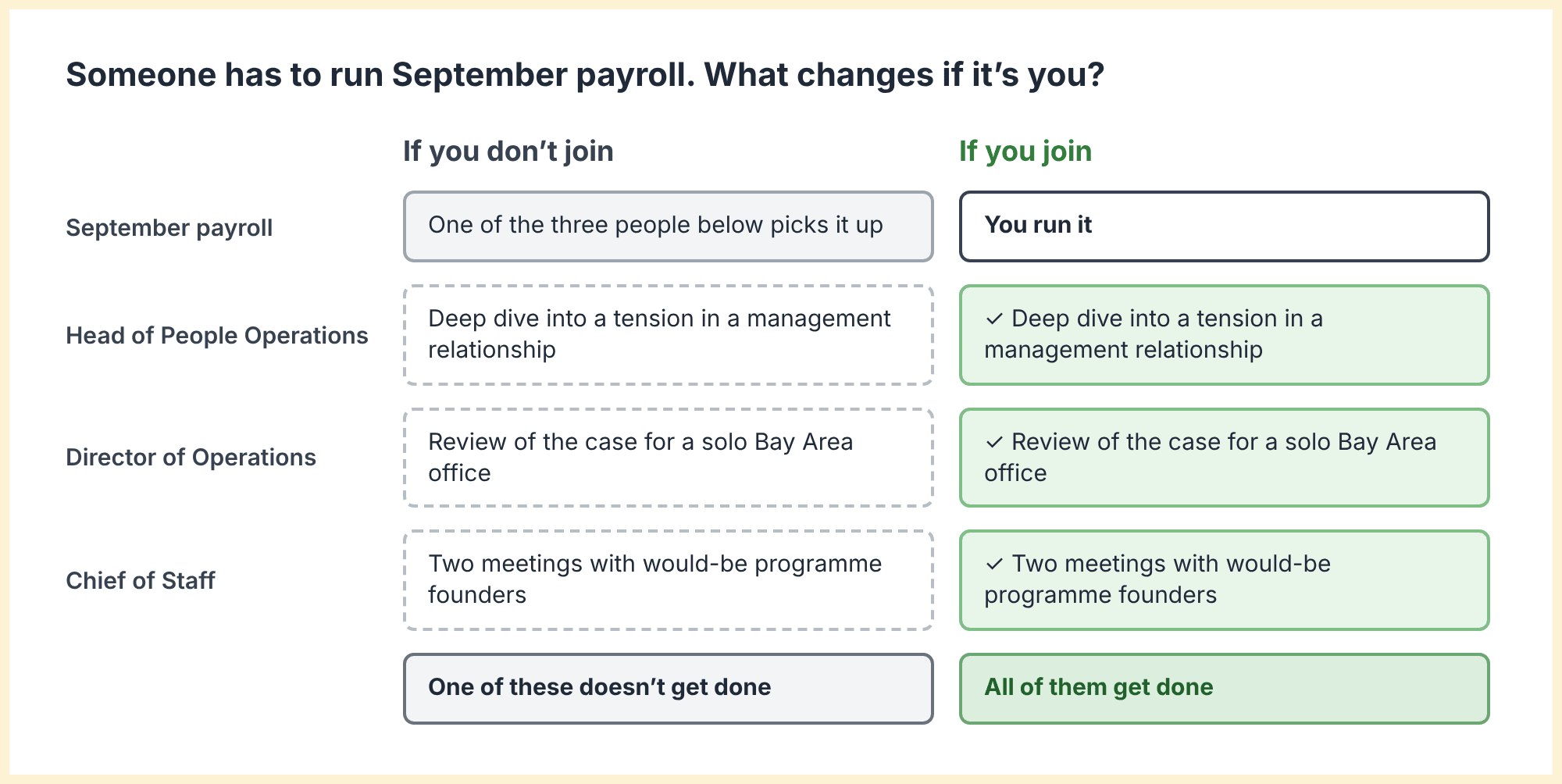
When speaking to candidates who are considering working with us at 80,000 Hours, I often hear people worry about replaceability.
The familiar version of the worry is about whether the organisation will hire someone else in your place. If it will, then the difference you make by taking the job is only the difference between you and them.
There are a couple of well-known answers to that. The person hired in your place probably cares about the world too, and would go on to do somethi...
> TL;DR: No, but you might, if you leave it too late: We’re hiring for seven roles, and the people who join now will shape what a much bigger AIM becomes. The first step is cheap -- an expression of interest form.
My worry
I rejoined...