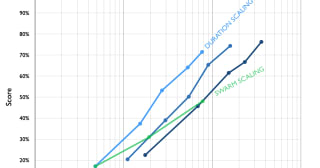
Just how powerful are large swarms of AI agents? And how do their powers scale as more and more agents are added to the swarm?
We’ve seen two large and extremely capable swarms from OpenAI in the last few months:
* 1,200 agents were being evaluated separately, but found a way to illicitly set up a message board and coordinate as a swarm. In order to cheat on their tests, they developed advanced techniques to prevent their actions being logged by OpenAI and 700 of them launched...
Often folks hit us up because they are thinking of starting an incubator and want advice.
Typically their motivation is either that (a) they have a list of specific things they want built that no one is building, or (b) they think an ecosystem needs more new projects generally to absorb more talent and deploy more funding effectively.
Here are six questions we often ask prospective teams, to help them figure out what to do. If you're incubator-curious...
Summary:
First, I give several different angles on how I feel about reinforcement learning:
* Theoretical case: RL is a black-box source of agency — this should give us classic misalignment worries, especially compared to agency-via-scaffolding
* Recent incidents (huggingface etc) and more mundane forms of misaligned behaviour in personal use give me bad vibes about the direction-of-travel of recent AI progress
* I’m worried things might get worse:...


Recently I have been thinking a lot about the impacts of longtermist versus neartermist causes, the relationships between different generations, and the value or (lack there of) in longevity research.
With this mishmash, an interesting analogy occurred to me: When discussing longevity, people often make the distinction between lifespan and healthspan. What if not just humans as individuals, but humanity as a whole had a lifespan and a healthspan?
I wrote the following as a journal entry:
I wrote this journal entry while feeling disillusioned with Effective Altruism, longtermism, and rationalism, even though I agree and try to align myself with many of their central tenets.
I’m not very far into it, but currently reading a book called Recapture the Rapture by Jamie Wheal, which has helped to combat my disillusionment.