Comments
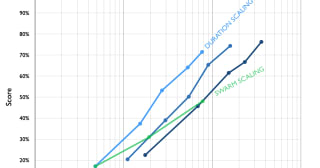
Just how powerful are large swarms of AI agents? And how do their powers scale as more and more agents are added to the swarm?
We’ve seen two large and extremely capable swarms from OpenAI in the last few months:
* 1,200 agents were being evaluated separately, but found a way to illicitly set up a message board and coordinate as a swarm. In order to cheat on their tests, they developed advanced techniques to prevent their actions being logged by OpenAI and 700 of them launched...


The 85 million children we cannot count
New wars are starting before the old ones have ended. Humanitarian budgets are being cut with a chainsaw. And in this time of ultra-prioritisation, even more than before, we are asked to prove that every euro or dollar is spent on saving lives.
I have been working in this sector for 15 years. I have seen its inefficiencies up close. I have also seen what it holds together.
For the last few years, I have been exploring Effective Altruism and asking whether its principles can be brought into mainstream humanitarian aid. Whether that is even possible. The global aid cuts are now forcing that question into the open. I find that both necessary and deeply unsettling.
Necessary, because the push toward cost-effectiveness is overdue. The tools are strong. Metrics like the Disability-Adjusted Life Year and the Wellbeing-Adjusted Life Year have made trade-offs clearer. Work by GiveWell and Rethink Priorities has improved how we compare and prioritise interventions.
Unsettling, because the version of effectiveness thinking now leaking into institutional aid is the narrowest version available. EA itself has internal language for working under uncertainty. Hits-based giving, cluster thinking, and work under deep uncertainty are part of the framework. Funders like Open Philanthropy¹ regularly support areas with long causal chains and incomplete evidence when the potential upside is large.
None of that nuance is what is showing up in the rooms where humanitarian budgets are being cut. What is showing up is the most legible version of cost-effectiveness, deployed as a universal filter.
There is also a division of labour problem. Effective Altruism began as a framework for philanthropic choice: how should private donors direct marginal giving if they want to do the most good? Official development assistance was meant to do something different. Public funding is supposed to hold up systems, sustain services, and maintain the protective infrastructure that keeps societies from fracturing, including where the cost-effectiveness case is not clean. These two systems were never substitutes. ODA is the spine. EA-aligned philanthropy is a precision instrument working in the gaps. When DAC ODA falls from its recent peak and drops 23.1% in one year, with another fall projected,² no amount of effective giving can fill the space. The danger is that as the spine contracts, the narrowest version of cost-effectiveness starts being used not as a tool for marginal philanthropic choice, but as a universal filter for public obligations.
The map is being redrawn
ODA cuts of this scale do something the EA framework has not yet had to fully reckon with. They redraw the neglectedness map in real time.
The architecture of which areas are well-funded is changing. Sectors that were not neglected in 2023, because traditional donors covered them, may meet the neglectedness criterion in 2026. The sector did not change. The funding around it did.
This is the moment when marginal donors, EA-aligned philanthropy and others looking for high-leverage giving, become structurally important. Not as replacements for official development assistance. They are not positioned for that, the funding is too small. But as the actors deciding which newly-orphaned areas get a serious second look.
DALYs and WELLBYs can account for avoided harm in principle. The problem is not that existing frameworks cannot value prevention. The problem is that they need credible counterfactuals. And in many of the areas now being defunded, the counterfactual is hard.
What would have happened to this child without school? Would she have been recruited? Married early? Trafficked? What would have happened to this community without the protection programme, the mental health support, the social cohesion work?
These are long, probabilistic causal chains. The value does not disappear. But our confidence in estimating it does. And when confidence falls, funding falls with it.
That is the selection problem. The default answer, applied strictly, will favour areas where causal chains are short and tractability is high. That is rational under uncertainty. It is also self-reinforcing. Areas with long causal chains and harder evidence problems will be passed over not because the potential impact is small, but because the cost of being wrong feels higher when the evidence base is incomplete.
Education in emergencies as the test case
234 million children in crisis-affected contexts.³ 85 million completely out of school.³ UN OCHA pool funds no longer prioritise it.⁴ In 2025, donors met just 24% of education appeals, and humanitarian actors were forced to cut their education funding requests by 33% before they were even submitted.⁵
There is rigorous experimental evidence that structured programmes in conflict settings, including education and psychosocial interventions, improve wellbeing outcomes. RCTs in Niger, Haiti, Lebanon and Syria have shown measurable gains in social and emotional learning and stress regulation.⁶ A programme implemented by Mercy Corps with conflict-affected adolescents showed a large reduction in hair cortisol, a biomarker of chronic stress, in a randomised controlled trial.⁷ A child in school is not just safer. She is physiologically less damaged by what is happening around her.
There is also a plausible and contextually supported case that school participation can reduce exposure to recruitment, trafficking, and early marriage.⁸
What there is not is strong causal evidence quantifying these protective effects directly.
Not because the effects are necessarily absent.
Because they are extremely difficult to isolate and measure.
Not a funding case. A research agenda.
This is not a call for EA funders to replace collapsing ODA. They cannot. And they should not be expected to. It is a call to do what EA is unusually good at: take uncertainty seriously, and build better tools for acting under it.
"Absence of evidence is not evidence of absence" can defend almost anything. So the line matters. The case is strongest when the mechanism is plausible, the possible effect is large, and the studies needed to reduce uncertainty are feasible but underfunded.
Education in emergencies appears to meet that test. So, plausibly, do other newly-defunded areas: protection, social cohesion programming, mental health in crisis, some forms of governance support. None of these will produce a clean DALY estimate next year. Some of them may, given investment in the right research. The rest may not. We will not know which is which until someone funds the research, tests the pathways and estimates the counterfactuals.
What counts as a life saved?
Only the death we prevented and measured?
Or also the life trajectory that did not collapse because the conditions for collapse were held back long enough?
Notes
Food for thought. I learnt that the most essential person in a system wasn't necessarily the leader, it was whoever was preventing it from breaking today. This person is often the invisible glue that keeps everything together. But how do you measure that or even detect it as an outsider?
I want to write something expanding more fully on what we decide is worth measuring and how that impacts decisions.