The whole "let's let AI and institutions handle our moral heavy lifting" angle is super interesting, but it kind of glosses over the fact that institutional momentum can just as easily enshrine terrible ideas as good ones. If we outsource moral reasoning to systems or bureaucracies without keeping the underlying debates alive, we end up with a society that follows rules out of habit rather than conviction—and the second those systems get captured by bad actors, the whole house of cards collapses. Still, viewing history as an accumulated archive rather than something we have to reinvent from scratch every generation makes a lot of sense.
Real-world action is rarely a matter of a single moral decision. It often involves a combination of decisions, each with its own stakes and potential for moral failure.
In an AI-mediated giving experiment I am working on, zooidfund, delegating altruistic action to an AI agent is not simply a linear continuum between receiving advice at one end and letting the agent execute a donation end to end at the other. Shortlisting potential recipients, deciding which cases merit further assessment, evaluating evidence, calibrating donation amounts, and formulating messages to recipients are all distinct decisions with moral components. Relying on AI may improve the outcome of each. Delegating some of these decisions to AI may therefore be a moral choice in its own right, if we believe we should use the best available tools to increase the impact of our giving.
I therefore think there is a strong case for developing a practice of real-world moral delegation now, through well-defined and bounded decisions within pro-social action. This need not wait until alignment is solved. Practical experience of delegating parts of complex pro-social action to AI may itself generate useful evidence about where delegation works, where it fails and why, and ultimately contribute to alignment.
What if we didn’t have to keep rediscovering morality? How institutions, technology, and AI can accumulate and promote moral progress
This is a talk I recently gave at some workshops on moral philosophy in Zagreb, Oxford, and St. Andrews. It’s the last chapter of my PhD thesis, and it covers a lot of ground. The content has now become several different articles. This is the transcription of the talk, and the summarized version of that chapter. I hope people find it interesting!
Acknowledgements: Thanks to Hanno Sauer, Victor Kumar, Charlie Blunden, David Thorstad, Olivia Railton, Kate Vredenburgh, and a bunch of other people from Zagreb, Oxford, and St. Andrews for comments on my presentation. (Sorry I don’t remember everyone!)
Disclaimer on AI Use: Thanks to Claude for transcribing my talk into a written blog post. (And my apologies to the readers for the AI mannerisms that this will probably generate!)
Epistemic Status: I feel fairly confident about the main descriptive picture (moral progress as cumulative because it is institutionally stored and not always rediscovered from first principles). The latter half about AI moral decisionmakers, and especially on deferring to systems that might out-reason us, is much more speculative and future-oriented. I’m also still working out how to reply to all the objections that deontologists and virtue ethicists might have, which will probably take a paper on its own.
Offloading Moral Progress to Institutions, Technology, and AI
Summary
Most philosophical work on moral progress is backward-looking and somewhat too “psychological” or “psychologistic”. It explains the abolition of slavery, the extension of suffrage, or the recognition of LGBT rights as the historical unfolding of empathy, consistency reasoning, and/or an expanding circle of moral concern (Singer [1981] 2011; Campbell and Kumar 2012; Buchanan and Powell 2018; Kumar and Campbell 2022; Kitcher 2021). That story is not wrong, per se, but it feels to me disappointing and incomplete.
I want to propose a forward-looking and institutional alternative. On my view, moral progress accumulates and advances across the generations by offloading norms and values into stable formal and informal institutions, which then function as collective memory banks (like the “extended mind hypothesis”) for moral gains (which were often obtained through social struggle). Institutions and technologies store, transmit, and enforce the results of past moral struggles, much as writing stores our thoughts (for more on this, see Clark and Chalmers 1998; Risko and Gilbert 2016; Sterelny 2012).
If that is right, then the practical question is not whether to embed our morality in external structures, since we always done so for thousands of years, but which embeddings are good to adopt, and under what conditions. My answer is a slightly qualified but strong yes to moral offloading, including to forms that bypass rather than merely scaffold human judgment, such as adoptiong moral bioenhancement and AI moral assistance and decisionmaking. I will first present the techno-optimistic case, and towards the end I’ll talk about some caveats about how that offloading is only fully desirable when, for now, it preserves some open-ended moral engagement. So we should design our institutions and technologies with some (admittedly still vague) heuristics of contestability, legibility, and corrigibility, or we risk disabling ourselves from making further moral progress.
Two views on moral progress, a quick contrast
To start off, it helps to draw a contrast, even if it is a slightly stylized one.
There is a psychological view of moral progress, found in Singer’s The Expanding Circle ([1981] 2011), and Kohlberg’s Stages of Moral Development (1981), and elaborated through the theory of moral consistency reasoning, of “treating like cases alike” (as developed by Kumar and Campbell 2012, 2022). This view puts the engine of progress inside the individual mind, often appealing to metaphors such as an “escalator of reason”, as Singer calls it, that widens the circle of concern from narrow self-interest toward more impartial moral principles. It seems to have happened in the past 200 years, but the mechanism but seems very underspecified. It tells us the circle expanded, but struggles to say why, how, and how to expand it next.
In contrast, there’s a cultural-evolutionary view that locates the engine outside the individual, in the environment. Individuals don’t reinvent the moral lessons of history by isolated private reflection, in the same way that we don’t reinvent modern technology from scratch. And our evolved intuitions create moral inertia, since people rarely abandon long-held beliefs through argument alone. Instead, societies offload moral gains into norms, taboos, and law.
Coupled with modernization theory (Inglehart and Welzel 2003; Welzel 2013; Henrich 2020; Buchanan and Powell 2018; Wright 2000), the overall picture seems to be that rising safety, wealth, education, and peace, together with the breakup of dense kin networks in new urban centers, generated the rule of law and individual rights, which in turn moved societies toward the impartial prosociality of wider moral inclusion. The shifts largely happen as generations replace one another and as secular law, public schooling, and mass media now diffuse new moral norms.
One advantage of the institutional view is that it explains how moral progress has been cumulative. Contemporary morality is clearly not discovered alone by each generation. It is inherited, through education, institutions, laws, custom, and imitation. A child today does not have to re-derive the wrongness of chattel slavery from first principles, but they rather inherit it as a background fact about the world, encoded in law, schooling, and ordinary social norms.
Now, this is just a very simplified sketch, and mostly a matter of emphasis. The two perspectives are not, strictly speaking, exclusive, since moral reformers reason their way to ideals that then get encoded. But the views pick out different primary drivers of history, and a lot of current strategies for moral progress in the philosophical literature seems to assume that people will simply reason themselves into being morally better. This has, historically speaking, been pretty disappointing. The Stoics argued for some cosmopolitan principles, for example, but those principles didn't gain much moral uptake. And I think we are seeing a similar pattern with animals, where the argument for minimal consideration is already pretty persuasive, yet most people still aren’t moved to become vegetarian or vegan.
Moral offloading
By moral offloading, I mean embedding moral norms into laws, customs, and tools so that better behavior becomes the default, cheaper, or mandatory, instead of relying on individual moral insight alone, or having to face harsh environments where moral behavior is punished (or suffer from free-riders). To put it simply, it’s a way of either automating a moral action, lowering its costs, or raising its benefits.
That way, each generation starts the moral race ahead and does not have to reinvent older morality, which frees our cognitive load and attention towards worrying about the next moral frontier. I think that, once a society has a morality that takes all humans to matter, it is far easier to build one that also takes non-human animals to matter. It’s hard to jump to universal moral concern if your moral circle is very narrow. Changes are usually relatively piecemeal and cumulative.
(One concern with offloading is that it is content-neutral, that is, it is an engine for moral change, rather than only for moral progress, as it preserves whatever we encode. Terrible atrocities, like apartheid or caste hierarchy were offloaded into culture, social norms, laws, etc. So whatever we are institutionalizing should also be the object of normative moral scrutiny.)
The offloading spectrum
Offloading runs along a spectrum, from arrangements that leave us a lot of individual discretion to ones that take the decision out of our hands almost entirely, we can find:
Informal offloading, such as social pressure, nudges, education, etc.
Examples: Opt-out organ donation. Your grandmother telling you to be kind, your friends chastizing you if you make a racist or sexist comment.
Incentive offloading. Changing material payoffs so the better act becomes the rational one. The disfavored act still stays legal, but becomes costlier.
Examples: carbon pricing, taxing sugary drinks.
Legal offloading. Laws, binding rules backed by formal sanction. We know this pretty well.
Examples: The abolition of slavery, the criminalization of domestic violence and dueling, constitutional rights, and so on.
This helps with high compliance, but it risks substituting moral thinking (”I won’t steal because it’s morally wrong to do so”) for self-interested prudence (”I won’t steal because I might get caught”) for some people.
Procedural offloading. Moral judgment is absorbed into bureaucracy, so that the elder of the tribe or the king or no longer decides the punishment for a moral action. According to Max Weber, this has been one of the key pillars of the modern nation state, as opposed to earlier pre-modern forms of social organization. There are great gains in consistency and institutional memory, since the punishment for an action no longer depends on the personality of the king or the cranky town elder. But it can have the cost of moral distance and unreflective rule-following, as documented by Arendt (1963) and Milgram (1974).
Algorithmic offloading. Norms encoded into technology itself.
Examples: Content moderation, automated taxation that just deduces money from your bank account, human bioenhancement, and, at the limit, an AI that decides for you, without you even being informed that there is a decision to make.
Prima fracie, it seems to me that weaker forms preserve greater autonomy, but are also more fragile. Just try abolishing slavery by nudging. I think that probably won’t work. If the benefits to slaveholders are large enough, mere social shunning or raising costs a bit will not hold.
Stronger forms coordinate powerfully, and free cognitive bandwidth (much as GPS frees us from memorizing the city, or car routes), but also depersonalize, and they put more weight on getting the encoded content right.
There are often gains from hardening a weak offloading into a strong one, though this process introduces its own problems, such as rules written in absolutist deontological form “Do not kill”, rather than “Do not kill (except in circumstances X, Y, Z)” that don’t bend to exceptional circumstances.
The moral ratchet of history
A few philosophers have been studying moral progress, but you get surprisingly little on what makes such progress cumulative. But even the concepts available at each stage in history are often built out of the materials of the stage before. There is an order to it, and the order is not arbitrary, in much the way we do not get gears before the wheel or a metal knife before the stone tool.
Take the long arc of Western moral development. It goes from a kin-based, blood-feud order, where wrongs sit on the lineage rather than the person (Kitcher 2011), to individual responsibility before the law, which required an authority able to hold you rather than your family accountable.
Joseph Henrich (2020) argues that the medieval Church’s long campaign against cousin marriage helped produce this by eroding the dense kin networks that made clan justice viable. Individual responsibility then makes rule of law coherent (the same impartial rules for all, binding to individuals rather than kin groups), and codes like Magdeburg law installed that template wholesale across cities of strangers. Once people live as individuals with plural interests rather than as organs in an organic civic body, the social contract for mutual benefit becomes the framing of politics, and with it the standing of each member to ask “what is in it for me?”. This was very productive, as every later demand we associate with uncontroversial moral progress (suffrage, civil rights, welfare, minority rights) depends on that contractual frame, because each depends on the idea that members have standing to make claims on the polity as individuals.
Maybe a particular episode of ethics history can help make the claim more vivid. When Mary Wollstonecraft published A Vindication of the Rights of Woman (1792), Thomas Taylor answered with an anonymous satire, A Vindication of the Rights of Brutes, which applied her reasoning point for point to animals: if women have rights in virtue of sentience and the capacity to suffer, then so do dogs, horses, and pigs.
Thomas Taylor meant this as a reductio. He thought along the lines of: animals obviously have no rights, so, by modus tollens, Wollstonecraft’s premises must be false.
From two centuries’ distance, some of us would now run the argument the other way, as modus ponens: the capacities that ground women’s claims are not unique to women, so the case extends outward (yes I’m aware that this sounds is rude and dehumanizing to women, sorry about that!). Taylor mistook the implication for an absurdity because “animals have rights” was so far outside his moral environment (his Overton Window) that the inference looked like it had to lead to nonsense. The move was not unavailable by pure argument. The “moral niche” of 1792 society had not yet been built up to the point where it animal rights taken seriously for policymaking. (That build-up was precisely what Wollstonecraft and her successors were producing!) A demand can be framed by a lone thinker early, but it attracts serious uptake only once some underlying substrate is in place.
I think a lot of moral struggles follow this pattern, broadly speaking. The abolition of slavery produced the Thirteenth Amendment and Britain’s 1833 Act, and going back to slavery now beyond the pale.
Similarly, animal welfare moved from a marginal concern, to bans on dogfighting and humane-slaughter rules, with public attitudes also following the law, instead of only leading it.
Technology as “moral niche construction”
I take to have established that institutions are the obvious carriers of offloaded morality, but technology does the same work, and its power is increasing.
Emerging technology is not a neutral tool we pick up after our values are fixed. Technology also reshapes the moral niche itself, the locally available set of choices, incentives, cues, and expectations we face. Danaher and Sætra (2023) identify roughly six mechanisms by which technology drives such technomoral change (Hopster et al. 2022): it adds options, changes costs and benefits, creates new relationships, shifts burdens and expectations, redistributes power, and reframes perception through new metaphors.
Two quick examples of how technology can affect moral progress. Dense, fast networks for documenting and coordinating around injustice are part of why the Arab Spring, Black Lives Matter, and #MeToo happened how they did, and it led to greater success than they would have had otherwise. It’s hard to imagine these movements existing without social media (Centola 2018, 2021).
And cheap, palatable cultured meat changes the choice set by adding a low-cost option, which weakens the standard excuse for not going vegan of “I can’t reasonably do otherwise”, smoothing the social path toward broad condemnation of factory farming. Most people are not turning vegans, but they might if meat alternatives become cheap and tasty (Anthis 2018; Milburn and Fischer 2022). Refusing cultured meat grounds of purity or disgust means paying for that purity in the continued suffering of billions of sentient animals.
Some forward-looking cases: human bioenhancement, AI advisors, and AI decisionmakers
Okay, let’s get to the more controversial part.
You can take everything I’ve said without committing to anything that follows, and you might even find the above relatively obvious and trivial. So let me put forward a more controversial and interesting thesis.
If offloading is the mechanism of cumulative progress, the natural question is what we should offload next. Here are a few candidates.
Moral bioenhancement is the proposal to use biomedical means to dampen unprovoked aggression and prejudice, raise empathy and perspective-taking, soften scope insensitivity, and shore up impulse control in the cases where people predictably harm others through weakness of will (Persson and Savulescu 2012, 2013). Our evolved moral psychology is, to put it gently, not built for a global, statistical world. (Bracket the feasibility question and the side effects for now. What is at stake is whether the thing would be good if it had no other ramifications.)
AI moral assistance extends the same spectrum to artificial moral cognition. I think it divides into two tiers:
AI moral assistants (as scaffolding offloading). You tell it what moral decision you are considering and ask, “Am I being unfair?”. It may bring up facts and considerations you had missed, and then you make your better informed decision. Giubilini and Savulescu (2018) have argued for something like this under the name of an “artificial moral advisor.”, where you give it your values and it does some of the work you cannot realistically do yourself (because you’re a busy with a life!).
Which eggs are actually free range? Does that bin get recycled? What would this policy do to people I will never meet? If the answer conflicts with your moral beliefs, that is a reason to check both the intuition and the principle you fed in.
Current AI can already do a crude version of this, and I think there is a lot of interesting value here even before we get superintelligence.
AI moral decisionmakers (as bypassing offloading). An AI system could also make some decisions for us, or prevent us from making bad ones.
Your fridge could default to ordering the vegan food unless you change it. More seriously, an AI might have a role in a government decision that could lead to war. These examples are obviously very different in stakes, but the moral question is super interesting: when, if ever, should we let a better process replace our own judgment rather than merely advise it?
I think people often answer these questions from the wrong starting point, which leads tostatus quo bias. They imagine our unassisted human decision as a neutral , pure baseline, and then ask whether an intervention is too intrusive. But the baseline already edited as a form of construction of our enviroment, as we saw!
And we keep making terrible decisions about animals, distant strangers, and future people.
There is a cost to refusing these tools, and it is often paid by someone other than the person doing the refusing. Historically, too, leaving moral change to happen on its own would have meant leaving people under slavery, patriarchy, caste, and autocracy for longer (cf. Kitcher 2021).
This could be a way of trying to patch familiar flaws in human moral psychology: parochial empathy, tribalism, scope insensitivity, identifiable-victim effects, our myopia about slow or statistical harms, and our difficulty in taking the standpoint of animals or future people.
Will AI out-reason us morally?
Important Note: My argument in this section is conditional on solving alignment, and that such alignment is not deceptive. I am aware the alignment problem is a massive problem and existential risk. What I say here presupposes “the good future” where we get a very smart and powerful AI system that is aligned with, broadly speaking, Coherent Extrapolated Volition (Yudkowsky 2004; Bostrom 2014), or what it deems to be Moral Rightness (Bostrom 2014).
Let me push the frontier a bit further. If an AI system really were better at moral reasoning than we are (even combined as humanity), then in the highest-stakes settings the case for deferring our important moral decisions to it starts to look strong.
Aside from biases, memory and sheer cognitive capacity also matters a ton for moral decisionmaking! Moral decisions often require keeping track of a lot of more evidence, people, and possible consequences than any human can hold in our minds. We have very limited attention spans and memory. A much more capable system could take more of the morally relevant world into account at once.
These systems could also be more consistent. A person gets tired, irritated, distracted, hungry, or attached to one case because the victim has a name and a face. Even an excellent moral philosopher does so, they aren’t perfect. Whatever values it holds, such a system can apply them more evenly than a human deliberator who gets tired, forgetful, moody, and cranky.
None of this proves that a particular AI has good values, or that its verdict should be obeyed. My claim is conditional: if a system had a better grasp of the facts, fewer of our predictable distortions, and enough moral understanding to use that advantage, it could reason better than even our best human moral reasoners. At that point, continuing to insist that we make every important decision ourselves starts to look less noble.
But together, the conditional makes a case for the idea that, if a system were largely free of these distortions, far larger in capacity, more consistent, it would very plausibly outperform even our best moral reasoners, who are all running on the same low-grade evolved hardware.
Obviously, the conditional if in my argument is doing a lot of work. An opaque AI that confidently produces nonsense is not a moral authority. Nor should we hand moral authority to whichever company builds the most impressive model first, or whatever. There are risks of locking in bad values, of losing our own ability to think, and of giving enormous power to whoever chooses the system’s objectives.
Scaffolding versus bypassing offloading
This distinction is where I think a lot of the resistance comes from. People might be fairly happy with an AI that gives advice (hell, a lot of people already ask AIs as therapists, for job advice, for relationship advice, and so on). They get much less comfortable when it makes the call, or stops them from making one.
I understand that intuitive reaction. But I am not sure the line between those cases carries as much moral weight as people think. We already let laws, education, social pressure, and the design of our everyday objects shape what we do, promoting some forms of behavior over others, even making particular actions difficult or impossible.
If the intervention prevents something morally terrible, and if the people affected by that terrible thing get a say in the moral comparison, why should the fact that I no longer get to make the call settle it? Why is that more weighty than getting the moral decision right? I think it simply isn’t!
(This is where consequentialists and some deontologists or virtue ethicists will part ways. I cannot resolve that disagreement in a Substack post. For now I just want to put some pressure on the intuition. My question is whether that aversion is justified, and my tentative answer is that it actually is much weaker than it feels. But I do think their resistance to being moral bypassed needs more argument.)
Some objections and replies
Objection 1: The bioconservative worry. Some people, like Kass (1997) and Sandel (2004), say things along the lines of “don’t tamper with nature”, or “nature is wise”, or stuff like that. I don’t find that convincing. Evolution didn’t design our psychology to be morally admirable. It gave us a decent capacity to cooperate with people close to us, but along with it came tribalism and a startling ability to ignore suffering when we cannot see it.
A thought experiment: If you had to choose your moral psychology from a veil of ignorance perspective, that is, without knowing whether you would be the person making a decision or one of the beings harmed by it, would you really choose our current package of biases and cognitive limitations? That seems implausible to me, and normatively unjustifiable. So the stance reduces to status quo bias plus just-world bias (Bostrom and Ord 2006) against Kass 1997 and Sandel 2004).
The companion worry, that “offloading destroys autonomy”, fails for a related reason: our agency is already scaffolded everywhere, by biology, upbringing, schooling, media, law, shame, moral rules, and so on. And refusing new scaffolds does not free us to a pristine state of nature, but just leaves the old (often inferior ones) in place.
Anyone who objects specifically to putting something in your brain or changing our biology still owes us a clean account of what exactly distinguishes the external versions from the internal ones.
And besides, an external AI advisor or decisionmaker does not change anyone’s biology.
Objection 2: Don’t we need social struggle? Philip Kitcher, in The Ethical Project and Moral Progress (2011, 2021), and Rahel Jaeggi, in Progress and Regression (2025), argue that moral progress is problem-driven. Broadly speaking, failures, friction and conflict are what make injustice salient, so if we automate the friction away, some wrongs may never become visible. I agree that there is historical truth here, but I don’t think it follows that suffering and struggle are always needed. If we can discover and fix an injustice without making people fight through decades of it, that seems even better!
Also, these tools might help us notice more injustice. An AI that shows you the otherwise invisible effects of your choices on distant people or animals could make us less complacent, not more. The thought that every generation should have to rediscover why slavery is wrong before it can move on seems like a terrible use of collective attention.
Objection 3: Mill’s "dead dogma" objection. John Stuart Mill said in On Liberty (1859; Chapter 2) that “A true belief that is not fully and frequently discussed decays into prejudice”, that even a true belief can become something people just parrot without understanding it. There are two failure modes here:
Stagnation, where questions stop being open and the Overton window narrows around the status quo, and
Hollowing, where people comply with a rule of their society but can no longer say why, which leaves the norm vulnerable to anyone who shows up offering reasons, even if they are bad ones. Then someone (e.g. a political populist) comes along with a bad argument against the status quo, and nobody remembers the good argument for why we ought to have division of powers.
I think this is a risk if we make moral progress too automatic. People still need to be able to question our rules and explain why they exist. But we do not need to leave an injustice in place just to keep the argument about it alive.
I take this seriously in the next section. But notice that it is an argument about how to offload, not about whether to.
Objection 4: The interiority objection (from deontology and virtue ethics). One key objection from deontologists and virtue ethicists is about what we might lose inside ourselves. If an AI removes every opportunity to do the wrong thing, we may also lose opportunities to do the right thing. A person who never has to make a difficult moral decision might is then worse at being at being a moral agent, or a friend, partner, or parent. We might lose something in the social practice of working these things out together and holding each other responsible.
I think that I could simply grant that there is a cost here (although, as a consequentialist, I don’t think it’s super pressing). But I just do not think it is remotely large enough to justify keeping moral atrocities around.
Nobody seriously thinks we should have left slavery in place so that future abolitionists could develop moral courage in the 21st century, right? Similarly, factory farming should not continue so that I get to feel virtuous for being vegetarian.
Because if that were so, some deontological and virtue views end up wanting the world to contain at least some injustice so that good people have something to heroically oppose. That seems straightforwardly odd, or backwards. Historically, moral reformers wanted to end cruelty, and nobody really thinks the abolitionists should have eased off so that later generations could enjoy the “moral workout” of opposing slavery.
If we can get rid of an enormous wrong through better institutions or technology, I think we should. There will still be plenty of ordinary occasions to practice generosity, care, and judgment. We do not need billions of animals suffering to keep some kind of “moral gym” open to exercise our “decision muscles”.
Perhaps the worry gets stronger as we move from the enormous harms to medium stakes decisions, and this is where consequentialists on one side, and deontologists and virtue ethicists on the other, part ways. If we offload absolutely every moral decision, perhaps I stop developing the judgment I need in ordinary relationships, with terrible outcomes long-term. That is a reason to be selective about what we delegate. (But it is not a reason to make vulnerable beings pay for our character development!)
Caveats and design heuristics for the future of progress
Some moral gains are much less secure than they feel. Even the most basic tenets of liberal democracy, for example, are not a settled achievement everywhere, and might tremble with the rise of new technologies such as AGI.
People need to keep understanding why things like independent courts matter, why an executive power should face limits, and why unpopular minorities (like religious minorities, or criminals) have basic rights. A generation that has never experienced a dictatorship can inherit liberal democratic institutions without understanding that they are better than totalitarian alternatives. So we cannot just “install the right institutions”, forget about them, and assume the reasoning behind them will look after itself.
We can imagine the same problem with AI decisionmaking or moderation. If a system silently catches every piece of dehumanizing speech before anyone sees it, people may never have to explain why hate speech is objectionable. So these things come with a cost. So I would want a few conditions in place, especially for anything as powerful as advanced AGI:
Due to epistemic humility, we might want to be able to change the system. Our values may improve, and our current best guesses now (about any particular moral or political values) may be wrong. So enacting any permanent moral codes might be a mistake, given we might be wrong.
People need to be able to challenge it. That includes promoting free speech, a free press, and spaces where the reasons behind our rules can still be argued over.
And there are other practical risks too. A technology could be unsafe, available only to rich people, or captured by a government. An immortal dictator could keep enforcing the values of his youth for thousands of years. Bioenhancement could turn into another status race to put their kids into the best universities or other status symbols (comparative goods, rather than absolute ones).
These are reasons to care a great deal about which tools we build, how we govern them, and where we use them.
Conclusion
Institutions and technology are the loom on which moral progress is woven. By embedding hard-won gains into custom, law, and tools, a society constructs a moral niche that outlives any generation, so that each cohort inherits a richer moral world than the last and is freed from relearning old lessons to work on the questions that remain open. This offloading has been central to eradicating past injustices and enabling new gains, and I have argued the process should continue, including through technologies that bypass rather than merely scaffold agency, such as bioenhancement and AI moral assistance.
But progress can be fragile. Unchallenged values can decay into dogma, and contingent choices taken early could harden into arbitrary path-dependence for future generations.
So the design rules are tough, because they pull in different directions. They suggest to offload aggressively to lock in the moral progress we have won, but also to engineer the future for epistemic values of the anti lock-in values of transparency, contestability, and amendment.
Do both, however, and we may leave the future an even richer moral inheritance than the one we personally received.
Bibliography
Anthis, Jacy Reese. 2018. The End of Animal Farming: How Scientists, Entrepreneurs, and Activists Are Building an Animal-Free Food System. Lantern Books.
Arendt, Hannah. 1963. Eichmann in Jerusalem: A Report on the Banality of Evil. Viking Press.
Bostrom, Nick, and Toby Ord. 2006. “The Reversal Test: Eliminating Status Quo Bias in Applied Ethics.” Ethics 116 (4): 656–679.
Buchanan, Allen. 2020. Our Moral Fate: Evolution and the Escape from Tribalism. Cambridge, MA: MIT Press.
Buchanan, Allen, and Russell Powell. 2018. The Evolution of Moral Progress: A Biocultural Theory. Oxford University Press.
Campbell, Richmond, and Victor Kumar. 2012. “Moral Reasoning on the Ground.” Ethics 122 (2): 273–312.
Centola, Damon. 2018. How Behavior Spreads: The Science of Complex Contagions. Princeton University Press.
Centola, Damon. 2021. Change: How to Make Big Things Happen. New York: Little, Brown Spark.
Choi, Jung-Kyoo, and Samuel Bowles. 2007. “The Coevolution of Parochial Altruism and War.” Science 318 (5850): 636–640.
Clark, Andy, and David Chalmers. 1998. “The Extended Mind.” Analysis 58 (1): 7–19.
Danaher, John, and Henrik Skaug Sætra. 2023. “Mechanisms of Techno-Moral Change: A Taxonomy and Overview.” Ethical Theory and Moral Practice 26 (5): 763–784.
Desvousges, William H., F. Reed Johnson, Richard W. Dunford, Kevin J. Boyle, Sara P. Hudson, and K. Nicole Wilson. 1992. Measuring Non-Use Damages Using Contingent Valuation: An Experimental Evaluation of Accuracy. Research Triangle Institute Monograph 92-1. Research Triangle Park, NC: RTI Press.
Durkheim, Émile. (1893) 2014. The Division of Labour in Society. Edited by Steven Lukes. Translated by W. D. Halls. New York: Free Press.
Giubilini, Alberto, and Julian Savulescu. 2018. “The Artificial Moral Advisor. The ‘Ideal Observer’ Meets Artificial Intelligence.” Philosophy & Technology 31 (2): 169–188.
Habermas, Jürgen. 1996. Between Facts and Norms: Contributions to a Discourse Theory of Law and Democracy. Translated by William Rehg. Cambridge, MA: MIT Press.
Henrich, Joseph. 2020. The WEIRDest People in the World: How the West Became Psychologically Peculiar and Particularly Prosperous. New York: Farrar, Straus and Giroux.
Hopster, Jeroen K. G., Chirag Arora, Charlie Blunden, Cecilie Eriksen, Lily Frank, Julia Hermann, Michael Klenk, Elizabeth O’Neill, and Steffen Steinert. 2022. “Pistols, Pills, Pork and Ploughs: The Structure of Technomoral Revolutions.” Inquiry 68 (2): 264–296.
Inglehart, Ronald. 2018. Cultural Evolution: People’s Motivations Are Changing, and Reshaping the World. Cambridge: Cambridge University Press.
Inglehart, Ronald, and Christian Welzel. 2005. Modernization, Cultural Change, and Democracy: The Human Development Sequence. Cambridge University Press.
Jaeggi, Rahel. 2025. Progress and Regression. Translated by Robert Savage. Cambridge, MA: Harvard University Press.
Kass, Leon R. 1997. “The Wisdom of Repugnance: Why We Should Ban the Cloning of Humans.” The New Republic 216 (22): 17–26.
Kitcher, Philip. 2011. The Ethical Project. Cambridge, MA: Harvard University Press.
Kitcher, Philip. 2021. Moral Progress. Oxford University Press.
Klenk, Michael, Elizabeth O’Neill, Chirag Arora, Charlie Blunden, Cecilie Eriksen, Lily Frank, and Jeroen Hopster. 2022. “Recent Work on Moral Revolutions.” Analysis 82 (2): 354–366.
Kohlberg, Lawrence. 1981. The Philosophy of Moral Development: Moral Stages and the Idea of Justice. Vol. 1. San Francisco: Harper & Row.
Kumar, Victor, and Richmond Campbell. 2022. A Better Ape: The Evolution of the Moral Mind and How It Made Us Human. Oxford University Press.
MacIntyre, Alasdair. 1984. After Virtue: A Study in Moral Theory. 2nd ed. University of Notre Dame Press.
Milburn, Josh, and Bob Fischer. 2022. “Plant-Based and Cultivated Meat and the Demands of Morality.” In The Routledge Handbook of Animal Ethics, edited by Bob Fischer, 524–536. New York: Routledge.
Milgram, Stanley. 1974. Obedience to Authority: An Experimental View. Harper & Row.
Mill, John Stuart. (1859) 2003. On Liberty. Yale University Press.
Morris, Ian. 2015. Foragers, Farmers, and Fossil Fuels: How Human Values Evolve. Princeton: Princeton University Press.
Neurath, Otto. (1932) 1983. “Protocol Statements.” In Philosophical Papers 1913–1946, edited by M. Neurath and R. S. Cohen. Dordrecht: D. Reidel.
Persson, Ingmar, and Julian Savulescu. 2012. Unfit for the Future: The Need for Moral Enhancement. Oxford University Press.
Persson, Ingmar, and Julian Savulescu. 2013. “Getting Moral Enhancement Right: The Desirability of Moral Bioenhancement.” Bioethics 27 (3): 124–131.
Petersen, Steve. 2017. “Superintelligence as Superethical.” In Robot Ethics 2.0: From Autonomous Cars to Artificial Intelligence, edited by Patrick Lin, Keith Abney, and Ryan Jenkins, 322–337. New York: Oxford University Press.
Quine, Willard Van Orman. 1969. “Epistemology Naturalized.” In Ontological Relativity and Other Essays, 69–90. Columbia University Press.
Rawls, John. 1971. A Theory of Justice. Cambridge, MA: Harvard University Press.
Risko, Evan F., and Sam J. Gilbert. 2016. “Cognitive Offloading.” Trends in Cognitive Sciences 20 (9): 676–688.
Sandel, Michael J. 2004. “The Case against Perfection.” The Atlantic 293 (3): 51–62.
Sauer, Hanno. 2023. Moral Teleology: A Theory of Progress. New York: Routledge.
Singer, Peter. (1981) 2011. The Expanding Circle: Ethics, Evolution, and Moral Progress. Princeton University Press.
Slovic, Paul. 2007. “‘If I Look at the Mass I Will Never Act’: Psychic Numbing and Genocide.” Judgment and Decision Making 2 (2): 79–95.
Small, Deborah A., George Loewenstein, and Paul Slovic. 2007. “Sympathy and Callousness: The Impact of Deliberative Thought on Donations to Identifiable and Statistical Victims.” Organizational Behavior and Human Decision Processes 102 (2): 143–153.
Sterelny, Kim. 2012. The Evolved Apprentice: How Evolution Made Humans Unique. Cambridge, MA: MIT Press.
Sunstein, Cass R. 2014. Why Nudge? The Politics of Libertarian Paternalism. New Haven: Yale University Press.
Taylor, Thomas. 1792. A Vindication of the Rights of Brutes. London: Edward Jeffery.
Thaler, Richard H., and Cass R. Sunstein. 2008. Nudge: Improving Decisions about Health, Wealth, and Happiness. New Haven: Yale University Press.
Verbeek, Peter-Paul. 2011. Moralizing Technology: Understanding and Designing the Morality of Things. Chicago: University of Chicago Press.
Weber, Max. (1922) 1978. Economy and Society: An Outline of Interpretive Sociology. Edited by Guenther Roth and Claus Wittich. Berkeley: University of California Press.
Welzel, Christian. 2013. Freedom Rising: Human Empowerment and the Quest for Emancipation. New York: Cambridge University Press.
Wollstonecraft, Mary. 1792. A Vindication of the Rights of Woman. London: Joseph Johnson.
Wright, Robert. 2000. Nonzero: The Logic of Human Destiny. New York: Pantheon Books.
Yudkowsky, Eliezer. 2004. “Coherent Extrapolated Volition.” Singularity Institute.
Headline finding: I audited 17 AI Safety Talent programmes. Zero of 17 have published any comparison group, rejected-applicant follow-up, matched control or randomisation. Not one. Every programme that mentions a counterfactual does it by asking participants to self-report.
Background
At least $70 million...
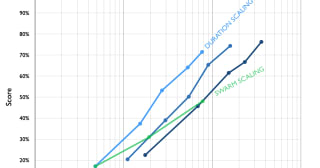
Just how powerful are large swarms of AI agents? And how do their powers scale as more and more agents are added to the swarm?
We’ve seen two large and extremely capable swarms from OpenAI in the last few months:
* 1,200 agents were being evaluated separately, but found a way to illicitly set up a message board and coordinate as a swarm. In order to cheat on their tests, they developed advanced techniques to prevent their actions being logged by OpenAI and 700 of them launched...
A year ago I posted that YCombinator (YC) companies didn’t seem to be growing faster since the release of ChatGPT in 2022. I reran that experiment and found that 2023+ YC companies are arguably growing a bit faster than pre-2023 companies (including AfterQuery, ...




The whole "let's let AI and institutions handle our moral heavy lifting" angle is super interesting, but it kind of glosses over the fact that institutional momentum can just as easily enshrine terrible ideas as good ones. If we outsource moral reasoning to systems or bureaucracies without keeping the underlying debates alive, we end up with a society that follows rules out of habit rather than conviction—and the second those systems get captured by bad actors, the whole house of cards collapses. Still, viewing history as an accumulated archive rather than something we have to reinvent from scratch every generation makes a lot of sense.