Headline finding: I audited 17 AI Safety Talent programmes. Zero of 17 have published any comparison group, rejected-applicant follow-up, matched control or randomisation. Not one. Every programme that mentions a counterfactual does it by asking participants to self-report.
Background
At least $70 million...
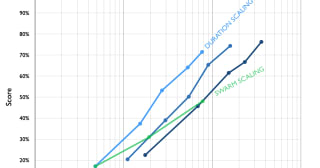
Just how powerful are large swarms of AI agents? And how do their powers scale as more and more agents are added to the swarm?
We’ve seen two large and extremely capable swarms from OpenAI in the last few months:
* 1,200 agents were being evaluated separately, but found a way to illicitly set up a message board and coordinate as a swarm. In order to cheat on their tests, they developed advanced techniques to prevent their actions being logged by OpenAI and 700 of them launched...
A year ago I posted that YCombinator (YC) companies didn’t seem to be growing faster since the release of ChatGPT in 2022. I reran that experiment and found that 2023+ YC companies are arguably growing a bit faster than pre-2023 companies (including AfterQuery, ...


Nice paper on the technical ways you could monitor compute usage, but governance-wise, I think we're extremely behind on anything making an approach like this remotely plausible (unless I'm missing something, which I may well be).
If we put aside the question b) in the abstract, of getting international compliance, and just focus on a) national governments regulating this for their own citizens. This likely requires some kind of regulatory authority with the remit and the authority to do this. This includes information gathering powers, which require companies by law to give specified information to the regulator. Such powers are common in regulation. However, we do not have AI regulators or even tech regulators (with the exception of data protection whose remit is more specific). We have a bunch of sector regulators, and some cross-sectoral ones (such as data protection, competition etc). The closest regulatory regime to being able to legally do something like this that I'm aware of is the EU, via the EU's AI Act, still in draft. Under this horizontal legislation which is not sector specific it will regulate all high risk AI systems (the annexes stipulate examples of what they consider high-risk). However, they have not defined compute as a relevant risk parameter (to my knowledge, although I think they have a new thing on General Purpose AI systems which could put this in so you might want to influence that, but I'm not sure what their capacity to enforce looks like).
No other western government has a comparable AI regulation plan. The US have a voluntary risk management framework. The UK has a largely voluntary policy framework they're developing (although they are starting to introduce more tech regulation some of which will include AI regulation).
Of course there are other parts of governments than regulators - and I'd really like it if 'compute monitoring' started to pay attention to how differently these different parts might use such a capability. One advantage of regulators is that they have clear, specified, remits and transparency requirements they routinely balance with confidentiality obligations. Other government departments may have more latitude and less transparency.