Comments
EA Finland: from a philosophy discussion club to a national organization

23 min readJan 14, 2023
35
This post describes the history of Effective Altruism Finland and Finnish effective altruism efforts, based on activities I've been involved in and what I've researched and heard from others. Although many people (Aayush Kucheria, Andrea La Mantia, Mikko Hemmi, Kaj Sotala, Karla Still, Kerkko Pelttari, Onni Aarne, Santeri Tani, Tapio Lahtiharju, Valtteri Lipiäinen and Vesa Hautala) have given me feedback and the post should not contain factual errors, it does obviously emphasize my experiences and knowledge – as they say, history is written by those who post on the EA forum. For another (shorter) perspective of the same events, see Karla’s post. In particular, I’ve focused less on Aalto EA and EA Tampere and pre-2018 EA Finland efforts, simply because I know less about these.
The perspective I’ve tried to take in this post is focusing on the concrete things we have done and what they were like. What I have talked less about is attendance numbers and other metrics. This post also should not be read as a “thank you” or appreciation post – I really appreciate our community, and listing all the cool things everyone in the community has done would take way too long.
If you are not that interested in EA Finland in particular but would like to get inspiration on how to do things in your local group, reading only the key takeaways at the end of each section should help you with that.
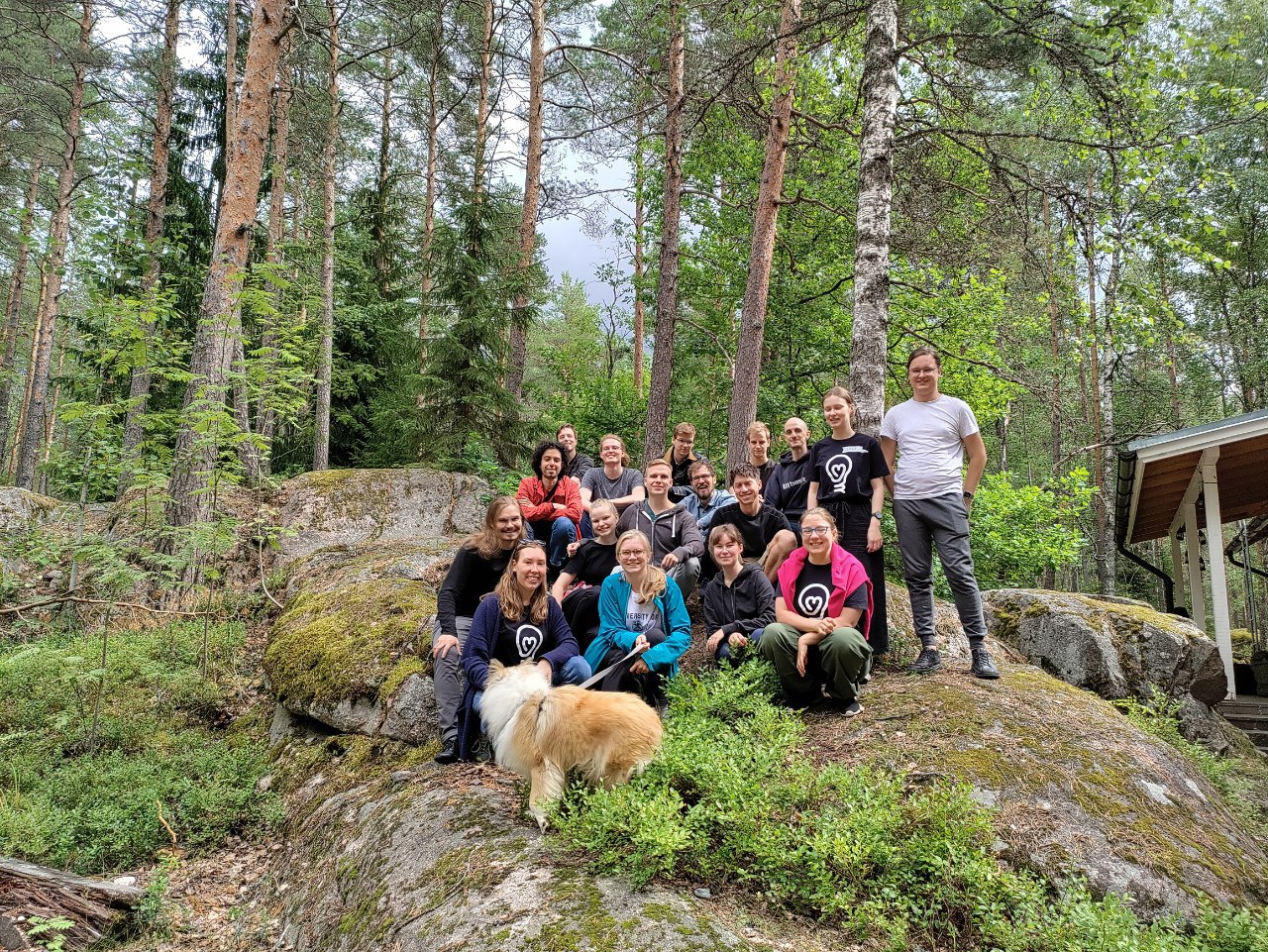
Effective altruism efforts in Finland started in the early 2010s, although there has been loosely EA/rationalist adjacent activity in Finland since the early 2000s, such as the Finnish Transhumanist Association.
The Finnish effective altruism scene started out as a small informal group. Some people who are still active today were Kaj and Mikko, both of whom originally heard about EA through LessWrong. In 2013, the group members wanted to scale up the activity, and founded official organizations: Effective Altruism Finland and the Helsinki University student association Effective Altruism Helsinki.
The group had meetups around once per month (with 3–10 participants in each meetup) and organizing events such as a panel discussion with a member of the Finnish parliament as a guest speaker, a visit to Animalia Finland and a giving game. There were also some initial network building attempts such as connecting to Finnish philosophers and academics. Once, someone in charge of writing a new upper secondary school text book about philosophy participated in a meeting and ended up including two pages about EA in the book.
However, it seems that the group was not large enough to sustain continued activity, and many members were busy finding work and finishing their studies or PhDs. The association meetings of the official groups were not held and some of the more outreach oriented activity died down, but the group was still informally meeting from time to time and hoping that some new people would show up and make it more active again.
In 2018, Charlie Rogers Smith came to visit a Finnish EA meeting. One of the attendants at the meeting was Onni, a CS freshman who had discovered EA a year earlier by being interested in philosophy and learning about Singer’s drowning child thought experiment. Charlie encouraged Onni to resurrect the EA Helsinki university group. Onni had no experience in running groups or organizing stuff whatsoever, but since nobody else present at the meeting was willing to commit time towards EA Helsinki, he took up the task anyway. This marks the beginning of a new era of effective altruism activity in Finland, although it may not have looked like it for a long time.
In the summer of 2018 Onni resurrected the dormant Effective Altruism Helsinki group, which is a university group for students in the University of Helsinki. For a long time, he was solely responsible for all activities, although he had some help from others for single events and activity planning.
From here starts the period that I also personally remember, because I also got involved as a participant when Onni explained he wanted to start a new club. (I came partly to support Onni’s club because it is good to support friends if they want to start a club, and partly because I was actually interested in this weird “helping others effectively” thing.)
Most people who joined EA Helsinki activities in this period found their way there in the following ways:
Some activities EA Helsinki had during 2018–2020:
Somehow I managed to learn a lot about EA just by discussing it in these monthly meetups. We didn’t do any background reading in an organized way, but people who had read more explained things to others. Several people have afterwards described the discussions as “too advanced for me” or “I did not understand anything the others were talking about”, which is probably not ideal. (One person who was intimidated by the “required” level of “intelligence” is an algorithmics researcher and university lecturer. He never tried coming to a meetup again but later read some EA books on his own.)
There were probably several reasons why all organization relied on Onni for a long time:
These things slowly started to change during 2020, when the participants became more knowledgeable about EA and started to feel more confident in taking responsibility of organizing things.
The first COVID wave in 2020 obviously influenced EA Helsinki activities significantly. Everything went remote, and so did EA Helsinki. Since all EA Helsinki communications had been done through Telegram and email, Onni created a Discord server so that the group could hold remote meetings. Finland didn’t face total pandemic lockdowns, but 2020–2022 had several periods where all in-person meetings were strongly discouraged.
In spring 2020, EA Helsinki moved some activities from in-person to Discord video calls:
After the initial pandemic shock EA Helsinki started to get more active.
All in all the pandemic had a positive influence on the growth of EA Finland. With the sudden change in everyone’s social contacts, for many of our current organizers the Finnish EA community became more important mainly because of the career club and weekly coworking sessions. In addition to that, there were several people who had been busy with other commitments before (like Karla and me), but since these were now canceled, they needed to find other things to do. If I had been as busy as usual with organizing role-playing game events, it would have taken me longer to find the time to actually start seriously reading about EA and organizing things.
During the first pandemic year EA Helsinki was still run in a very chaotic and non-organized way. Onni was still the main responsible person for everything, but now there were around 8 others who also regularly participated in organizing (for example, held remote monthly meetups and EA intro events). This somewhat functioned because the number of organizers was small enough, but it was not the ideal way to do things because there was also a lot of miscommunication and some projects never got finished. The first bigger project that actually worked out was running an intro program. In the next section I will tell what effects it had.
A sociology student did a Master’s thesis on us around this time, so if you are reading her findings, this is the context she drew most of her conclusions from.
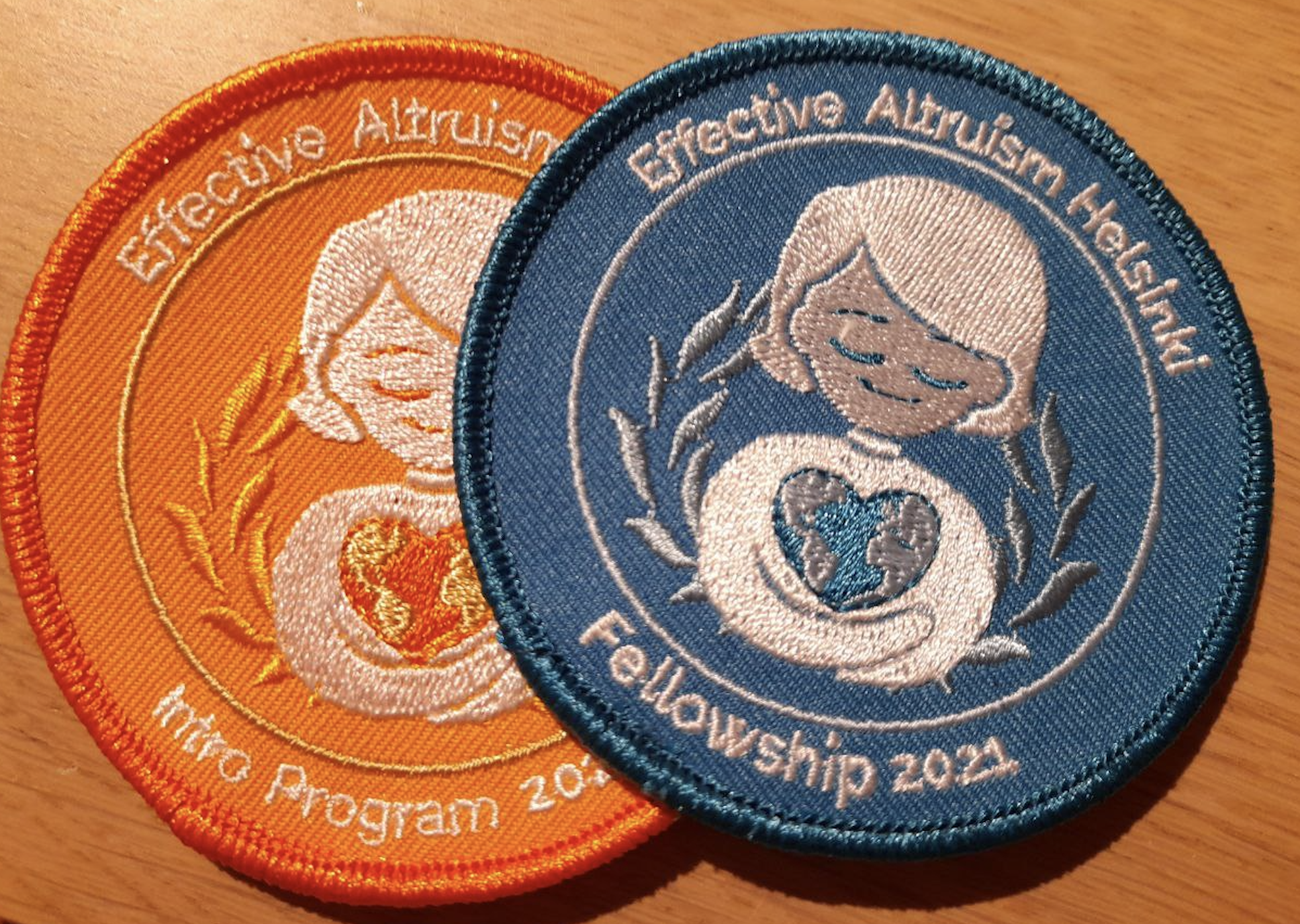
In the spring of 2021 EA Helsinki ran a 8 week intro to EA program for students and recent graduates for the first time. The program was advertised to students of the University of Helsinki, Aalto University and on our mailing list. In the end, 34 participants completed the program. The sessions were obviously held remotely, like our other activities. A lot of attention was paid to the marketing of the intro program, especially visuals, since the intro program organizers felt that it would help the audience perceive EA Helsinki as more of a professional organization and less of a philosophy discussion club.
Running the intro program had two main benefits:
With the sudden rapid growth of people who wanted to do EA stuff and had opinions on how EA Helsinki should do things, I started to get worried we would not be able to organize things in the chaotic way we had done before. Because of the lack of the organizational structure, it was also not obvious who would be in a position to decide that we now need an organizational structure.
I tried to convince Onni he should organize a strategy day where we can make concrete plans on what to do. Onni said he didn’t know how to do it and asked me to organize it if I wanted one.
So I organized a strategy and planning day for EA activities in Finland. We held it outside in a park because of COVID and it was hard to keep all post-its of the planning canvas exercise in place with the wind. Only around 60% of the people who had voiced interest actually showed up, but with those who did, we actually managed to make a plan for the future year:
Most roles were pretty easy to fill, but it was hard to decide on a general coordinator who is responsible for the big picture. Everyone who was discussed for the role had other time constraints.
Eventually, we ended up deciding that Karla is going to be the general coordinator and Onni is going to help her out, even if Karla was going to exchange to Germany and Onni was busy working on his Master’s Thesis. As expected, this setup meant that people took care of their responsibility areas pretty independently, and neither Karla or Onni could support them as much as they’d originally hoped to.
Looking back, I’m surprised we didn’t have any major issues despite the lack of available coordination. (Santeri remembers this as “we deliberately avoided hierarchies”, but I think it was more that nobody was able to step up and take responsibility for EA Finland as a whole.)
During the fall of 2021, we created a donation website (following the example of other national giving sites), which is currently just a webpage that provides information on effective giving in Finnish and redirects users to the donating pages of the organizations we recommend. I am not sure if the result is super impressive given we had a team of 8 people that spent all together 400 hours on it. We had the option to use graphics and existing listings from other effective giving websites, but we wanted to make a website from scratch and make a conscious decision on what recommendations to include. If we’d gone with a minimal viable product, the project would have taken less time, but on the other hand, now we have more ownership of the result.
As a volunteer organization, it was also important that we actually managed to complete a project with an end product. Working on something together in a structured way also helped us learn how we function as teams and was motivational for the people involved. For a long time we had just been a discussion club talking about doing good, and now we were at least doing focused public outreach. It felt weird to tell the team that we are creating this website so that a person who would otherwise have died might not die. It was quite a different experience from other volunteer projects I have led.
Creating the donation website also forced us to actually get our bureaucracy together, so we revitalized the Effective Altruism Finland organization that had been registered in 2013 but that nobody had held association meetings for since then. As an organization it is possible for us to handle money, so we can hopefully at some point start collecting and redirecting donations like the other Nordic donation platforms. (Vesa has been trying to implement this as a part of his work, but it has turned out to be more difficult than we imagined.)
Until the fall of 2021 I don’t think almost anyone in the global EA community was aware that we had become more active as EA Finland. We didn’t ask for any support in setting up things, our group was marked as “inactive” in the EA groups page (until somebody noticed it and fixed it), and we also didn’t have any external funding. We paid for our activities ourselves, but they also often didn’t cost money since we were operating mostly remotely and had access to free university spaces when needed. The most expensive events we organized were giving games that we did as an intro to EA activity a couple of times.
I would say we were somewhat isolated from the global EA community for a long time. We did have some support from other EAs in the Nordics, such as Onni having calls with Risto Uuk from EA Estonia and Eirin Evjen from EA Norway. I remember we discussed the option of getting support from CEA, but at least I was quite scared to do that, because I thought people at CEA must be very busy and talking to me about organizing some random national group won’t be a priority to them. I also didn’t really know how they would be able to help us since they didn’t know us or the Finnish social environment we were operating in.
Finally, I ended up talking to Catherine Low from CEA in September 2021. It happened almost by accident: I originally applied to get mentoring from Magnify Mentoring (at the time WANBAM), and they didn’t find me a mentor but recommended that I’d talk to Catherine since I mentioned community building in Finland as one of my areas of focus. For me, this call was important because it made the international EA community seem more real; that there were actual people out there, not just names on the EA forum. From there on, more people from EA Finland have been in more contact with CEA.
Until 2021, most people from EA Finland had also not participated that much in international EA events, and when they had, it was more in personal capacity than with community building efforts in mind. We also didn’t have a culture of advertising international EA events or sharing notes about our experiences. Some Finns had attended EAG(x)s conferences in 2019 and earlier, and some participated in EAGxVirtual 2020. It sounds like these experiences were valuable for the participants, but there was not much knowledge sharing after them, and I cannot track any single community building step to having been a direct result of a conference attendance.
The EAGxPrague 2021 conference was the first international conference where we tried to go as a group of EA Finland folks and that was also largely advertised to people who follow our communications. Since it was postponed to 2022, the first conference with a significant number of EA Finland folks attending was EAG London 2022, which was also my first live international EA event. A lot of other Finns went to other EAG(x) conferences in 2022 as well: I can think of at least 20 EA Finland affiliated people who participated in a live conference last year.
In 2021–2022, we also had more people participate in virtual EA programs and get more international EA contacts that way. The AGI Safety Fundamentals 2022 winter course was quite popular, with 8 of our volunteers participating in it.
And yet, finding a place in the international EA ecosystem is not always easy when many organizations are located in not-Finland. To me, the notion of getting hired at an EA organization went from “practically impossible” to “very difficult” when Onni started to work for Rethink Priorities in 2022. Onni was not the first Finn to ever be work for an EA organization (for example, Kaj done work for MIRI already in 2012, and Vesa had been working for EA for Christians since 2021) but it felt different because I had seen most of Onni’s growth from an EA hobbyist to a young EA professional.
Our community kept on getting bigger. There were new iterations of the intro program that bought in new people. More activity was divided into separate groups, and while EA Finland was the main organization everyone was sort of affiliated to, Aalto EA began to have a lot more activities on their own, EA Tampere was getting more active and EA Helsinki started to have some university-targeted activity that was somewhat separate from other EA Finland activities.
With all of this, we felt that it started to be really hard to keep up with everything we wanted to do with just volunteer work. As an example, significantly less things got organized for the duration of AGISF because we had 8 active organizers out of ~20 participating in it, and when they all spend 5–7 hours a week studying AI safety material, that’s 5–7 hours a week less time for group organizing per person.
We also hoped that having paid workers would help us get all the less pleasant bureaucracy stuff done in a more organized manner, and that this would mean there was at least someone in the organization who could commit enough time to organizing to actually understand what is going on and what everyone is doing. It takes a lot of effort to organically keep track of what all 20 organizers are doing.
After a lot of processing, we formed a team of 4 potential new employees that would all work part-time, and applied for funding for 2 full time equivalents. At this point, we figured that our core activities that we wanted the employees to support were:
We found out in April 2022 that our funding request was granted, and the new employees (Santeri, Karla, Vesa and me (Ada)) started to work for EA Finland in May. Around the same time, we also got a grant to pay for community building activities that we could use for event spaces and food.
Since May, we have had some changes and benefits from having paid employees. Describing everything in detail would take too long, and our co-directors Santeri and Karla would have a better picture of it than me, so I just list some main points on a surface level:
Another nice thing that happened in summer 2022 was our first in-person retreat organized by Andrea. The benefits of retreats have often been repeated on posts like this; just like everyone else, we felt that spending some time together helped us get to know each other better and get more motivated to do things together. (The downside of retreats in these times are of course the people who need to miss out because they get a slight flu right before the event.)
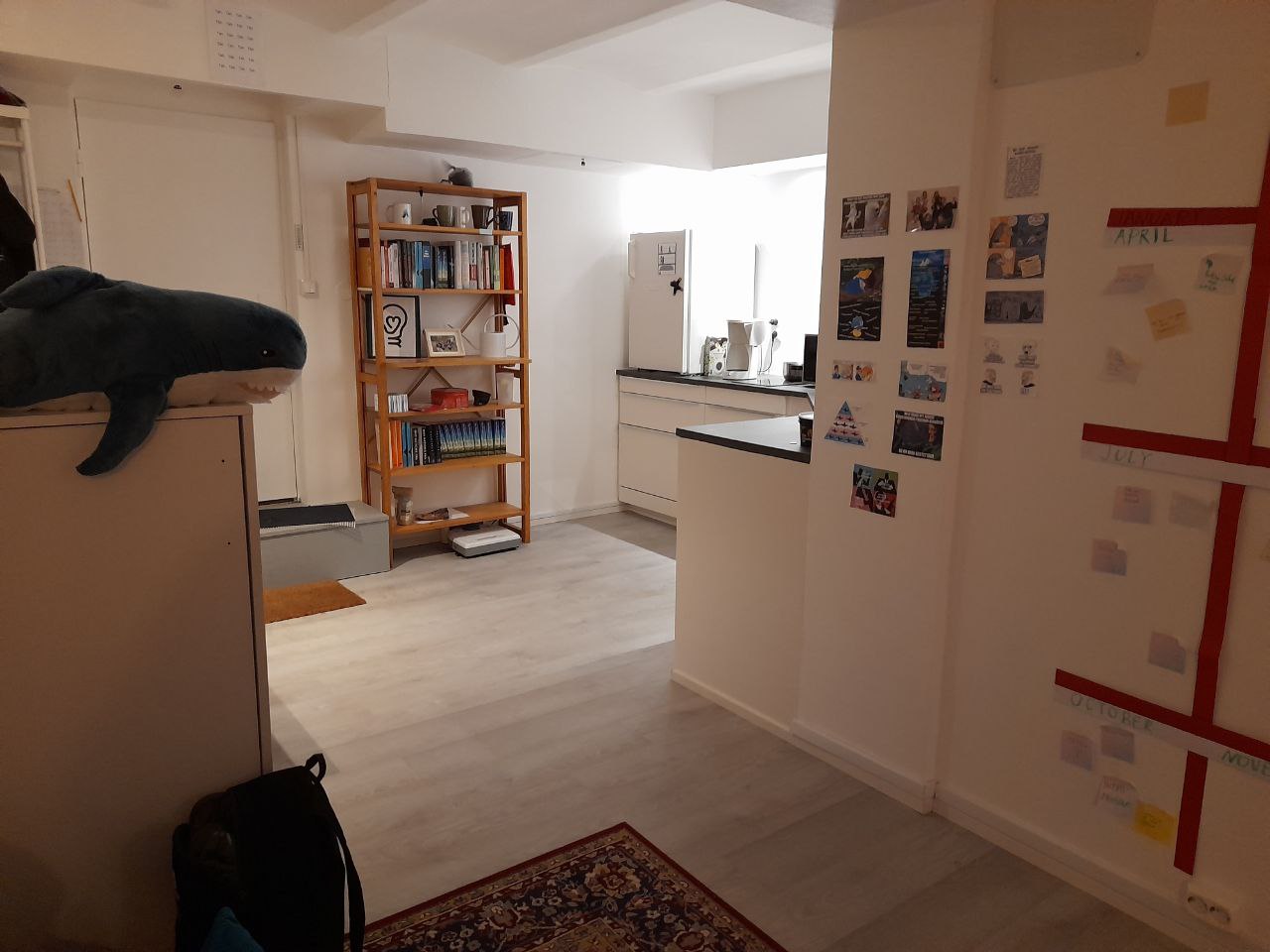
In October 2022, we also rented an office space for EA Finland. It is a coworking space where people can come do EA related work and volunteering, and meet others to build connections among EAs in the area. For organizing small events, having an own space has also proven useful. An extra benefit is the possibility to store EA Finland possessions somewhere other than distributed in people’s homes, especially that we can have a small library to borrow EA books from.
It is now early 2023. We hope to continue growing and setting up good practices for doing EA things in Finland. I am especially hopeful about new EA groups in different Finnish cities and some EA related volunteer projects our members have been working on.
Community building can also sometimes feel frustrating, because the effects are uncertain and there is a delay before you see them. Having been involved in active organizing for several years now, I notice that sometimes the process from first hearing about EA ideas and actually making big career or life related decisions can take a long time.
Community building is not just about introducing EA ideas to people and hoping that they quickly start to act on them. If we manage to create sustainable communities that people can be a part of for a long time, we get to see all the cool things people do 3 or 5 or 10 years after first hearing about EA.

So what's up with Onni now?
Onni works for Rethink Priorities and is part of the board of EA Finland, but does not actively participate in community building efforts in a hands-on practical basis anymore such as organizing events or so. My impression is that he is relieved that other people are doing it now :)
Good that you asked, since one thing I wanted to highlight with this story was that it is possible to succeed at community building even if it is not your favorite thing or the best personal fit for you considering all abstract possibilities – if you are the only person able to put in effort at a specific time, you are the best person to do it. (And later you can hand it over to others when you discover a new another opportunity that utilizes more of your personal strengths.)