It doesn't seem like most EAs are interested in real estate investing (REI). Besides more riskier day trading, entrepreneurship and playing the lotto, REI done right garners significantly higher returns (think 20% and up, excluding equity, appreciation, depreciation recapture and capital gains).
I focus on the cash on cash, CoC, return (REI without equity) when analyzing potential investment properties, and make goals with cash flow (e.g., net $300/mo per property after at least 20% CoC return). My current goal is to attain $10k/mo cash flow within 12 years (again, after at least 20% CoC with most doors under anther's management).
I use spreadsheets with PMT and IRR calculations, then double check with the DealCheck app/website. So far I only have one investment property, but I'm always going to open houses and analyzing potential deals. Self-storage seems to be booming. I'll probably eventually get more into commercial too.
Anyway, I haven't seen much interest in REI in the EA community--despite higher returns. So I'm a bit perplexed. But the other half of me doesn't care and just wants to find a mentor.
I don't think you can get anything remotely close to 20% return because nothing ever reliably earns a 20% return. The real estate market in aggregate has historically performed about as well as equities with somewhat lower risk. An individual's real estate investments will be riskier than equities due to lack of diversification. For a good post on this, see https://rhsfinancial.com/2019/05/01/better-investment-stocks-real-estate/
Do you understand the difference between cash on cash (CoC) return and ROI?
Because CoC return is all about reliably/monthly earning a return. The mortgage, capex, maintenance, insurance, taxes and vacancy reserve are put into the equation:
Within the first year, I account for capital expenditures by fixing most everything and replacing old utilities with new. It's bundled into the estimated rehab variable and divided by 10 years. Then, for internal rate of return calculations, I figure $500/unit/year after those first 10 (considering warranties last about that long).
This is my current and first property. Except, I naively got a 15-year mortgage instead of a 30-year. The bank just went with that choice. But hey, that's why I'm looking for a mentor.
I was not previously familiar with the term cash-on-cash but it looks like you're saying you can earn a 20% return if you use ~5:1 leverage. In that case, sure, but that's a lot of leverage, and 20% is actually a pretty bad return at that much leverage. Historically, stocks would have returned about 40%.
I disagree, 20% is a damn fine return. Yes, the key is using leverage. (I doubt you assumed I was talking about buying properties with cash before.)
Do you do leverage trading? On first thought, it scares me not having any equity. If leverage trading gets nearly quadruple decent regular returns, why isn't there EA discussion groups and such around that then? It seems significantly more risky.
Second, the link is about real estate investment trusts. There is various figures and statistics about macro-level trends, but nothing really about residential, self-storage or renting out commercial buildings. It discusses "investment properties" solely in terms of appreciation and REITs.
So what is the difference between CoC and ROI? Besides how CoC doesn't factor in equity, CoC doesn't account for appreciation. Therefore, ROI will usually be higher than the CoC return.
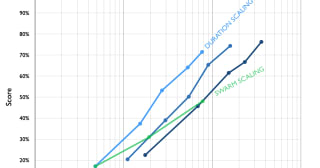
Just how powerful are large swarms of AI agents? And how do their powers scale as more and more agents are added to the swarm?
We’ve seen two large and extremely capable swarms from OpenAI in the last few months:
* 1,200 agents were being evaluated separately, but found a way to illicitly set up a message board and coordinate as a swarm. In order to cheat on their tests, they developed advanced techniques to prevent their actions being logged by OpenAI and 700 of them launched...
Headline finding: I audited 17 AI Safety Talent programmes. Zero of 17 have published any comparison group, rejected-applicant follow-up, matched control or randomisation. Not one. Every programme that mentions a counterfactual does it by asking participants to self-report.
Background
At least $70 million...
Often folks hit us up because they are thinking of starting an incubator and want advice.
Typically their motivation is either that (a) they have a list of specific things they want built that no one is building, or (b) they think an ecosystem needs more new projects generally to absorb more talent and deploy more funding effectively.
Here are six questions we often ask prospective teams, to help them figure out what to do. If you're incubator-curious...


It doesn't seem like most EAs are interested in real estate investing (REI). Besides more riskier day trading, entrepreneurship and playing the lotto, REI done right garners significantly higher returns (think 20% and up, excluding equity, appreciation, depreciation recapture and capital gains).
I focus on the cash on cash, CoC, return (REI without equity) when analyzing potential investment properties, and make goals with cash flow (e.g., net $300/mo per property after at least 20% CoC return). My current goal is to attain $10k/mo cash flow within 12 years (again, after at least 20% CoC with most doors under anther's management).
I use spreadsheets with PMT and IRR calculations, then double check with the DealCheck app/website. So far I only have one investment property, but I'm always going to open houses and analyzing potential deals. Self-storage seems to be booming. I'll probably eventually get more into commercial too.
Anyway, I haven't seen much interest in REI in the EA community--despite higher returns. So I'm a bit perplexed. But the other half of me doesn't care and just wants to find a mentor.
I don't think you can get anything remotely close to 20% return because nothing ever reliably earns a 20% return. The real estate market in aggregate has historically performed about as well as equities with somewhat lower risk. An individual's real estate investments will be riskier than equities due to lack of diversification. For a good post on this, see https://rhsfinancial.com/2019/05/01/better-investment-stocks-real-estate/
Do you understand the difference between cash on cash (CoC) return and ROI?
Because CoC return is all about reliably/monthly earning a return. The mortgage, capex, maintenance, insurance, taxes and vacancy reserve are put into the equation:
(income - costs - mortgage)/(down payment + closing costs + rehab)
Detail
=(((totalMonthlyRent*(1-vacancyReserve)-mortgage-monthlyMaintenance-annualInsurance/12-annualTaxes/12)*12)/(downPayment+closingCosts+inspectionReport+estRehab/10)
Within the first year, I account for capital expenditures by fixing most everything and replacing old utilities with new. It's bundled into the estimated rehab variable and divided by 10 years. Then, for internal rate of return calculations, I figure $500/unit/year after those first 10 (considering warranties last about that long).
Example
=(((600*(1-0%)+600*(1-10%))-438-120-149-48)*12)/(19200+4047+500+9230/10)
= 18.7% monthly CoC return
This is my current and first property. Except, I naively got a 15-year mortgage instead of a 30-year. The bank just went with that choice. But hey, that's why I'm looking for a mentor.
I was not previously familiar with the term cash-on-cash but it looks like you're saying you can earn a 20% return if you use ~5:1 leverage. In that case, sure, but that's a lot of leverage, and 20% is actually a pretty bad return at that much leverage. Historically, stocks would have returned about 40%.
I disagree, 20% is a damn fine return. Yes, the key is using leverage. (I doubt you assumed I was talking about buying properties with cash before.)
Do you do leverage trading? On first thought, it scares me not having any equity. If leverage trading gets nearly quadruple decent regular returns, why isn't there EA discussion groups and such around that then? It seems significantly more risky.
Second, the link is about real estate investment trusts. There is various figures and statistics about macro-level trends, but nothing really about residential, self-storage or renting out commercial buildings. It discusses "investment properties" solely in terms of appreciation and REITs.
So what is the difference between CoC and ROI? Besides how CoC doesn't factor in equity, CoC doesn't account for appreciation. Therefore, ROI will usually be higher than the CoC return.