Comments
Wonderful work! I’ve commented directly on the spreadsheet, but for the benefit of anyone who won’t check it:
Several of these ideas can be rolled into one:
- A remote research institute for independent researchers
- Infrastructure to support independent researchers
- Building vibrant EA academic communities in Africa, Asia, and Latin America
- AI alignment prizes, advance market commitments, and other forms of proto–impact markets
The scheme that I imagine could have all of these benefits:
- Find and recruit more independent researchers for high-impact research
- Tap into talent pools in countries that don’t have a lot of EA presence
- Circumvent restrictions on foreign donations/grants to researchers in some countries
- Support independent researchers monetarily
- Kickstart academic careers
- Support many small research projects efficiently (low due diligence overhead)
- Recruit for-profit investors such as business angels and impact investors to derisk research for researchers
- Derisk research for potential risk-averse non-EA funders
- Help researchers network, find potential advisors or collaborators
- Provide researchers with infrastructure (servers, labs, etc.) efficiently
- Monitor and improve the counterfactual impact of prize contests
- Tap into corporate funding for prize contests (in high-growth industries)
The best thing is that to my knowledge it should be fully legal to do this.
We (GoodX) are working on infrastructure to support independent researchers with funding and simplify grant applications. We’re not currently implementing this particular scheme, but that could change given the right team (experts in US securities law and startup fundraising).
The approach:
- Build a network:
- Set up a nonprofit think tank with some form of limited liability and a suitable purpose so that it is exempt from the requirement to register any publicly traded securities with the SEC.
- Network among business angels, HNWI (including non-altruists), possibly VCs. Even $100k go a long way in low-income countries, so “high net worth” can be a low bar depending on the country.
- Watch out for prize contests, AMCs, governmental and private outcome payers, etc.
- Let the investors scout out great researchers:
- An investor could be an Indian economics professor – smaller high-context investors can lead; larger low-context investors can follow.
- Possibly help with the match-making, especially once we have a mature network ourselves.
- Match-make between investor + researcher and prize contest/AMC/outcome payer:
- Make contracts with large funders such as Open Phil, Gates Foundation, USAID, etc. over outcome purchases, AMCs, etc. that match the areas of expertise of the researchers.
- This could even work for risk-averse funders who could not otherwise support scientific research.
- Or enter the research into existing prize contests.
- Take the investment from the investor, pay the researcher a monthly contractor salary, hold some money back to cover costs.
- If the researcher is successful and the outcome payment is disbursed, it goes to the investors.
Meanwhile nothing keeps that think tank from also seeking grant funding and using its network to pay contract researchers from that. Especially researchers who have proven themselves in a prize contest but can’t currently find any new suitable outcome payor, could be kept under contract from grant money.
We’re always happy to have calls on such topics!

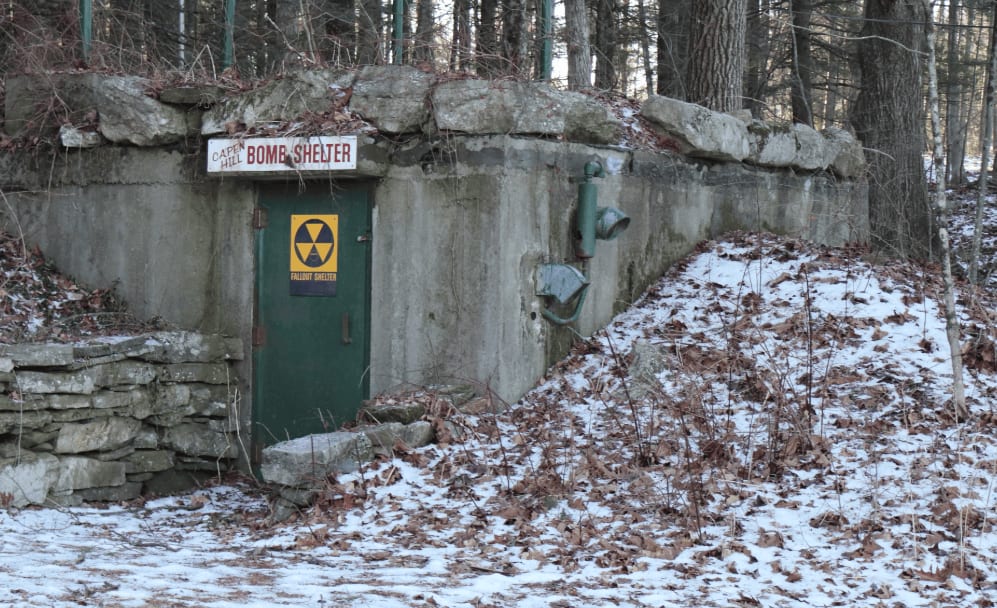

I see that the compilation and distribution of "civilisational reboot manuals" is already on the list. I love the concept, but think this scope should be significantly expanded to include stress testing and refinement of the drafted content. This would verify whether the most important facets of knowledge and technology are covered, and if the detail and style are such that they can be followed. I heard this suggested by Lewis Dartnell (author of "The Knowledge") on the 80,000hrs podcast, and think it would be great to really run with it. A fun, high-profile and potentially profitable way would be through a televised competition format, where teams of "survivors" have to try rebuild as much of the tech tree as possible (or reach a set technological achievement), with a "civilisational reboot manual" as their guide.
The mechanics of such a competition would need thoughtful planning to get a working balance between being sufficiently realistic of civilisational collapse scenarios (number of people, resources on hand etc.), have an acceleration mechanism to model decades of rebuilding within a season length, and be watchable. Challenging, but I don't think it would be a show-stopper (terrible pun, sorry).
Benefits of this could include:
An incubator team could refine the concept and goals, perhaps do some limited trials, and then pitch to various networks or streaming services.