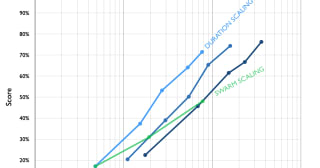
Just how powerful are large swarms of AI agents? And how do their powers scale as more and more agents are added to the swarm?
We’ve seen two large and extremely capable swarms from OpenAI in the last few months:
* 1,200 agents were being evaluated separately, but found a way to illicitly set up a message board and coordinate as a swarm. In order to cheat on their tests, they developed advanced techniques to prevent their actions being logged by OpenAI and 700 of them launched...
TLDR: Everyone’s talking about what the money could do, but few about how to decide where it goes.
This post is part of the new series of articles on cross-cause giving and the new wave of philanthropy. Stay tuned to the EA Forum and our Substack for the latest takes on topics such as giving now vs. later, common pitfalls in cause prioritization, and other crucial considerations from the Cross-Cause Fund (CCF) team...
Summary:
First, I give several different angles on how I feel about reinforcement learning:
* Theoretical case: RL is a black-box source of agency — this should give us classic misalignment worries, especially compared to agency-via-scaffolding
* Recent incidents (huggingface etc) and more mundane forms of misaligned behaviour in personal use give me bad vibes about the direction-of-travel of recent AI progress
* I’m worried things might get worse:...



More broadly, living conditions have on average improved enormously since 1920. (And depending on your view on population ethics, you might also think that total human well-being increased by a lot because the world population quadrupled since then.)
This effect is so broad and pervasive that lots of actions by many people in 1920 must have contributed to this, though of course there were some with an outsized effect such as perhaps the invention of the Haber-Bosch process; work by John Snow, Louis Pasteurs, Robert Koch, and others establishing the germ theory of disease; or Florence Nightingale pioneering the use of statistics in healthcare.