Your disability does not make you less of an effective altruist
Effective altruism is about doing the most good with what you have. Having a mental or physical disability might cause you to have less time, money or energy to spend. But if you maximize the impact of these resources, you are doing as much good as you can with what you have.
While I agree with you in principle, I think that the reality is that it is tough to keep this idea in mind, primarily because we judge people based on the results/achievements, rather than on the effectiveness of what they achieved based on what they had.
Simple toy example: the person who started with $100 and ends up with $500 gets much more praise than the person who starts with $5 and ends up with $100.
That’s a good point – others will no doubt measure your success by your absolute impact which will depend on your initial abilities/resources. My post was more meant to address the guilt and distress I suspect many disabled EAs feel, which I think is unfounded.
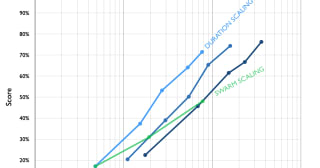
Just how powerful are large swarms of AI agents? And how do their powers scale as more and more agents are added to the swarm?
We’ve seen two large and extremely capable swarms from OpenAI in the last few months:
* 1,200 agents were being evaluated separately, but found a way to illicitly set up a message board and coordinate as a swarm. In order to cheat on their tests, they developed advanced techniques to prevent their actions being logged by OpenAI and 700 of them launched...
Headline finding: I audited 17 AI Safety Talent programmes. Zero of 17 have published any comparison group, rejected-applicant follow-up, matched control or randomisation. Not one. Every programme that mentions a counterfactual does it by asking participants to self-report.
Background
At least $70 million...
Often folks hit us up because they are thinking of starting an incubator and want advice.
Typically their motivation is either that (a) they have a list of specific things they want built that no one is building, or (b) they think an ecosystem needs more new projects generally to absorb more talent and deploy more funding effectively.
Here are six questions we often ask prospective teams, to help them figure out what to do. If you're incubator-curious...


Your disability does not make you less of an effective altruist
Effective altruism is about doing the most good with what you have. Having a mental or physical disability might cause you to have less time, money or energy to spend. But if you maximize the impact of these resources, you are doing as much good as you can with what you have.
While I agree with you in principle, I think that the reality is that it is tough to keep this idea in mind, primarily because we judge people based on the results/achievements, rather than on the effectiveness of what they achieved based on what they had.
Simple toy example: the person who started with $100 and ends up with $500 gets much more praise than the person who starts with $5 and ends up with $100.
That’s a good point – others will no doubt measure your success by your absolute impact which will depend on your initial abilities/resources. My post was more meant to address the guilt and distress I suspect many disabled EAs feel, which I think is unfounded.