The only big example of this phenomenon I can think of is the decline in "home production"; all the household services produced by women throughout history were never counted in GDP, but when they started to become part of market transactions (e.g. buying food from outside rather than cooking at home) they became part of GDP. I am not aware of any estimates of GDP growth valuing home production, though I'm sure someone has done it.
Part of the reason it's almost pointless to do so is because the quality/nature of a good changes as it moves across the production boundary, to the point where it's hard to say whether it's even the same good. For example, is food from a restaurant the same "product" as food you cook at home? It's probably a different product, with some degree of substitutability with home production.
and of course, the fact that people voluntarily pay >$5n for a restaurant meal rather than $n for the ingredients even when it saves no time and doesn't facilitate work is a pretty strong indication that it's a different product people often significantly prefer.
If we look at other paid substitutes for unpaid household labour, the UK spends less than 1% of GDP on childcare and employs far fewer people cleaning households than it did in the early 20th century, so it's pretty clear that replacing unpaid labour with paid labour is not a major factor in its economic growth. Most of the additional GDP boost from more women entering the workforce came from them doing higher-value work, not them sometimes paying others to carry out household work they did for free.
Those aggregate figures point towards the answer to the title question being "a rounding-error sized percentage of overall growth"
What percentage of economic growth can be attributed to the "monetization" of different resources? — EA Forum
[Question]
What percentage of economic growth can be attributed to the "monetization" of different resources?
Is there a way to measure how much of global growth is attributable to just how we attribute "value" to certain resources (people, undervalued goods, emissions, etc). Â Â
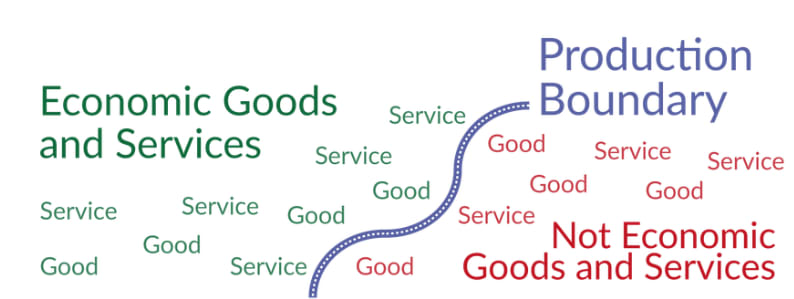
Credit: Image from Our World in Data
Max Roser's post on Our World in Data, titled  "What is economic growth? And why is it so important?" explains that there are things that fall outside our definition of economic goods and services. However, I am curious if there is a way to determine whether there is a distinction between (a) a new good or service being produced and (b) a good or service that has moved from outside the boundary to inside.
AI Use Note: Main body text entirely human written. Claude (Opus 4.8) helped develop models of animal life histories in the appendix.
Cross-posted from Good Structures.
Executive Summary
* Animal advocates sometimes make claims like “there are X of this animal...
Summary
Back in November 2023 I posted here to launch Spiro and raise our first $198k. Two and a half years later this is an update and a fundraiser for the next step.
The short version: we've now reached over-5,900 people with TB preventive medicine, including over 3,000 children under five years old. Our early results have held up well an...
Adapted from my Substack, Funding Anthropalypse.
Short version: if you want a share of the coming Anthropic and OpenAI windfall - the $37bn+ that could be in play next year - the way in is to become 'legibly excellent', so the evaluators and donors that frontier lab staff already trust point them to yo...
The only big example of this phenomenon I can think of is the decline in "home production"; all the household services produced by women throughout history were never counted in GDP, but when they started to become part of market transactions (e.g. buying food from outside rather than cooking at home) they became part of GDP. I am not aware of any estimates of GDP growth valuing home production, though I'm sure someone has done it.
Part of the reason it's almost pointless to do so is because the quality/nature of a good changes as it moves across the production boundary, to the point where it's hard to say whether it's even the same good. For example, is food from a restaurant the same "product" as food you cook at home? It's probably a different product, with some degree of substitutability with home production.
and of course, the fact that people voluntarily pay >$5n for a restaurant meal rather than $n for the ingredients even when it saves no time and doesn't facilitate work is a pretty strong indication that it's a different product people often significantly prefer.
If we look at other paid substitutes for unpaid household labour, the UK spends less than 1% of GDP on childcare and employs far fewer people cleaning households than it did in the early 20th century, so it's pretty clear that replacing unpaid labour with paid labour is not a major factor in its economic growth. Most of the additional GDP boost from more women entering the workforce came from them doing higher-value work, not them sometimes paying others to carry out household work they did for free.
Those aggregate figures point towards the answer to the title question being "a rounding-error sized percentage of overall growth"