Zvi does a pretty in-depth AI news round up every week or two now, plus some individual posts on AI topics. Not exclusively about safety, but often gives his own safety-informed perspective on capabilities news, etc. https://thezvi.substack.com/
This qualitative survey of AI safety experts I just finished, I think it might be a useful resource for people just starting their career in AI safety! https://www.lesswrong.com/s/xCmj2w2ZrcwxdH9z3
The navigating AI risks newsletter could be relevant as well: "Welcome to Navigating AI Risks, where we explore how to govern the risks posed by transformative artificial intelligence. " https://navigatingairisks.substack.com/
Stay up-to-date with the latest advancements in the world of AI and AI safety with our newsletter, crafted by the experts at the Center for AI Safety. No technical background required.
Each week, this newsletter provides summaries of three important developments that AI policy professionals should know about, especially folks working on US AI policy. Visit the archive to read a sample issue.
This weekly newsletter, sent out by Jeff Ding, a researcher at the Future of Humanity Institute, covers the Chinese AI landscape and includes translations from Chinese government agencies, newspapers, corporations, and other sources.
This is a weekly newsletter about artificial intelligence, covering everything from technical advances to policy debates, as well as a weekly short story.
Policy.ai (Center for Security and Emerging Technology (CSET))
A biweekly newsletter on artificial intelligence, emerging technology and security policy.
The AI Evaluation Substack is a monthly digest that covers the latest developments, research trends, and critical evaluations in the field of artificial intelligence.
This newsletter, which is distributed eight times a year, provides information about the Oxford Internet Institute, a multidisciplinary research and teaching department of the University of Oxford dedicated to the social science of the Internet.
A blog "Don't Worry About the Vase" is a Substack newsletter: "Doing both speed premium short term updates and long term world model building. Currently focused on weekly AI updates. Explorations include AI, policy, rationality, medicine and fertility, education and games."
Other resources: collections, programs, reading lists, etc.
Getting involved
AI Safety Training - A database of training programs, conferences, and other events for AI existential safety, collected by AI Safety Support
AGI Safety Fundamentals (AGISF) - courses by BlueDot Impact on AI alignment (101 and 201) and AI governance
MATS Program - ML Alignment & Theory Scholars (MATS) Program (previously SERI MATS - Stanford Existential Risks Initiative ML Alignment Theory Scholars)
The closest thing to this that I’m aware of is Lots of Links by AI Safety Support, which is great, but you can’t comment on it to add more and share reflections, which I think is a bummer. There’s probably more. (Relevant xkcd.)
Thanks to folks who directed me to some of the resources listed here!
Note also that in some cases, I'm quoting near-verbatim from assorted places that directed me to these or from the descriptions of the resources listed on their websites.
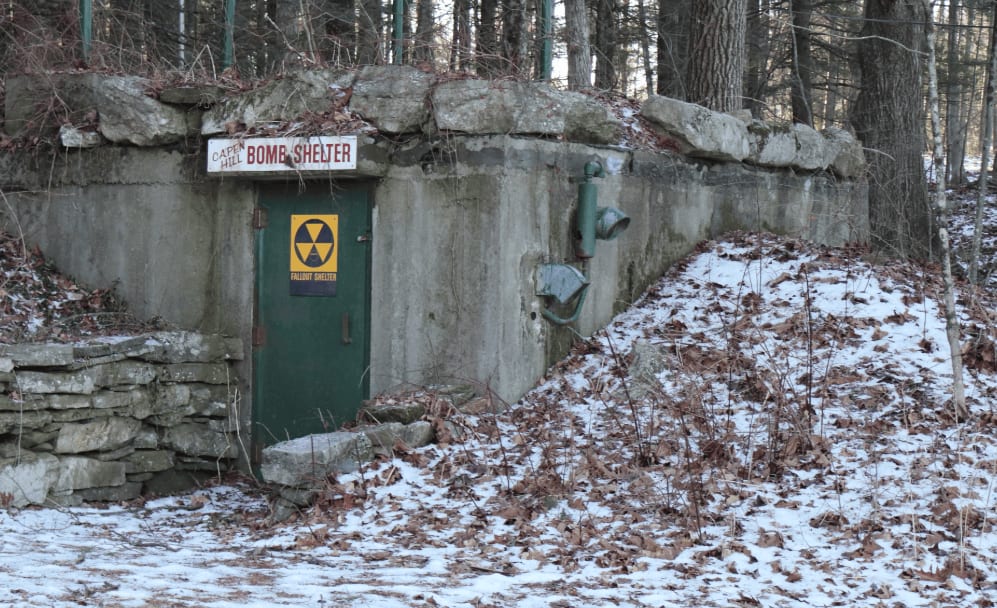
I was born at the end of the cold war, unaware of the danger we were emerging from. Duck and cover drills (as if those could protect schoolchildren from a nuclear blast) were a curiosity of the past.
The farmer-poet Wendell Berry, who wrote about the dread of nuclear war, died recently. From his 1968 “The peace of wild things”:
When despair for the world grows in me
and I wake in the night at the least...
Summary
Over the course of a year, the Fieldshaper program develops you into a field-leading grantmaker. You’ll steward $1,000,000 in grant capital, receive a $125,000 annual stipend, and deploy that capital within a sub-field of one of three key areas (farmed animals, global health, or philanthropic infrastructure); building the track record to become a grantmaker who can shape a field.
Role Details
* Title: Grantmak...


Zvi does a pretty in-depth AI news round up every week or two now, plus some individual posts on AI topics. Not exclusively about safety, but often gives his own safety-informed perspective on capabilities news, etc. https://thezvi.substack.com/