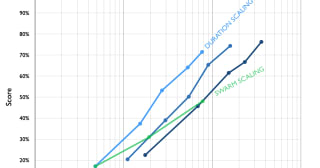
Just how powerful are large swarms of AI agents? And how do their powers scale as more and more agents are added to the swarm?
We’ve seen two large and extremely capable swarms from OpenAI in the last few months:
* 1,200 agents were being evaluated separately, but found a way to illicitly set up a message board and coordinate as a swarm. In order to cheat on their tests, they developed advanced techniques to prevent their actions being logged by OpenAI and 700 of them launched...
TLDR: Everyone’s talking about what the money could do, but few about how to decide where it goes.
This post is part of the new series of articles on cross-cause giving and the new wave of philanthropy. Stay tuned to the EA Forum and our Substack for the latest takes on topics such as giving now vs. later, common pitfalls in cause prioritization, and other crucial considerations from the Cross-Cause Fund (CCF) team...
Summary:
First, I give several different angles on how I feel about reinforcement learning:
* Theoretical case: RL is a black-box source of agency — this should give us classic misalignment worries, especially compared to agency-via-scaffolding
* Recent incidents (huggingface etc) and more mundane forms of misaligned behaviour in personal use give me bad vibes about the direction-of-travel of recent AI progress
* I’m worried things might get worse:...


Some random thoughts on psychology and EA. We need to make some distinctions.
On the one hand you have a theory about suffering. CBT doesn't have a clear fixed theory, it updates given the evidence. Most refer to these evolutions as first wave (behaviorism) vs second wave (revolution of cognitions, Beck, 'typical' CBT) and third wave (mindfulness-based (MBCT) & value-based (Acceptance and Commitment Therapy, ACT, a contextual behavioral science). The discussion continues.
Psychoanalytical and psychodynamisch therapies have different theories about suffering as well, but have some fixed ideas on the importance of early experiences.
There shoud be a difference between evidence based vs science based. Psycho-analytical (Freud, Lacan) theories aren't science based, although some interventions might be evidence based.
The dodo-bird effect is overrated and mostly people with different agenda's (promoting non science based interventions) misuse it to make their point. Be careful. Different forms of interventions do matter.
But psychology is a young science and a lot of things need to be fixed, updated and worked upon. Hope EA will contribute to this by taking a decent theory on psychological suffering into account. Before looking at evidence of different interventions. Contextual behavioral science might be a great place to start.