Great post, thanks for writing it (and appreciate the shout outs for Ultra/our Mid-stage Global Health Fund).
One way to frame this is as an opportunity for all non-cG GiveWell donors to give to these other parts of the scaffolding this year. Given that cG's grant covers the majority or all of GiveWell's expected grantmaking in 2026, this frees up other donors to redirect funding, and then they can always return to the bigger GiveWell next year if it needs more regranting funds.
I don't think the framing offered in this comment is useful because it relies on the assumption that GiveWell's expected grantmaking is fixed at [whatever amount has been currently announced by GiveWell], and that expected grantmaking would not further increase with additional funds. I'm not saying that people should definitely donate to GiveWell (more on that below), just that this particular argument for not doing so doesn't hold up.
It's probably worth examining the historical parallel here:
In conversation, groupchats, and various social chatter that I've seen this year, lots of people assumed prior to CG's latest funding announcementthat GiveWell's grantmaking might have capped out at ~$500-600M this year, and that as a result GiveWell had no more near-term absorptive capacity.
That turned out to be extremely wrong; GiveWell quickly found new funding opportunities when fundraising expectations increased, and its grantmaking expectations ~doubled.
There's certainly a point at which GiveWell would reach full funding saturation based on available opportunities and staff capacity, but I don't think there's any basis to assume that the saturation point happens to be $1B, especially since GiveWell has asserted that it is funding-constrained and generally has a strong track record of being truthful about its sincere beliefs.
If I were currently deciding where to donate in global health, I expect I wouldn't try to guess at GiveWell's absorptive capacity and would instead use these frames to think through the decision:
Marginal CE of GiveWell vs. other GHD funders
Immediacy of impact - "absorptive capacity" is often used in a bunch of ways, and isn't necessarily equivalent to "money has impact in the world quickly". I'm personally getting more worried about transformative AI coming soon, so that heightens my interest in having impact quickly vs. betting on potential future impact.
Ecosystem effects - Tony mentions many interesting ones above. For example, if a larger GiveWell would fund disproportionately fewer small- to medium-sized orgs and if I believe that those smaller orgs are necessary to build a good future GHD ecosystem, I might be worried about funding GiveWell vs. other opportunities.
Discount rates, but I don't expect this would shift me much relative to the considerations above
Risk tolerance, which would include both the inherent risk of funding early-stage orgs and the track records of intermediary funders
(probably more stuff that doesn't occur to me atm; I'm writing fast)
When I've done this kind of thinking in the past, I've ultimately settled on giving to CE/AIM for my GHD giving - that's mainly because I tend to favor catalytic investments and hits-based work in my personal giving, and because I'm cripplingly contrarian and easily influenced by arguments that big institutional actors are missing things. I could definitely see myself giving in the future to e.g. the Mid-stage Global Health Fund or another similar funder!
But fwiw, I think that the question of "Where can my dollars have the most impact in global health" is not at all clear, including because many of the questions about ecosystem effects, funder diversity, etc. are not settled at all and because we don't know yet how GiveWell will behave at large funding levels. I'd be very interested in seeing more public discussion of those issues, and I think it's not a good idea to make decisions based on probably-wrong heuristics about GiveWell's likely absorptive capacity.
(I work at GiveWell and my thinking is inevitably informed by that experience, but the specific claims I'm making here rest on public information and personal opinions, not insider information - I'll keep it that way if this thread continues. I also don't donate to GiveWell right now, and haven't since I started working there: I currently give mostly to animal welfare and GCR opportunities, and I've donated ~20% of my likely 2026 giving to CE/AIM)
Hi Calum - thanks for this. I think your heuristics for thinking about giving are very helpful and would endorse them to donors.
To address your other point, I don't think this claim does rely on GiveWell having fixed grantmaking capacity. It relies on GiveWell having some limit to its grantmaking capacity, and a reasonable belief that that limit may be covered by existing receipts and expected receipts. Given that GiveWell's announcement of this grant says that the grant is $1bn and that it aspires to grow its grantmaking to $1bn, that belief is reasonable, especially as GiveWell will also continue to receive donations from other donors (and has in the first 6 months of the year).
To use your own logic, you could use the historical parallel, which is that GiveWell's grantmaking has remained reasonably constant for the past several years (around $400m per year, except for a dip in 2023). It is great that GiveWell says it will direct more this year, but this has been announced alongside a dramatic increase in receipts. It doesn't follow that donors should therefore believe that it can increase grantmaking indefinitely, and it isn't unreasonable for donors to wait and see whether these projections come to pass.
FWIW, I do expect GiveWell's grantmaking to increase substantially this year - I think the post said it has already ~equalled last year's grantmaking in the first half of the year, which is great. I think it is quite unclear whether GiveWell's grantmaking will exceed its receipts, however.
To frame this directly, would you bet your own money that GiveWell will grant more than it receives in 2026? I would personally bet the opposite, especially as it granted out less than it received in 2021, 2022, 2023, roughly broke even in 2024, and almost certainly received more than it granted in 2025 (although it has not released final figures for 2025 receipts yet).
In short, I don't think this argument relies on the claim you suggest it does. It instead relies on reasonable claims based on a) GiveWell's disclosures of its own finances; and b) the historical pattern of GiveWell's grantmaking.
(Your comment also doesn't address the issue of power concentration, which just got much worse, and could be mitigated by donors, but then neither did mine, so fair enough.)
I am nonetheless excited to see how much GiveWell can move this year, remain a huge fan and donor with my own money, and endorse your questions as smart ones for any donor to think about.
yo, I will respond more later, at which point I’ll delete this comment and upload a new one. I don’t have time to write something careful at the moment, which is why I should not enter Forum discussions in general. 🤦♂️
Thanks for this post! I agree with your points, especially the part about investing in operational scaffolding. It gives the smaller orgs the chance to grow and succeed; currently it's very difficult for startup charity entrepreneurs to succeed. Some of that is due to lack of management experience, and some of that is due to a pattern of funders investing in startup costs for orgs but not continuing support 6 months later due to a lack of proven impact. My main complaint with that pattern is that I'd like to see funding focused on helping them build a pathway to success, not just dropping seed funding and expecting great outcomes.
Regardless, making sure M&E is implemented from the beginning and operation scaffolding is built in, and then adding in a diversification layer are all really critical components of building healthy and impactful organizations.
The underlying assumption in CG’s move is that the wave of money behind it is highly likely to come. Maybe this is a dumb question, but what gives them such a high level of confidence? It seems relevant to the discussion.
As someone privy to only a small fraction of it, I suspect there is a large quantity of private information that leads those in the know to conclude that a lot of philanthropic dollars are coming, including to global health and development.
Even the anticipation of the third wave is a great opportunity to think about how development could be better.
What resonates to me from your post is the importance of supporting many organizations to innovate and flourish vs. a huge rush of money creating a monopoly on impact for a few. I’m hoping that we see more ways that high performance gets rewarded, which is not the norm in development from our experience.
It sounds simple, but doing a better job doesn’t necessarily get you more work as often as it should. The upside of achieving this isn’t just that more money goes to high performers, but it also creates a work culture that promotes individual growth and appreciation for good work. The downside of not achieving this can be seen across many commercial and social sectors today.
Thank for increasing awareness of these concerns and opportunities with your post.
A $1B grant to GiveWell is a huge opportunity, not just to save more lives now, but to strengthen the whole EA funding ecosystem. The real test is whether this catalyzes better support for absorptive capacity, rewards high performers without creating bottlenecks, and keeps space for innovation across implementation orgs. Thanks for laying out these stakes so clearly.
$1 billion grant to GiveWell: How Might This Change Who Gets Funded?
The $1B grant from Coefficient Giving to GiveWell is very exciting and will improve the lives of millions. Is it a change in the equilibrium of funding for implementation organisations within the cost-effectiveness focused global health and development space? I argue that it could be and share some thoughts of what the implications of that may mean.
Disclosure: I am the CEO of Fortify Health, an organisation that has received funding from GiveWell. I also sit on the Governance and Advisory Boards of organisations that have received funding from GiveWell. This article reflects my personal opinions and not those of Fortify Health or other associated organisations. I am not a neutral observer, and much of my optimism below is the optimism of a potential beneficiary. Please discount accordingly.
AI used to structure thoughts and review verbally dictated text
On Thursday, Coefficient Giving announced a $1 billion commitment to GiveWell. I expect it to be a superb grant, funding interventions that are about as cost-effective as anything we know of. It will likely improve, if not save, millions of lives whilst also building the capacity of both GiveWell and recipient organisations for the future.
But it feels like more than a single grant. Coefficient were clear that this is "a one-off surge, not a new steady state", and that they are moving now to build capacity ahead of a much bigger wave of giving they expect in the coming years (GiveWell's own note on the commitment is here). Set that against the AI IPOs on the horizon and the windfall so many are anticipating (the "third wave" of American philanthropy) it is hard not to read this as the opening salvo in what may turn out to be a seismic shift in how global health and development gets funded.
None of this is new as a topic of conversation; plenty of folks have been talking about it for a while and there plenty of articles on the EA Forum itself discussing much of what I have laid out, frankly more eloquently. But it appears that it is now actually arriving, and I find I have a lot of feelings about it. I wanted to set them down honestly if nothing else, to concretize my own thoughts.
The Clear and Positive Case
Let me start with what I think is unambiguously good.
Highly cost-effective, evidence-based interventions may now have the funding they need to reach dramatically more people and improve their lives. With the collapse of USAID and the wider retreat of multilateral funding over the last two years, there is a real and painful gap for exactly the sort of interventions that are rigorous, cheap, and deserving of support. A billion dollars, deployed well, means more children sleeping under bed nets, more supplements reaching those who need them, more nutritious food, more unconditional transfers to people living in poverty. In the near term, this will help a very large number of people. This is great!
Additionally, the thing I deeply appreciate about GiveWell, whether or not you share their giving philosophy, is their commitment to radical transparency, to red teaming, and openness to feedback on their methodologies and calculations. These values give me, and hopefully the wider community, some comfort that they are bringing a growth mindset to their grantmaking rather than treating their models as settled truth. It is a large part of why I hold my fears and uncertainties somewhat weakly.
Concentrations of Funding
Jack Lewars has written cogently on his Funding Anthropalypse Substack about the risks of concentration. His core worry, which I largely share, is that when funds concentrate within a single funder operating from a single mindset, you lose diversification - and with it, you introduce the risk of a single methodological or philosophical error propagating through the whole system. Perhaps a fairer way to put it is not "error" but a systematic underweighting of a certain kind of giving, such that some interventions end up over-invested and others under-invested. This seems highly plausible to me, and I think the value of worldview and funding diversification is real.
Jack has covered the equilibrium of giving better than I could. I want to look at a different equilibrium ...
The Equilibrium of Implementation
The thesis: A funder's ability to disburse money well is operationally constrained. Nick Allardice, President and CEO of GiveDirectly, has made a version of this point well: a historic wave of money may be about to arrive, and the sector simply is not built to absorb it at the effectiveness and scale this moment demands. The capacity to move money well is itself a binding constraint. There are only so many grants a single person or team can make, and this is especially true for funders that hold the line on rigour, transparency, red teaming, and cost-effectiveness - values I admire and believe are core to impact, but which are slow and expensive to staff for.
The natural consequence is an incentive towards larger grants, disbursed more quickly, particularly for a funder without an endowment to draw down gradually, as is essentially the case with GiveWell (as I understand it).
GiveWell themselves are incredibly transparent in this, as they note, “Our researchers are explicitly searching for bigger opportunities than we’ve had the resources to investigate and to fund in the past. … Our growing team is investigating promising programs at a scale we haven’t previously been able to pursue.” As I read this, I understand this to infer that the organisations best placed to absorb a step-change in philanthropic capital quickly are the large multinationals and BINGOs (big international NGOs) that already have the operational, legal, and financial machinery in place around the world. They can take in significant sums fast, because the scaffolding already exists.
I want to be careful here. I see nothing intrinsically wrong with the interventions these organisations deliver, and while there are critiques of the BINGO model, that is not my argument. My argument is that if a wall of money flows preferentially to the largest and most easily-fundable organisations, we may quietly lose something that matters a great deal.
What’s the Matter with Individually Great Grant Making at a Larger Scale?
In the short term, more of the same feels fundamentally positive – millions of lives will improve. My concern is with the medium and longer term, and it runs along three lines.
What I worry about most is underinvestment and potential loss of innovation and nimbleness. The organisations working at the edges - locally-led organisations, new entrepreneurs coming out of Ambitious Impact Programs and similar incubation programs, and people simply experimenting - are the ones least able to access this kind of resource, and they are precisely the ones a creative non-profit landscape needs. This is the both/and I keep returning to: the sector is both extraordinarily effective and frustratingly conservative, depending on where you look, and it needs the big absorptive players and the small experimental ones. More of the same will not change the overall vector of global development. Changing that vector takes thousands of entrepreneurs trying thousands of interventions, most of which will fail, a few of which will be the next bed net (or wheat flour fortification … sorry, my bias kicked in).
Next, the implications on the labour market. A concentration of capital in the largest organisations will pull talent toward the players who can pay the most. Labour movement is sticky, so once people move, they tend to stay. It will also drive up salaries, which I actually think is a good thing: so many of us in global health and development are, frankly, underpaid and running on intrinsic motivation, and a correction there is overdue. However, this can also calcify talent within certain types of organisations, pricing out smaller (read as more likely to be innovative) organisations that may deserve to scale.
Finally I am concerned with a loss of M&E rigour, and it is the one closest to my own work. A large and fast influx of capital puts pressure on the very epistemics that make cost-effective giving cost-effective in the first place. It is worth saying plainly, as I have argued before, that a potentially highly cost-effective intervention on paper is not the same thing as a cost-effectively implemented one, as we have seen with Dispensers for Safe Water. The modelled figure and the realised impact on the ground can diverge sharply, and the only way to know is to monitor implementation fidelity and hold on to a healthy scepticism about whether the money is actually doing what the model says it should. Given the enormous opportunity cost of these potentially larger grants, that discipline matters even more.
This kind of monitoring is neither cheap nor quick, and I think that can be under-appreciated. Take the area I know best, anaemia reduction. Testing implementation fidelity at the beneficiary level is time-consuming, and the core indicators of whether anaemia is actually falling - haemoglobin and serum ferritin - can take up to twelve months to shift in a way you can validly measure and attribute to fortification. Good monitoring and evaluation often takes time, and if the dominant incentive is to move money quickly, that is precisely the sort of slow, unglamorous rigour that can get squeezed or alternatively shift away from interventions that are simply too time-consuming to monitor and evaluate.
What might help
None of this is an argument against the grant. To Coefficient Giving's real credit, this $1 billion appears squarely focused on building absorptive capacity - both GiveWell's own, and that of the key recipients it funds. What I fear is that we end up building the absorptive capacity of only a subset of the sector. It is, without doubt, a highly impactful subset and one that can reach huge numbers of people. But it may leave underweighted exactly the players who could drive the innovation and creativity we will need over the long term. So this becomes an argument for pairing the grant with deliberate investment in absorptive capacity further down the pipeline. A few mechanisms seem worth serious consideration:
Ring-fencing a portion of funds for smaller and medium-sized organisations, explicitly accepting that the cost-effectiveness of funder time will be lower for these grants or regranting. This is a real cost, and I think it may be worth paying. Ultra Philanthropy (as one example) appears to be doing exactly this and could serve as a highly effective hedge to the risks I have laid out.
Investing in operational scaffolding so that smaller organisations can scale and absorb funding without building every function (particularly operationa functions) from scratch. Scaling fellowships are one route (similar to Mulago Fellowships, 100x, and The Nudge Accelerator) focused on organisations implementing evidence-based, highly cost-effective interventions. Secondary or shared-service organisations are another - Health Progress Hub, Impact Ops, High Impact Professionals, Consultants for Impact, and others in this space can meaningfully reduce the operational burden of scaling.
Funding nimbler monitoring and evaluation that can generate credible evidence for uncertain innovations on shorter timelines. A/B testing, robust internally run M&E frameworks: systems that support evidence that arrives fast enough to actually steer an experimenting organisation towards cost-effective impact.
The common thread is that the highest-leverage use of some of this money may not be another large grant to a proven recipient, but investment in the capacity of others to become fundable at all.
Closing
I think this is the start of a catalytic moment: an opportunity to lift billions of lives and to sustain the innovation and nimbleness the sector will need for the problems that come after. I feel real gratitude for the generosity and foresight of the individuals behind this, and I am confident their giving will improve an enormous number of lives.
Given the deep uncertainties of the medium and long term, though - including AI's own implications for wealth, labor, and the shape of economic development - I think a little caution is warranted. My sense is that the right posture is to welcome this wholeheartedly while protecting worldview diversification and working actively to minimize the risks of concentration in who may be delivering interventions.
I am far from certain about any of this, and I would love to hear where others think I have got it wrong.
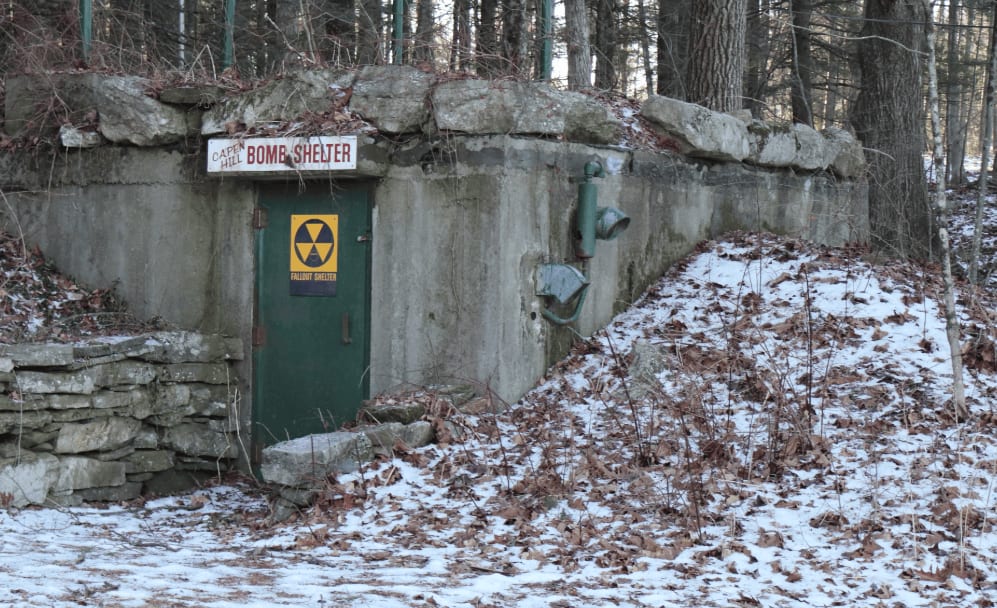
I was born at the end of the cold war, unaware of the danger we were emerging from. Duck and cover drills (as if those could protect schoolchildren from a nuclear blast) were a curiosity of the past.
The farmer-poet Wendell Berry, who wrote about the dread of nuclear war, died recently. From his 1968 “The peace of wild things”:
When despair for the world grows in me
and I wake in the night at the least...
Summary
Over the course of a year, the Fieldshaper program develops you into a field-leading grantmaker. You’ll steward $1,000,000 in grant capital, receive a $125,000 annual stipend, and deploy that capital within a sub-field of one of three key areas (farmed animals, global health, or philanthropic infrastructure); building the track record to become a grantmaker who can shape a field.
Role Details
* Title: Grantmak...


Great post, thanks for writing it (and appreciate the shout outs for Ultra/our Mid-stage Global Health Fund).
One way to frame this is as an opportunity for all non-cG GiveWell donors to give to these other parts of the scaffolding this year. Given that cG's grant covers the majority or all of GiveWell's expected grantmaking in 2026, this frees up other donors to redirect funding, and then they can always return to the bigger GiveWell next year if it needs more regranting funds.
I don't think the framing offered in this comment is useful because it relies on the assumption that GiveWell's expected grantmaking is fixed at [whatever amount has been currently announced by GiveWell], and that expected grantmaking would not further increase with additional funds. I'm not saying that people should definitely donate to GiveWell (more on that below), just that this particular argument for not doing so doesn't hold up.
It's probably worth examining the historical parallel here:
There's certainly a point at which GiveWell would reach full funding saturation based on available opportunities and staff capacity, but I don't think there's any basis to assume that the saturation point happens to be $1B, especially since GiveWell has asserted that it is funding-constrained and generally has a strong track record of being truthful about its sincere beliefs.
If I were currently deciding where to donate in global health, I expect I wouldn't try to guess at GiveWell's absorptive capacity and would instead use these frames to think through the decision:
When I've done this kind of thinking in the past, I've ultimately settled on giving to CE/AIM for my GHD giving - that's mainly because I tend to favor catalytic investments and hits-based work in my personal giving, and because I'm cripplingly contrarian and easily influenced by arguments that big institutional actors are missing things. I could definitely see myself giving in the future to e.g. the Mid-stage Global Health Fund or another similar funder!
But fwiw, I think that the question of "Where can my dollars have the most impact in global health" is not at all clear, including because many of the questions about ecosystem effects, funder diversity, etc. are not settled at all and because we don't know yet how GiveWell will behave at large funding levels. I'd be very interested in seeing more public discussion of those issues, and I think it's not a good idea to make decisions based on probably-wrong heuristics about GiveWell's likely absorptive capacity.
(I work at GiveWell and my thinking is inevitably informed by that experience, but the specific claims I'm making here rest on public information and personal opinions, not insider information - I'll keep it that way if this thread continues. I also don't donate to GiveWell right now, and haven't since I started working there: I currently give mostly to animal welfare and GCR opportunities, and I've donated ~20% of my likely 2026 giving to CE/AIM)
Hi Calum - thanks for this. I think your heuristics for thinking about giving are very helpful and would endorse them to donors.
To address your other point, I don't think this claim does rely on GiveWell having fixed grantmaking capacity. It relies on GiveWell having some limit to its grantmaking capacity, and a reasonable belief that that limit may be covered by existing receipts and expected receipts. Given that GiveWell's announcement of this grant says that the grant is $1bn and that it aspires to grow its grantmaking to $1bn, that belief is reasonable, especially as GiveWell will also continue to receive donations from other donors (and has in the first 6 months of the year).
To use your own logic, you could use the historical parallel, which is that GiveWell's grantmaking has remained reasonably constant for the past several years (around $400m per year, except for a dip in 2023). It is great that GiveWell says it will direct more this year, but this has been announced alongside a dramatic increase in receipts. It doesn't follow that donors should therefore believe that it can increase grantmaking indefinitely, and it isn't unreasonable for donors to wait and see whether these projections come to pass.
FWIW, I do expect GiveWell's grantmaking to increase substantially this year - I think the post said it has already ~equalled last year's grantmaking in the first half of the year, which is great. I think it is quite unclear whether GiveWell's grantmaking will exceed its receipts, however.
To frame this directly, would you bet your own money that GiveWell will grant more than it receives in 2026? I would personally bet the opposite, especially as it granted out less than it received in 2021, 2022, 2023, roughly broke even in 2024, and almost certainly received more than it granted in 2025 (although it has not released final figures for 2025 receipts yet).
In short, I don't think this argument relies on the claim you suggest it does. It instead relies on reasonable claims based on a) GiveWell's disclosures of its own finances; and b) the historical pattern of GiveWell's grantmaking.
(Your comment also doesn't address the issue of power concentration, which just got much worse, and could be mitigated by donors, but then neither did mine, so fair enough.)
I am nonetheless excited to see how much GiveWell can move this year, remain a huge fan and donor with my own money, and endorse your questions as smart ones for any donor to think about.
yo, I will respond more later, at which point I’ll delete this comment and upload a new one. I don’t have time to write something careful at the moment, which is why I should not enter Forum discussions in general. 🤦♂️
thanks for your reply!