Comments
Non-Trivial helps bright high school students start solving the world's most pressing problems.
Since our first fellowship 2 years ago, we’ve received over 35,000 applications and our alums have already gone on to co-author reports for the UN and publish at NeurIPS.
We’re now facing an unexpected funding gap of ~$360k for 2025 and ~$1M for 2026.
This post is an abridged review of 2024, 2025 plans, and our funding gaps. If you’d like any more information, or you can help out, please email our founder Peter ([email protected]).
Many young people make crucial decisions that guide the rest of their lives. Non-Trivial empowers exceptional high schoolers to grapple with the question "How can I make a meaningful difference?" before facing option-constraining decisions, like what to study at university.
Our participants conduct impact-oriented and (importantly!) self-directed research on a topic that interests them. We support them with free online programs that provide mentorship, scholarships, and a global community of dedicated fellows.
Non-Trivial was founded by Peter McIntyre, who previously set up 80,000 Hours’ advising, headhunting, and job board.
Our fellows have worked on a range of problems, such as:
Promotion and selection:
Fellowship:
Impact:
Hiring:
Safeguarding and community health:
Our participants (ages 14-20) typically have a multi-year lag before they are able to help solve pressing problems in the world. That makes it hard to assess the impact of our programs at this point because it has been only two years since our first program.
So instead of focusing on direct contributions at this stage, we gauge our expected impact by looking at:
To help assess these factors, we analyzed the exit survey from our July 2024 cohort and conducted an impact survey among previous fellows and finalists. Our impact survey had a 36% response rate (n=164 responses out of 176 fellows from 2022/2023 and 278 finalists from 2024). Some results are reported below.
Overall, our fellows are significantly above average high school graduates in attending top universities and SAT test scores.
| 2023 Fellows | 2024 Finalists | 2024 Fellows | |
|---|---|---|---|
Average SAT scores (Harvard average: 1550) | 1564 (n=37) | 1533 (n=35) | 1558 (n=61) |
Share of top 10 THE or Ivy League unis of those admitted to a university | 67% (n=48) | 20% (n=20) | 43% (n=37) |
Share of AIME qualifiers of those who reported AMC scores | 86% (n=7) | 72% (n=18) | 84% (n=37) |
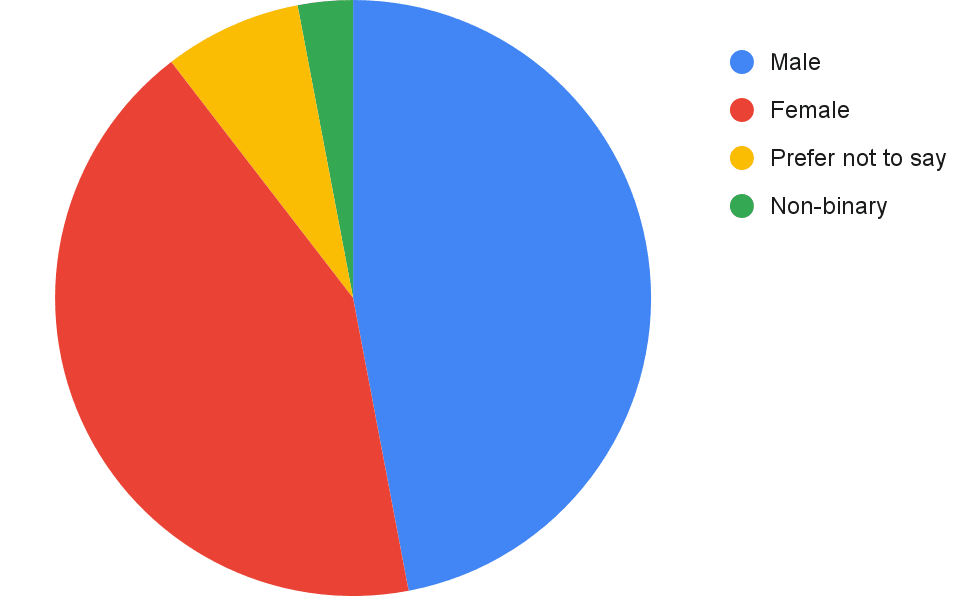
Among admitted fellows, 54% indicated Male or Prefer not to say as their gender. 46% indicated Female, Non-binary, or Other.
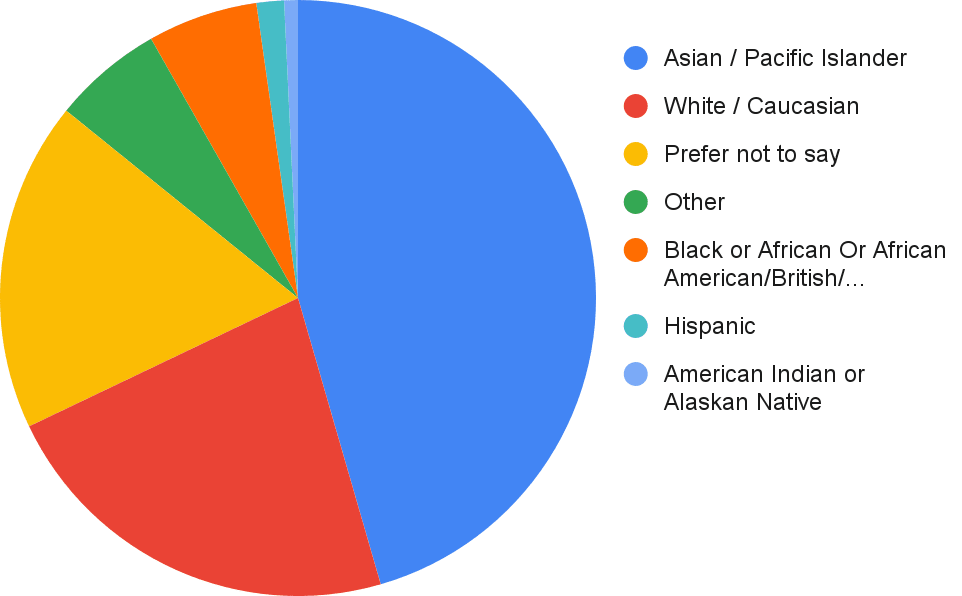
Among admitted fellows, 86% indicated either Asian / Pacific Islander, White / Caucasian, or Prefer not to say. Approximately 14% of our fellows indicated any of Black or African Or African American/British/…, Other, American Indian or Alaskan Native, or Hispanic.
Participants generally reported being satisfied with and helped by our programs. Scores in the table below are out of 10 unless otherwise indicated.
| 2023 Fellows | 2024 Fellows | |
|---|---|---|
| Number of graduated fellows | 161 | 132 |
| Number of graduated finalists[1] | NA | 420 |
| Likelihood to recommend | 8.5 | 9.0 |
| Fellowship satisfaction | NA | 8.24 |
| Good use of time | 8.62 | 8.9 |
| NT helped me engage with the question of how I could make a difference | NA | 9.2 |
| NT helped me take action | NA | 9.0 |
| NT gave me confidence I could make a difference | NA | 9.2 |
| I expect to stay in touch with friends I met through NT | 6.3 | 7.5 |
In 2025, we’ll prioritize better empowering our students to choose a problem they’re passionate about and making our program more appealing to our highest potential applicants.
How many participants we accept and staff we hire is dependent on our fundraising efforts.
2025 | |||
|---|---|---|---|
| Minimal | Baseline | Expansion | |
| Core staff (end of year) | 3 | 3 | 5 |
| Research Foundations Trainees | 500 | 800 | 800 |
| Research Fellows | 50 | 150 | 150 |
| Research Scholars | 6 | 12 | 12 |
Below is a summary of our OKRs for 2025.
1. Help participants engage critically with the question of how they can make a difference.
2. Reach more of our most gifted target audience.
3. Increase the number of top projects.
We’re facing an unexpected funding gap after Good Ventures' exit from high school programs, though our operations are funded through most of 2025.
So we can plan ahead, we're seeking ~$1M for our 2026 core operations. Early funding certainty is important for retaining our team and because we begin making program and partnership decisions in Q2 2025.
Additionally, our programs (being online and low marginal time cost) are highly scalable and primarily funding constrained. If we receive an extra ~$360k in commitments before March 1 2025, we’d be able to accept another 100 promising fellows to match our 2024 capacity.
Our lead grantmaker at Open Philanthropy says:
"I think Non-Trivial is filling what is currently a pretty neglected niche identifying and supporting talented high-school students; our estimates suggest they meet OP’s cost-effectiveness bar for this kind of outreach work. I would like to see them get funded."
If this is something you might consider helping out with, please email our founder Peter ([email protected]).
We are changing the name of the Finalist Program to Research Foundations Program.



Donated.
I've been hugely impressed by the NT fellows and finalists I came across in my work at 80k and it seems like NT was either their first exposure to EA ideas or the first meaningful opportunity to actively apply the ideas (which can be just as important). I imagine uni groups are well in your debt for your role in helping finalists/fellows connect ahead of starting university too.