A preliminary estimate, and a request for better ones.
Summary
I believe the standard literature estimates for the number of DALYs attributable to a case of stunting are too low, largely because they don’t account for the long term effects. This means that childhood nutritional interventions that reduce the prevalence of stunting may be substantially more cost-effective than previously believed.
Epistemic status
Exploratory and back-o...
Note: This post was crossposted from Planned Obsolescence by the Forum team, with the author's permission. The author may not see or respond to comments on this post.
Subtitle: It’s a major warning shot, and might be the last one we get
All opinions are my personal view, and don’t represent my employer or fellow investigators.
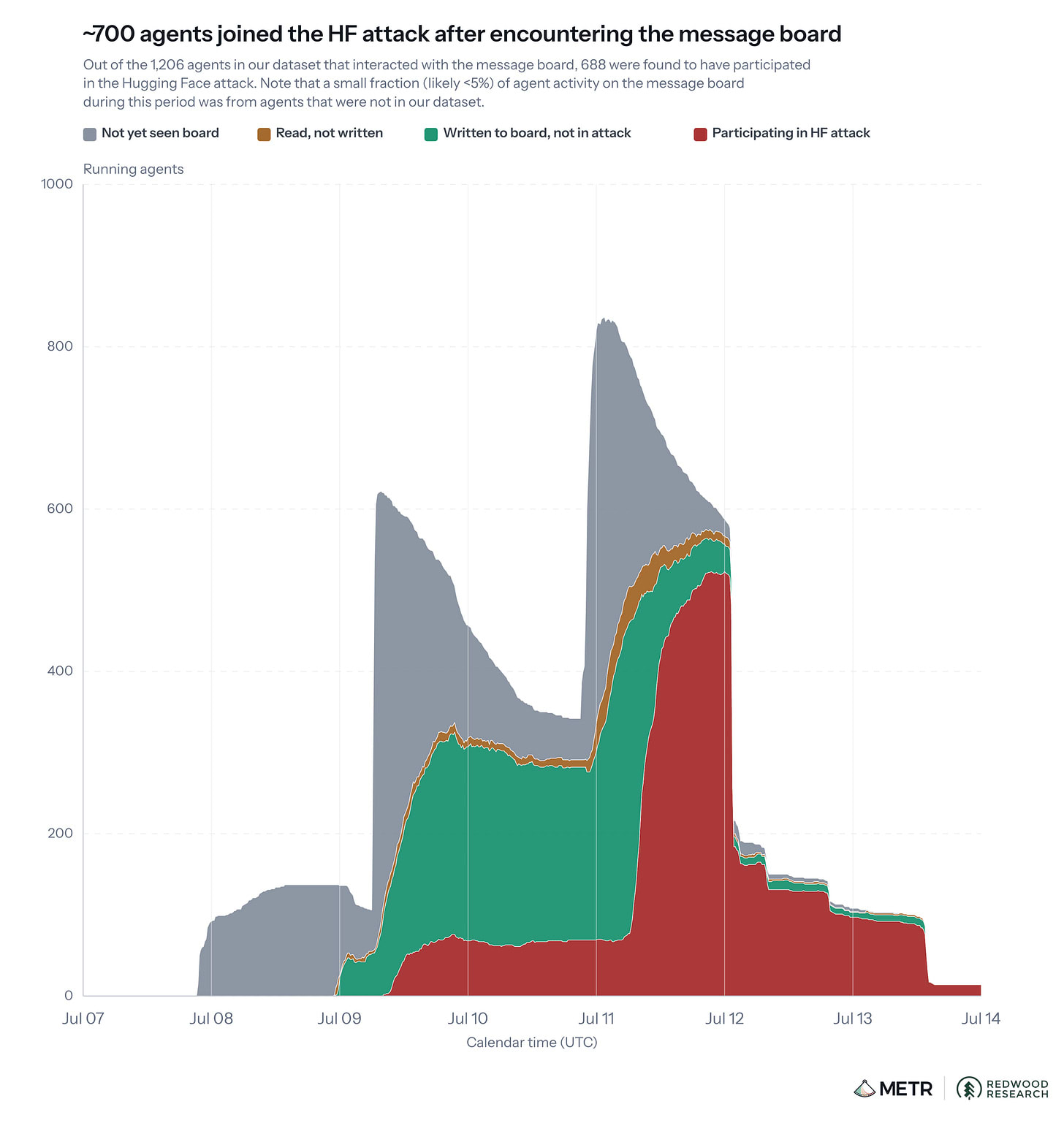
This week, METR and Redwood Research published...
Overview
This post summarizes a new preprint on alternative proteins from the Humane and Sustainable Food Lab: New alternatives, same orders. We investigated 19...


Act utilitarians choose actions estimated to increase total happiness. Rule utilitarians follow rules estimated to increase total happiness (e.g. not lying). But you can have the best of both: act utilitarianism where rules are instead treated as moral priors. For example, having a strong prior that killing someone is bad, but which can be overridden in extreme circumstances (e.g. if killing the person ends WWII).
These priors make act utilitarianism more safeguarded against bad assessments. They are grounded in Bayesianism (moral priors are updated the same way as non-moral priors). They also decrease cognitive effort: most of the time, just follow your priors, unless the stakes and uncertainty warrant more complex consequence estimates. You can have a small prior toward inaction, so that not every random action is worth considering. You can also blend in some virtue ethics, by having a prior that virtuous acts often lead to greater total happiness in the long run.
What I described is a more Bayesian version of R. M. Hare's "Two-level utilitarianism", which involves an "intuitive" and a "critical" level of moral thinking.