Since you published this on April 1, I read the headline, thought it was satire, and laughed out loud, but it turns out this is a great post! Big fan of time-time tradeoffs.
I like this. I touched on some similar themes in these old notes on "neutral hours" around different energy levels being more or less productive for different kinds of work, but I didn't really get to the "value of time varies a lot with opportunities", and I think you're right that that's an important part of the puzzle.
I was fully expecting this to be an April Fools post based on the title, and became more and more confused as the article progressed, since you were making excellent points throughout!
One thing I'd like to add is that our brains treat scarce time as more valuable and act accordingly. This is my completely-unsubstantiated theory for why many people work better under a deadline. Not just "better" as in "more focused", but "better" as in "I spent 12 hours scrambling to put this together today, and this somehow turned out better than I would have done if I spent two hours a day for a week."
A strategy I have occasionally used when I have difficulty motivating myself to work is to actually limit the amount of work I do on that day. "Okay Jay, you've gotten no real work done on this tough problem, and it's 1 pm now. Here's the deal - you're only allowed to work on this problem until 4pm. After that, not only can you stop, I'm insisting that you do. If you want to get some progress done, you'd best get started."
And you know, it often works. So I think that there's a second dimension to time value not mentioned in the article - one being "opportunity" (Such as being at an EAG conference) and another being scarcity. These two often go hand-in-hand, but not always. EAG time is both high opportunity and high scarcity. Gym time is high opportunity for exercising, but less scarce since you can always just go again tomorrow.
Yes. Classic example for me is doing tasks that don't require much mental energy when I'm tired & reminding myself to do this (even though I sometimes can't be bothered) because it saves me having to do these tasks at a later time when I could be doing more cognition-heavy things.
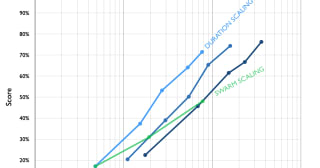
Just how powerful are large swarms of AI agents? And how do their powers scale as more and more agents are added to the swarm?
We’ve seen two large and extremely capable swarms from OpenAI in the last few months:
* 1,200 agents were being evaluated separately, but found a way to illicitly set up a message board and coordinate as a swarm. In order to cheat on their tests, they developed advanced techniques to prevent their actions being logged by OpenAI and 700 of them launched...
TLDR: Everyone’s talking about what the money could do, but few about how to decide where it goes.
This post is part of the new series of articles on cross-cause giving and the new wave of philanthropy. Stay tuned to the EA Forum and our Substack for the latest takes on topics such as giving now vs. later, common pitfalls in cause prioritization, and other crucial considerations from the Cross-Cause Fund (CCF) team...
Often folks hit us up because they are thinking of starting an incubator and want advice.
Typically their motivation is either that (a) they have a list of specific things they want built that no one is building,  or (b) they think an ecosystem needs more new projects generally to absorb more talent and deploy more funding effectively.
Here are six questions we often ask prospective teams, to help them figure out what to do. If you're incubator-curious...
Since you published this on April 1, I read the headline, thought it was satire, and laughed out loud, but it turns out this is a great post! Big fan of time-time tradeoffs.